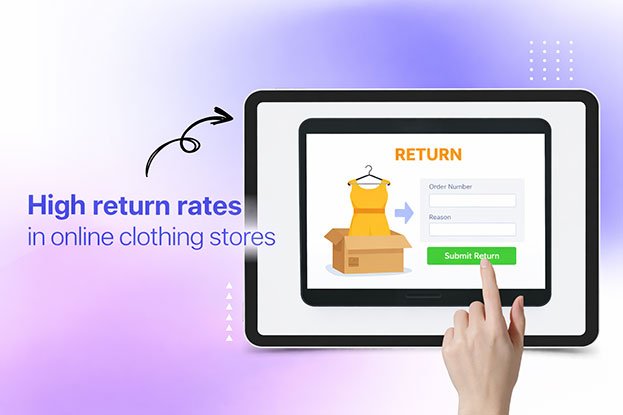
High return rates online clothing stores usually indicate a visual expectation gap between product images and the real garments customers receive.
The Real Reason Customers Send Clothes Back
High return rates are one of the most expensive problems in online fashion.
They quietly damage:
-
profit margins
-
ad performance
-
inventory planning
-
customer lifetime value
-
brand trust
Yet many clothing store owners misdiagnose the cause.
They assume returns happen because of:
-
sizing problems
-
poor product quality
-
wrong audience targeting
-
unrealistic price expectations
-
fast-fashion buying behavior
Sometimes those factors play a role.
But in many fashion ecommerce stores, the issue is simpler — and far more controllable:
👉 Customers received something that didn’t match what they expected.
And in online clothing retail, expectation is built almost entirely through product images.
Returns Are an Expectation Gap — Not Just a Product Problem
Most return reasons sound like this:
-
“Color different than pictured.”
-
“Material thinner than expected.”
-
“Doesn’t look the same as online.”
-
“Not what I imagined.”
Notice something important:
These aren’t always product defects.
They’re perception gaps.
Before purchasing, buyers create a mental image of:
-
How the color will look in natural light
-
How thick or soft the fabric will feel
-
How structured or fitted the garment will appear
-
How premium the overall product feels
If the real product differs even slightly from that mental image, disappointment begins.
And disappointment leads to returns.
Why Fashion eCommerce Is More Sensitive to Returns Than Other Niches
In electronics, specs reduce uncertainty.
In home goods, dimensions reduce uncertainty.
In clothing, visuals reduce uncertainty.
Customers cannot:
-
Touch the fabric
-
Feel the weight
-
See real-world lighting
-
Test fit in person
So they rely almost completely on product images to judge quality and accuracy.
That makes apparel one of the most visually dependent industries in eCommerce.
If images are even slightly misleading — intentionally or unintentionally — return rates increase.
The Hidden Role of Product Images in Return Behavior
Many brands treat product images as marketing tools.
But in reality, they are expectation-setting tools.
If images:
-
Brighten colors too much
-
Over-smooth texture
-
Hide natural folds
-
Distort garment shape
-
Use inconsistent lighting
-
Present unrealistic contrast
Customers form an inflated perception.
When the product arrives and feels more “normal” than the photo suggested, it feels disappointing.
Even if the product quality is acceptable.
That’s why high return rates often trace back to visual over-promise.
When “Attractive” Becomes Dangerous
There’s a common misconception:
“Better-looking photos reduce returns.”
Not always.
Photos that are:
-
Too polished
-
Too retouched
-
Too bright
-
Too perfected
can increase return rates.
Because they raise expectations beyond reality.
The goal of apparel photo editing should not be exaggeration.
It should be:
✔ Accurate color
✔ Clear texture
✔ Natural structure
✔ Honest lighting
✔ Consistent presentation
Attractive builds clicks.
Accurate protects revenue.
The Financial Impact Most Brands Underestimate
High return rates don’t just mean refund processing.
They create a chain reaction:
-
Increased shipping costs
-
Restocking labor
-
Inventory delays
-
Reduced ad efficiency
-
Higher cost per acquisition
-
Lower customer lifetime value
And perhaps most damaging:
Customers who return once are less likely to trust again.
So high returns hurt both short-term profit and long-term growth.
The Core Insight
If your clothing store has rising return rates, the problem may not be the product itself.
It may be that your images are creating an expectation the real garment cannot fully meet.
In fashion eCommerce, perception becomes reality.
And when perception is misaligned, returns follow.
The Exact Image Mistakes That Trigger Clothing Returns
If customers are returning your products, the issue usually isn’t random.
It follows patterns.
And most of those patterns start with how your products are visually presented online.
Let’s break down the most common image-related causes of clothing returns.
1️⃣ Color Inaccuracy (The #1 Return Trigger)
This is the most common complaint in fashion returns:
-
“Color is darker than expected.”
-
“Looks different in real life.”
-
“Not the shade I thought.”
Color perception online is extremely sensitive.
Even small shifts in:
-
white balance
-
exposure
-
saturation
-
contrast
can make a product look slightly different.
When a customer orders what they believe is a deep black jacket and receives something that looks charcoal, trust drops immediately.
We explored this deeply in
Why Apparel Product Colors Look Wrong Online —
color inconsistency doesn’t just affect conversion; it directly increases returns.
Reducing color exaggeration and improving accuracy reduces refund risk.
2️⃣ Over-Smooth or Over-Retouched Fabric
In an attempt to make products look premium, some brands over-edit:
-
removing natural folds
-
flattening texture
-
smoothing fabric grain
-
increasing artificial sharpness
The result?
The product online looks structured and thick.
The product in hand feels softer, thinner, or more natural.
That mismatch creates disappointment.
Good editing enhances clarity — it should never create illusion.
This connects directly to the principles in
How Professional Apparel Photo Editing Increases Online Sales,
where editing builds confidence without distorting reality.
3️⃣ Misleading Garment Shape (Especially Ghost Mannequin)
Ghost mannequin photography is powerful when executed properly.
But when shape correction is poor, problems appear like:
-
unrealistic waist tapering
-
stiff shoulders
-
overly sharp silhouettes
-
distorted proportions
Customers subconsciously expect the garment to look that structured when worn.
If it doesn’t, it feels “wrong.”
We discussed this issue in
Why Ghost Mannequin Photos Look Unprofessional —
shape inconsistency damages trust.
When the silhouette looks unnatural online, return rates increase offline.
4️⃣ Inconsistent Lighting Across Products
Here’s a subtle but powerful problem:
One product looks bright and crisp.
Another looks darker and muted.
Another looks warm-toned.
Individually, each image may look fine.
But across the store, inconsistency creates confusion.
Buyers begin questioning:
-
“Is this fabric thinner?”
-
“Is this color different?”
-
“Why does this look less premium?”
This links directly to what we covered in
Why Fashion Brands Lose Sales Because of Bad Product Images —
visual inconsistency weakens brand trust.
And weak trust increases returns.
5️⃣ Product Pages That Leave Questions Unanswered
Returns often happen when buyers feel surprised.
Surprise happens when images don’t show:
-
fabric close-ups
-
back view
-
sleeve structure
-
collar detail
-
stitching clarity
If customers must “guess” certain aspects of the product, they fill in the gaps themselves.
And when their guess is wrong, the product comes back.
This is similar to what we discussed in
High Traffic but Low Sales Fashion Ecommerce —
when images fail to remove doubt, performance suffers.
In this case, it’s not just conversion that suffers — retention does too.
6️⃣ Over-Promising Through Ad Creatives
Sometimes the problem isn’t just product images — it’s the difference between ad visuals and product page visuals.
If ads show:
-
enhanced color vibrancy
-
dramatic lighting
-
high-fashion styling
But the product page shows standard catalog images, expectation misalignment begins.
That gap increases both bounce rate and return rate.
We saw this pattern in
Why Your Clothing Ads Don’t Convert (Image Problems Brands Ignore).
Ad promises must match product page reality.
How Product Images Reduce Apparel Return Rates
Many clothing returns happen because the product customers receive does not match what they expected from the online listing. When shoppers feel that the color, texture, or shape of the garment looks different in real life, they are far more likely to send the item back.
In fact, research shows that almost half of ecommerce returns happen because the item did not match what the customer expected, which often starts with inaccurate or unclear product images.
Better product images help close this gap between expectation and reality.
When clothing photos clearly show the true color, fabric texture, and structure of the garment, buyers can make more confident decisions before purchasing.
High-quality apparel product images typically reduce returns by helping customers understand:
-
the real color of the clothing
-
the fabric texture and thickness
-
the overall shape and fit of the garment
-
small design details such as stitching or buttons
When these details are visible, customers are less likely to feel surprised or disappointed when the product arrives.
Professional product photography and editing also improve consistency across the entire catalog. Consistent lighting, accurate color correction, and clean backgrounds make it easier for shoppers to compare products and trust what they see.
Better images do not just increase sales. They also help reduce costly returns by ensuring that the product customers receive matches the expectations created by the online store.
For clothing brands managing large ecommerce catalogs, improving product images is often one of the simplest ways to reduce return rates while strengthening customer trust.
The Psychological Chain Behind Returns
Let’s simplify what happens:
1️⃣ Buyer sees image
2️⃣ Buyer forms expectation
3️⃣ Buyer receives product
4️⃣ Reality slightly differs
5️⃣ Emotional disappointment
6️⃣ Return initiated
It’s not always logical.
It’s emotional.
And emotion in fashion is powerful.
Reducing returns requires reducing emotional mismatch.
The Core Insight
High return rates in online clothing stores are rarely random.
They’re usually the result of:
✔ color inconsistency
✔ unrealistic texture presentation
✔ distorted garment shape
✔ lighting inconsistency
✔ incomplete visual storytelling
When product images clearly and accurately communicate reality, expectation gaps shrink.
And when expectation gaps shrink, return rates fall.
Key Takeaway
Most clothing returns are triggered by small visual mismatches between what customers see online and what they receive in real life.
Improving color accuracy, fabric clarity, shape realism, and catalog consistency reduces these mismatches — and protects profit margins.
How to Systematically Reduce Return Rates Through Image Optimization
If high return rates are damaging your margins, the solution is not guesswork.
It’s alignment.
Returns decrease when expectations align with reality.
And in fashion eCommerce, alignment is built visually.
Here’s how to reduce clothing return rates systematically.
Step 1: Audit Color Accuracy Across Your Bestsellers
Start with your top 20% of revenue-driving products.
Ask:
-
Do whites look consistent across collections?
-
Do blacks appear deep and true — not faded?
-
Are neutral tones slightly warm or cool?
-
Does the same color look different on separate product pages?
Color inconsistency is the #1 driver of clothing returns.
We explored this deeply in
Why Apparel Product Colors Look Wrong Online,
because even subtle color shifts create expectation gaps.
Correcting color doesn’t mean increasing saturation.
It means improving accuracy and consistency.
When customers receive what they expected visually, return rates drop.
Step 2: Prioritize Texture Clarity Over Perfection
Many brands try to make garments look flawless.
But flawless often looks artificial.
Instead, aim for:
✔ Clear stitching
✔ Natural folds
✔ Honest fabric thickness
✔ Realistic material depth
Over-smoothing texture creates unrealistic expectations.
We discussed how balanced editing improves trust in
How Professional Apparel Photo Editing Increases Online Sales.
Editing should clarify — not exaggerate.
The goal is confidence, not fantasy.
Step 3: Correct Garment Shape for Realism
Ghost mannequin and flat lay images must represent natural structure.
If the garment:
-
looks overly slim
-
appears unnaturally stiff
-
has distorted symmetry
-
shows collapsed areas
Customers imagine it fitting differently than it will.
We detailed how poor execution damages trust in
Why Ghost Mannequin Photos Look Unprofessional.
When shape reflects reality, fewer buyers feel misled.
And fewer feel misled means fewer returns.
Step 4: Standardize Lighting & Editing Across the Catalog
Inconsistent presentation increases doubt.
Even when products are good, visual instability creates uncertainty.
Establish:
✔ consistent background tone
✔ uniform lighting balance
✔ similar shadow density
✔ consistent editing style
This aligns with what we discussed in
Why Fashion Brands Lose Sales Because of Bad Product Images —
consistency signals professionalism.
Professionalism signals trust.
Trust reduces returns.
Step 5: Align Ad Creative With Product Page Reality
If your ads look premium and cinematic, but your product pages look average, expectation gaps widen.
This mismatch contributes to both:
-
low conversion
-
higher return rates
We explained this dynamic in
Why Your Clothing Ads Don’t Convert.
The product page must visually confirm what the ad promised.
When the promise and reality match, dissatisfaction drops.
Step 6: Think Beyond Conversion — Think Retention
Reducing returns isn’t only about saving shipping costs.
It improves:
✔ Customer lifetime value
✔ Repeat purchase rate
✔ Brand trust
✔ Review quality
✔ Long-term ROAS
Brands that reduce return rates often see performance improve in other areas as well.
This ties back to the broader pattern we discussed in
High Traffic but Low Sales Fashion Ecommerce.
When trust increases, everything improves.
The Framework: Clarity → Accuracy → Consistency → Confidence
If you simplify the strategy, it looks like this:
Clarity improves understanding.
Accuracy reduces expectation gaps.
Consistency strengthens brand perception.
Confidence reduces returns.
That’s the visual growth loop for fashion eCommerce.
Final Takeaway
High return rates in online clothing stores are rarely random.
They are usually the result of small but repeated visual mismatches between expectation and reality.
When you systematically improve color accuracy, texture clarity, garment realism, and presentation consistency, return rates decrease — even without changing the product itself.
In fashion eCommerce:
Attractive images drive clicks.
Accurate images protect profit.
📊 Case Study: How One Apparel Brand Reduced Returns by 31% Without Changing the Product
Client Profile
Business Type: Mid-size DTC women’s fashion brand
Platform: Shopify
Monthly Orders: ~3,200
Return Rate: 24% (above industry comfort range)
Main Complaint: “Not as expected”
The brand had:
✔ Strong ad traffic
✔ Decent conversion rate
✔ Good influencer presence
✔ Positive product reviews
But margins were shrinking due to returns.
🚨 The Problem
The founder believed returns were caused by:
-
Sizing variation
-
Customer behavior
-
Fast-fashion expectations
But when we reviewed the return reasons, a pattern appeared:
-
“Color slightly different.”
-
“Material thinner than expected.”
-
“Doesn’t look like photo.”
-
“Shape not as structured.”
These weren’t sizing errors.
They were expectation mismatches.
🔍 Image Issues Identified
After auditing their top 50 SKUs, we found:
1️⃣ Color Inconsistency
-
Whites slightly overexposed
-
Blacks appearing washed out
-
Neutral tones shifting between collections
This connected directly to what we explained in
Why Apparel Product Colors Look Wrong Online.
2️⃣ Over-Smooth Fabric Editing
Fabric texture was softened heavily in editing.
Online, garments looked thick and structured.
In reality, they were softer and more relaxed.
This created a premium illusion that reality couldn’t fully match.
3️⃣ Slight Shape Distortion in Ghost Mannequin
Some products had overly tapered waists and sharp silhouettes.
Customers expected that exact shape.
When worn, it looked more natural — and less dramatic.
We’ve seen this pattern before in
Why Ghost Mannequin Photos Look Unprofessional.
4️⃣ Inconsistent Lighting Across Product Lines
Different photoshoots created visible tone shifts.
The brand didn’t notice.
Customers subconsciously did.
As discussed in
Why Fashion Brands Lose Sales Because of Bad Product Images,
inconsistency weakens trust.
🔧 The Solution: Realistic Optimization Framework
Instead of reshooting everything, we applied structured visual corrections:
✔ True-to-life color calibration
✔ Controlled exposure balancing
✔ Natural texture clarity (no over-smoothing)
✔ Realistic garment shape refinement
✔ Catalog-wide lighting consistency
✔ Standardized editing guidelines moving forward
No filters.
No exaggeration.
No dramatic enhancement.
Just accurate, consistent presentation.
📈 Results After 90 Days
Without changing product quality or pricing:
-
Return rate dropped from 24% → 16.5%
-
“Not as expected” complaints reduced significantly
-
Customer satisfaction improved
-
Repeat purchase rate increased
-
ROAS improved due to reduced refund loss
Revenue impact was stronger than expected — not because traffic increased, but because retained revenue improved.
The founder’s feedback:
“We didn’t realize how much expectation inflation our images were causing.”
🎯 Key Insight
Reducing return rates wasn’t about improving products.
It was about aligning expectation with reality.
And expectation in fashion eCommerce is built visually.
When images accurately communicate:
✔ real color
✔ real texture
✔ real structure
✔ consistent presentation
Return rates naturally decrease.
FAQs
Why do online clothing stores have high return rates?
Online clothing stores have high return rates mainly because of expectation gaps. When product images do not accurately represent color, texture, or shape, customers feel disappointed and return the item.
Can product images reduce return rates in fashion ecommerce?
Yes. Accurate product images reduce return rates by aligning customer expectations with the actual garment. Clear color, natural texture, and realistic shape reduce “not as expected” complaints.
What is the main cause of clothing returns online?
The main cause of clothing returns online is visual mismatch between product images and the real item. Small differences in color, lighting, or fabric clarity often trigger refunds.
How can I reduce return rates in my clothing store?
You can reduce return rates by improving color accuracy, enhancing natural fabric texture, correcting garment shape, and maintaining consistent lighting across your catalog.
Does professional apparel photo editing help reduce refunds?
Professional apparel photo editing helps reduce refunds by improving visual accuracy and consistency. When customers receive what they expected visually, dissatisfaction decreases.
Why do customers say “not as expected” in fashion ecommerce?
Customers say “not as expected” when the product differs from the mental image formed from online photos. Improving image realism reduces this gap.
Stop Losing Revenue to Preventable Returns
If your clothing store has a return rate above 15–20%, image accuracy may be costing you more than you realize.
Before adjusting pricing, ads, or suppliers, evaluate your visual presentation.
Send us one of your best-selling product images and we’ll optimize it specifically for apparel eCommerce — focusing on:
✔ True color alignment
✔ Natural texture clarity
✔ Realistic garment structure
✔ Catalog consistency
You’ll receive a side-by-side comparison to assess the difference.
No contracts.
No obligation.
Just a practical test to see if visual alignment can reduce return risk in your store.
If your images are inflating expectations, you’ll see it clearly.
👉 Request your free apparel image optimization test today and protect your margins.