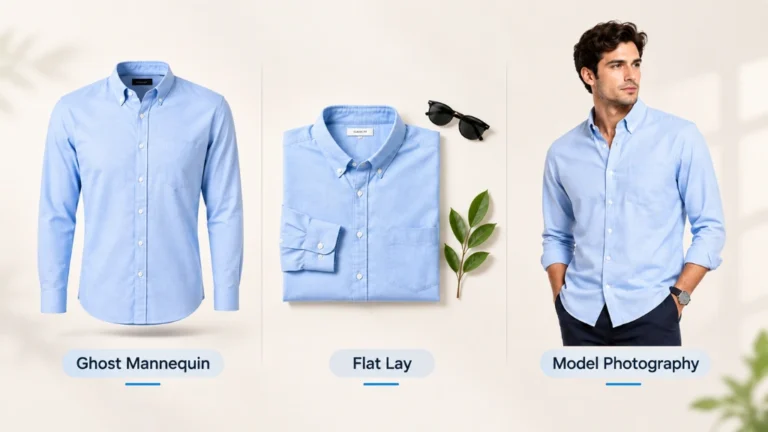
If you sell clothing online, you’ve probably faced this question: should this shirt sit on a ghost mannequin, lie flat on a table, or be worn by a model? Ghost mannequin vs flat lay vs model photography sounds like a small styling choice. It isn’t. Your photo format shapes how shoppers judge fit, quality, and price, before they read a single word of your description. It also affects your conversion rate, your return rate, and your budget.
There’s no single right answer for every store. A jewelry brand and a streetwear label aren’t solving the same problem. But there is a right answer for your catalog, your customer, and your stage of growth. This guide will help you find it.
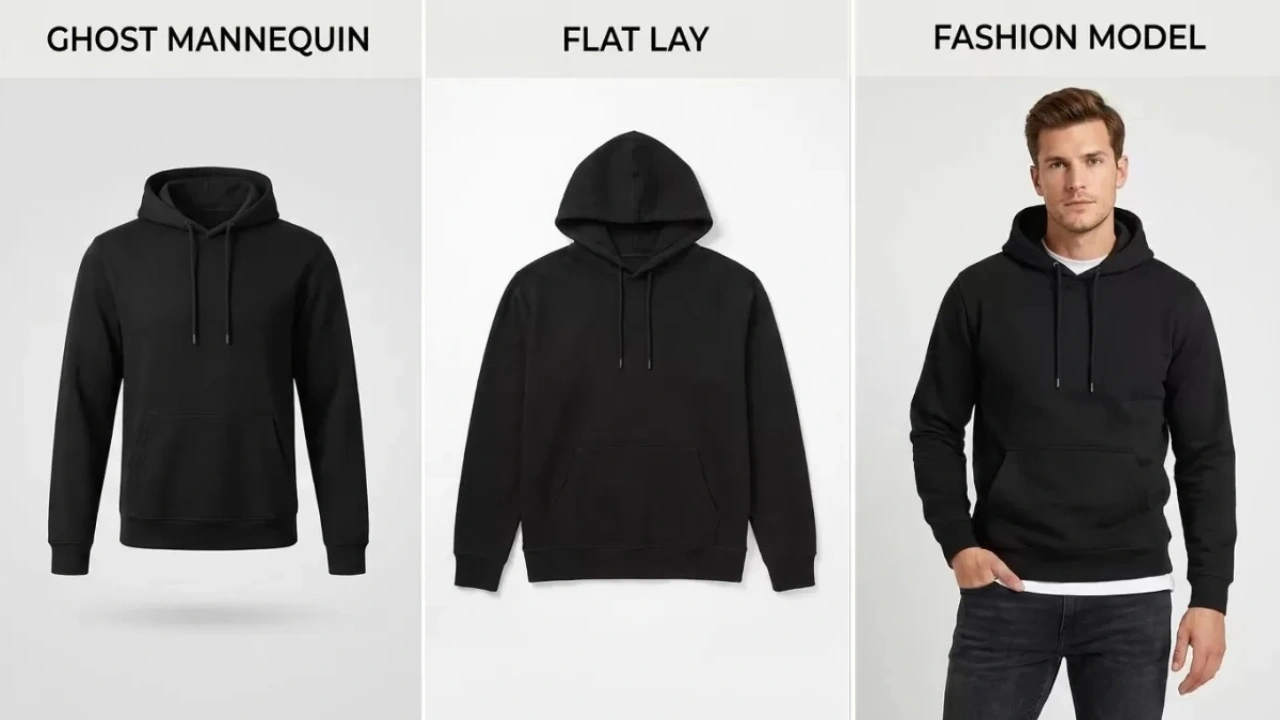
We’ll break down what each format is, what it costs, what the data shows, and which product types perform best in each style. By the end, you’ll have a simple framework for choosing, or combining, these three formats instead of guessing.
Why This Decision Matters More Than You Think
Online shoppers can’t touch fabric or try on a fit. Photos are their only substitute for that. Research on shopping behavior shows that product images are one of the biggest factors in a purchase decision, right up there with price and reviews. Many studies find that most shoppers rank product photos as the single most important part of a product page, ahead of reviews and even price.
So this isn’t a cosmetic choice. It’s a conversion lever. Get it wrong, and you’ll see higher bounce rates, more “how does this fit” questions from customers, and more returns. Get it right, and you reduce hesitation at the exact moment a shopper decides to buy.
Let’s look at each format on its own.
What Is Ghost Mannequin Photography?
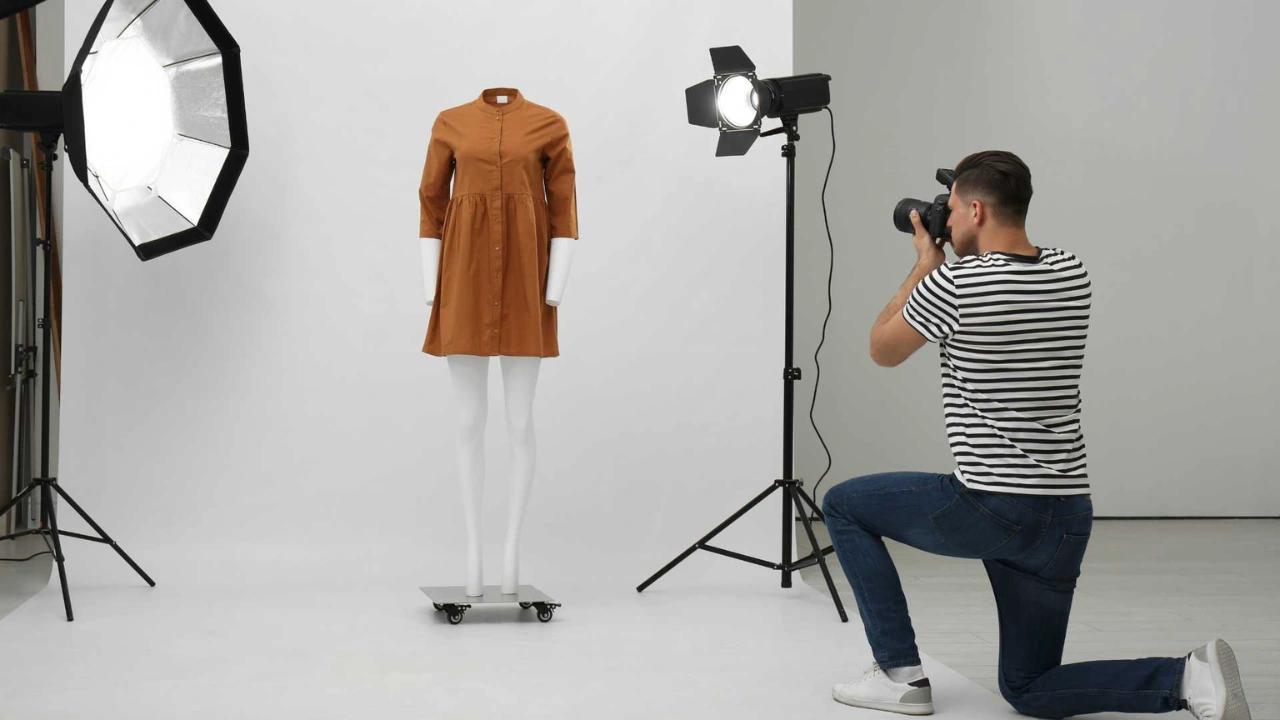
Ghost mannequin photography (also called the “invisible mannequin” shot) shows a garment with its natural shape, but with no model or mannequin visible. The item looks like it’s floating, holding its real volume, with nothing else pulling focus.
This isn’t one photo. It’s usually a blend of several shots, often including a separate neckline or collar shot added in during editing. That’s why this format depends so much on the quality of the retouching. A rushed edit shows rough edges, mismatched lighting, or a gap where the collar should be. It looks unprofessional fast.
Where it wins:
Shows true shape and structure, without a model’s body type changing the picture
Keeps full focus on the product, which suits brands that compete on craftsmanship
The standard for wholesale, B2B catalogs, and marketplaces like Amazon
Scales well once your setup is dialed in, so shooting hundreds of SKUs a day is realistic
Where it falls short:
Shoppers still can’t tell how it fits a real body, so sizing doubt stays high
Needs skilled editing. This is the format most sensitive to post-production quality, which is why many brands outsource it to a photo retouching company
Doesn’t say much about lifestyle or brand personality on its own
Clipping Area works with apparel brands on exactly this problem. We take a solid mannequin or on-model base shot, then handle the ghost effect, neckline blending, and shape correction so the final image looks seamless, not obviously stitched together. In this format, the editing is often what makes or breaks the shot.
What Is Flat Lay Photography?
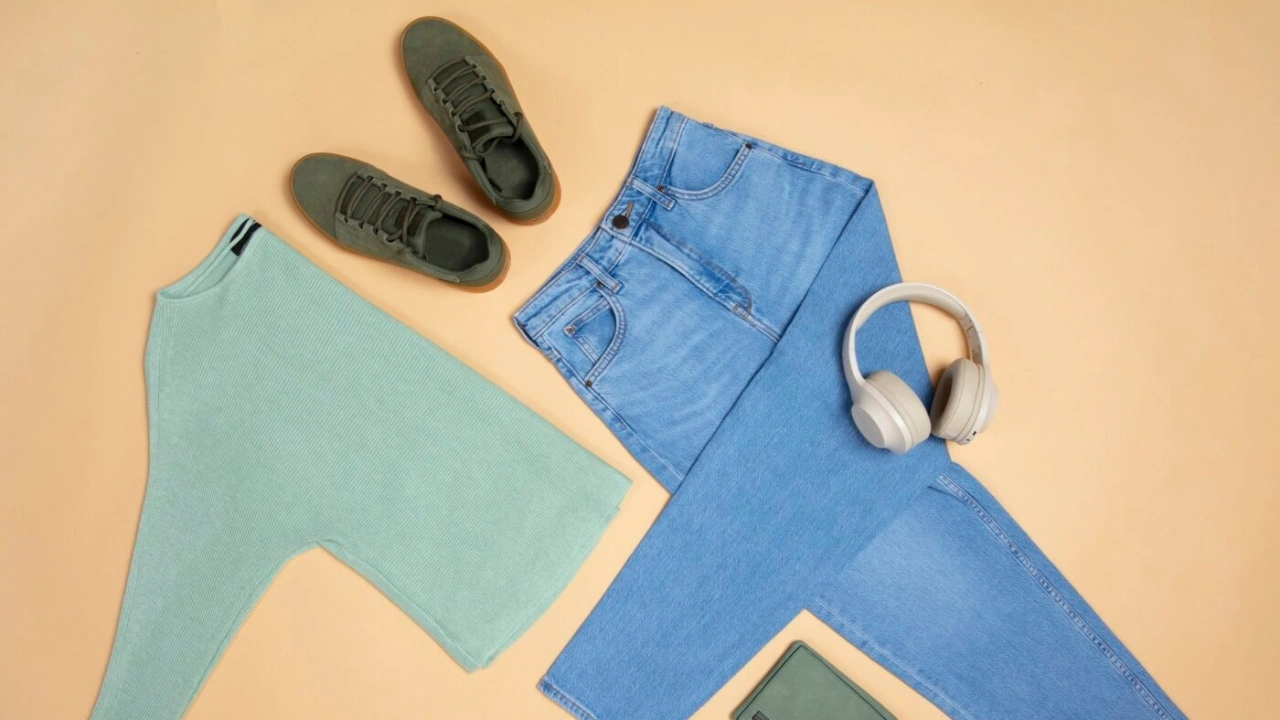
Flat lay photography is simple: the product lies flat on a surface, shot from directly above. It’s often styled with props, folds, or a full “outfit” layout. This is the look you see across fashion Instagram grids and minimalist online shops. Clean backgrounds, open space, sometimes a full outfit arranged in one frame.
Flat lays are popular for good reason. They’re fast and cheap compared to model shoots, and they look great on social platforms where the image itself needs to stop a scroll.
Where it wins:
Cost-efficient. No model fees, and shoot time per item is fast
Performs well on Instagram, Pinterest, and TikTok Shop
Works great for accessories, folded knitwear, and detail-heavy items like bags and jewelry
Flexible for storytelling. You can group a full outfit in one shot, which helps with upsells
Where it falls short:
Gives almost no sense of fit or drape, a real problem for blazers, dresses, or tailored pants
Styling quality swings a lot. A weak flat lay looks flat in the other sense too: lifeless
Shadows and wrinkles from the setup need careful cleanup, especially for marketplaces with strict background rules
What Is Model Photography?
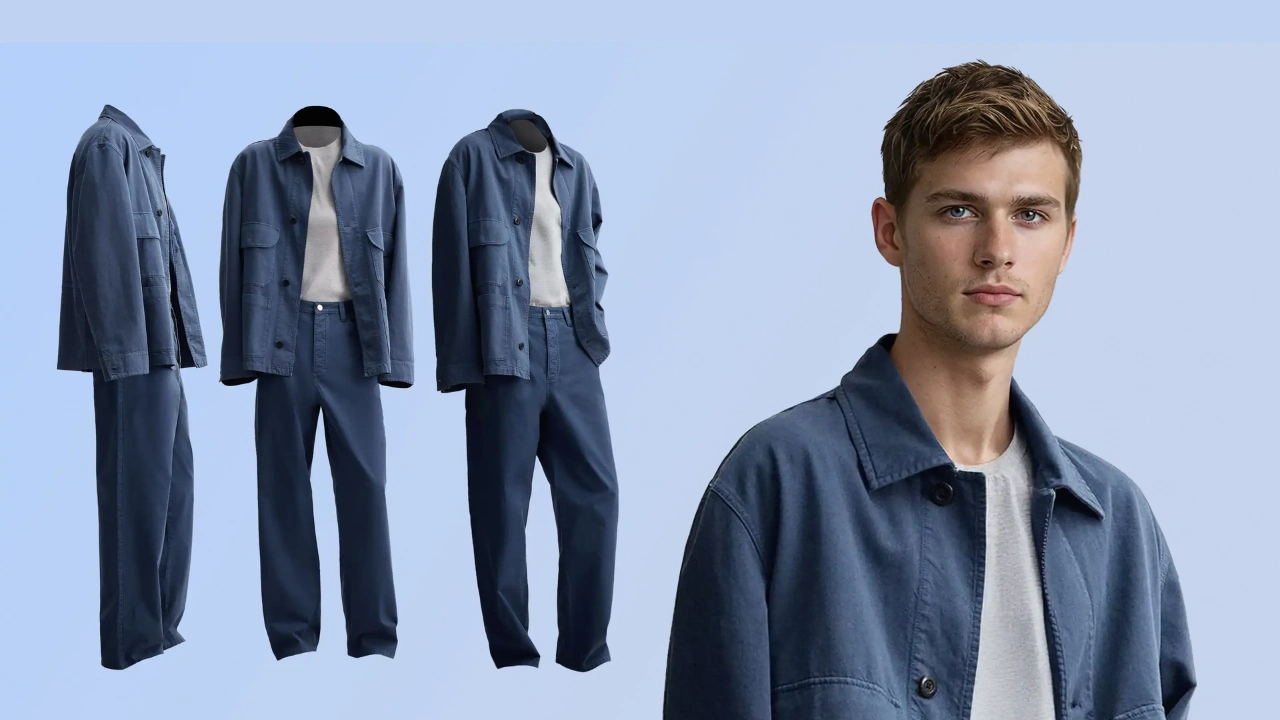
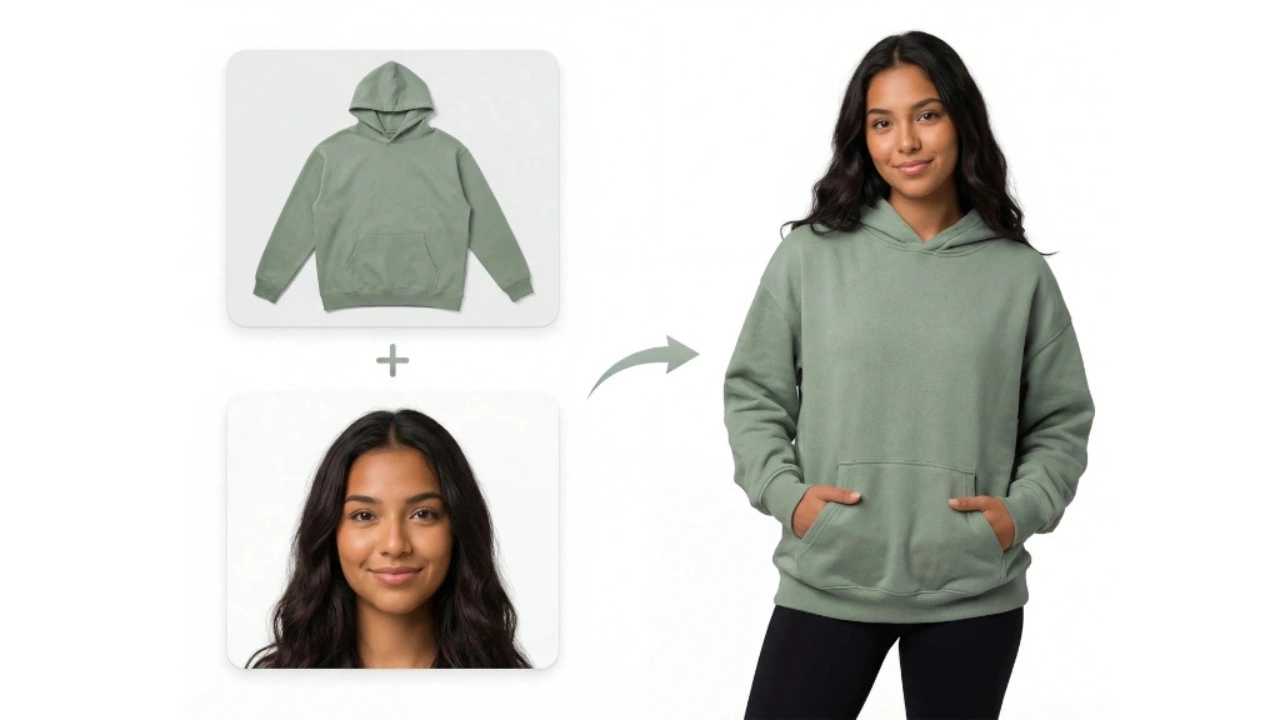
Model photography is the most immersive format. A real person wears the garment, and the shot shows fit, movement, and proportion, sometimes with a lifestyle setting. This ranges from a plain studio shot to a fully styled editorial or lifestyle photo.
Where it wins:
Answers the biggest question in apparel shopping: “how will this look on a real body.” This directly cuts down on fit-related returns, one of the biggest costs in fashion ecommerce
Builds brand identity. A well-cast shoot shows who the brand is for, not just what the product is
Supports size-inclusive marketing when brands shoot the same item on different body types, a trust signal that matters more each year in markets like the US, UK, and Australia
Essential for anything where fit and movement are the whole point: activewear, swimwear, dresses, denim
Where it falls short:
The most expensive and slowest format. Model fees, styling, hair and makeup, and studio time all add up
Brings in variables outside the product itself. If a shopper doesn’t relate to the model or the mood of the shot, it can work against you
Harder to keep consistent across a big catalog. Lighting, pose, and retouching standards need tight control
Flat Lay Photography Vs Mannequin Photography
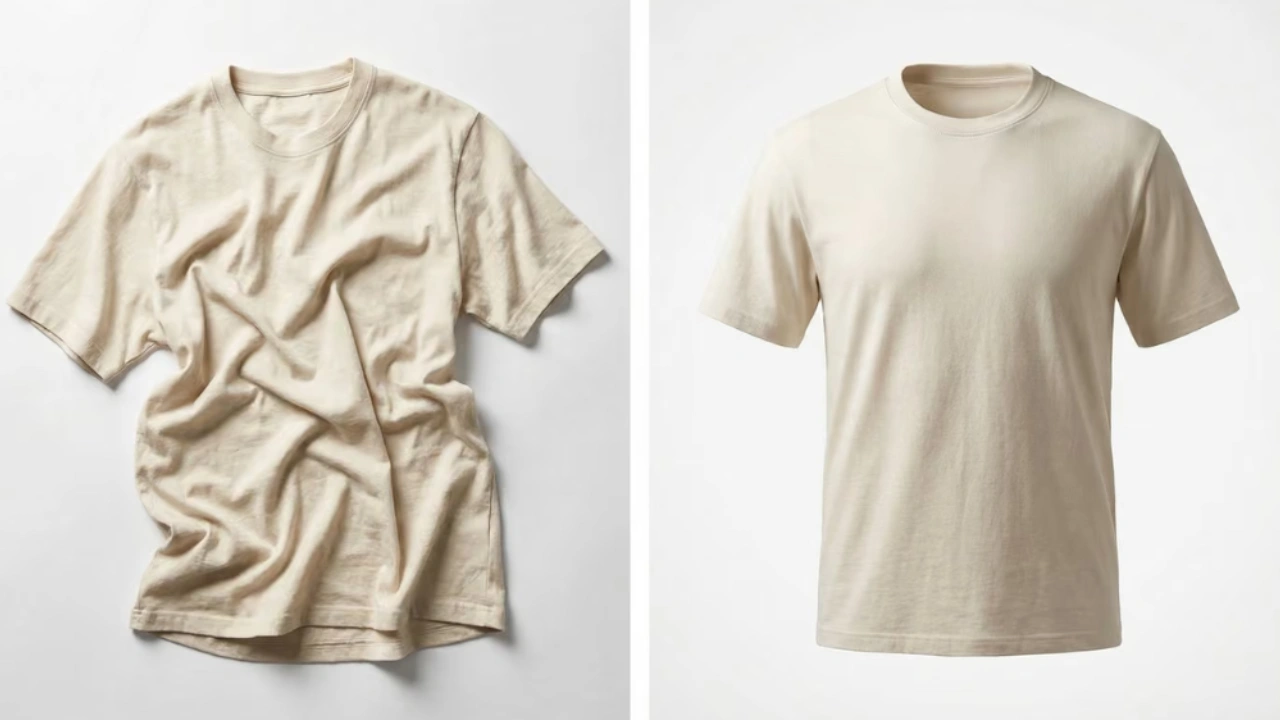
Flat lay photography shows products laid flat on a surface, styled from a top down angle to highlight fabric texture, patterns, and layout. It works well for casual, lifestyle, or accessory focused brands wanting an editorial feel. Ghost mannequin photography, on the other hand, shows garments in 3D form with a hollow, invisible body effect, giving customers a true sense of fit, shape, and drape as if worn.
It suits apparel brands wanting a professional, consistent, ecommerce ready look. Flat lay feels stylized and social media friendly, while ghost mannequin feels structured and sales focused. Many brands combine both to balance storytelling with product clarity.
What the Data Actually Says About Conversion for eCommerce

Here’s the honest answer: no single format wins across the board. The best format depends on the product type and where the image sits in the shopper’s journey.
Primary listing images (the thumbnail, the first photo): ghost mannequin and clean model shots on white backgrounds tend to beat flat lays here. They’re easier to scan at a glance, and they match what shoppers expect from platforms like Amazon and Zalando.
Fit-critical items: dresses, fitted tops, denim, activewear, swimwear all benefit from at least one model shot in the gallery. Case studies and A/B tests from fashion retailers show that adding a model shot to a listing that only had flat lay or ghost mannequin images can lift conversion and cut fit-related returns, because it removes the shopper’s biggest doubt.
Structure-forward items: blazers, coats, and tailored pieces where silhouette matters most. Here, ghost mannequin photography often matches or beats flat lay, since it keeps the 3D shape that flat lay can’t show.
Accessories and flat goods: bags, jewelry, scarves, folded knitwear. Flat lay holds up well here, especially paired with a detail or on-model shot, since these items don’t carry the same fit-doubt problem as apparel.
Social commerce and discovery: flat lay and lifestyle model shots beat plain ghost mannequin images, because their job is to stop a scroll, not just show the product clearly.
The real pattern here isn’t “pick one format.” It’s “match the format to the job the image needs to do.”
The Real Answer: Most High-Converting Stores Use All Three
Look at how mature fashion brands build their product galleries, and you’ll notice a pattern. They rarely lean on one format alone. A strong gallery for a fitted garment might look like this:
First image: a clean ghost mannequin or plain-background model shot, for instant clarity
Second and third images: on-model shots, front and back, ideally on more than one body type
Fourth image: a styled flat lay or close-up showing fabric texture or stitching
Fifth image: a lifestyle shot, for emotional connection
This mix lets each format do the job it’s actually good at. It also gives you flexible assets across channels: the ghost mannequin shot works for Amazon and Google Shopping, the model shots work on your product page and paid social, and the flat lay makes a great standalone Instagram or Pinterest post.
Cost and Turnaround: What to Actually Budget For
Budget usually drives this decision more than anything else. Here’s a practical breakdown.
Flat lay: Lowest cost per shot. Minimal crew needed. Editing is mostly background cleanup, shadow correction, and color correction, which is fast to run at scale.
Ghost mannequin: Moderate shooting cost (a mannequin, sometimes a stand-in model for extra shots), but the real cost is in the editing. Good ghost mannequin work needs a skilled retoucher for neckline blending, shape correction, and shadow work. This is the format most often outsourced, since doing it well in-house at volume is genuinely hard.
Model photography: The highest total cost, once you add model fees, styling, hair and makeup, and studio or location time. Editing still matters (skin retouching, color grading, consistent backgrounds), but the shoot day itself is the bigger expense.
For brands managing hundreds or thousands of SKUs a season, this is usually where a hybrid approach makes sense: shoot efficiently in-house or with a local studio, then hand the labor-heavy editing work, ghost mannequin compositing, background removal, color matching, to a specialized partner.
This kind of volume editing is exactly what Clipping Area was built for. We take raw studio shots, flat lay, mannequin, or on-model, and turn them into consistent, marketplace-ready images at a per-image rate, so brands don’t need to build an in-house retouching team from scratch.
You might also read this resourceful article
Choosing the Right Format for Your Product Category
Use this as a quick guide:
Structured outerwear, blazers, coats: ghost mannequin first, model shot second
Dresses, fitted tops, denim, activewear, swimwear: model photography is close to essential, paired with a ghost mannequin or plain-background shot as the primary image
Knitwear, casual basics, t-shirts: flat lay or ghost mannequin both work; test what fits your brand look
Bags, jewelry, accessories: flat lay as the main shot, with a detail or on-model shot as backup
Loungewear and sleepwear: model photography works strongly here, since comfort and fit are the whole sell
B2B or wholesale catalogs: ghost mannequin is close to expected, since buyers care about construction and consistency across the range, not lifestyle appeal
Common Mistakes That Undercut Any Format
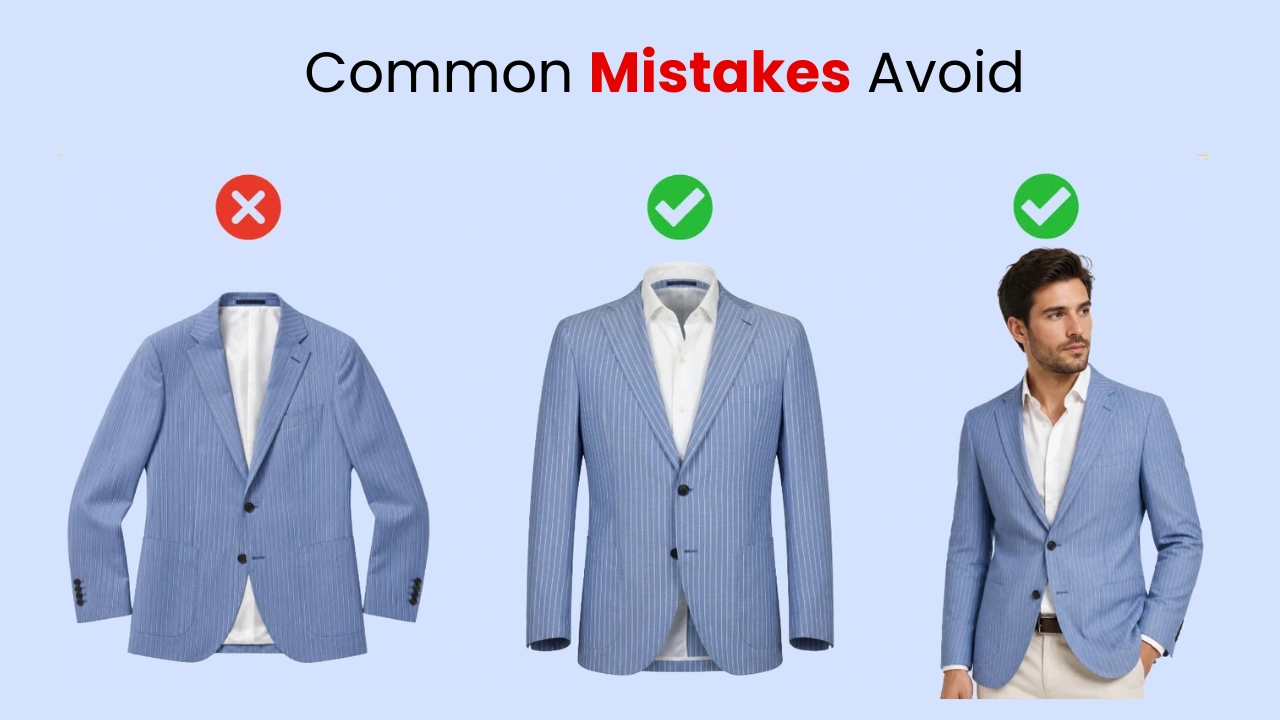
No matter which style you pick, a few mistakes will quietly hurt conversion:
Inconsistent lighting and color across your catalog. If one product looks warm and the next looks cold and flat, shoppers trust the store less, even without noticing why
Poor background removal. Rough edges on a ghost mannequin shot, or a visible shadow line on a flat lay, reads as unprofessional, even on an otherwise good photo
Skipping the second angle. One front-facing shot, in any format, leaves too much unclear. Back views, side views, and close-ups all reduce hesitation
Over-retouching model shots. Heavy skin smoothing or unnatural proportions break trust fast, especially with younger shoppers who spot over-editing quickly
Not testing on mobile. Most ecommerce traffic is mobile. A flat lay with fine detail that looks great on a desktop screen can turn into a blur on a phone if it isn’t cropped right
Frequently Asked Questions
Does ghost mannequin photography work for every garment type?
It works best on structured items with a clear shape, like jackets, shirts, and sweaters. It’s harder to pull off on soft, drapey fabric or asymmetrical designs, where the “invisible body” effect can look off without skilled retouching.
Is flat lay photography enough on its own for an apparel store?
For a small accessories brand, maybe. For general apparel, flat lay alone usually leaves too much fit doubt. That tends to show up as higher returns rather than lower sales, since unsure shoppers often buy two sizes and send one back.
How many images should a product listing have?
Most guidance points to five to eight images per listing: one clean primary shot, one or two model shots if the category needs it, a detail or texture shot, and ideally a size-reference image.
Should I outsource ghost mannequin editing or do it in-house?
If you’re shooting fewer than a few dozen SKUs a month, in-house can work with the right software and a patient editor. Past that volume, outsourcing to a post-production studio is usually cheaper than hiring and training your own team, since this format has a steep learning curve.
Does model photography always beat ghost mannequin for conversion?
No. For fit-critical items, it usually helps. For structure-forward items or accessories, ghost mannequin or flat lay can perform just as well, sometimes better, since fit isn’t the shopper’s main question there.
The Bottom Line
Ghost mannequin, flat lay, and model photography aren’t competing for one winner. They’re three tools for three different jobs: clarity, context, and connection. Brands that convert best rarely bet everything on one style. They match the format to the product, layer formats within a gallery when budget allows, and keep editing quality consistent across the whole catalog, since even great photography looks amateurish with sloppy retouching behind it.
If post-production, not the shoot itself, is your bottleneck as your catalog grows, that’s fixable. Clean ghost mannequin compositing, consistent background removal, and color-matched editing across hundreds of SKUs is the kind of volume work Clipping Area handles every day, so your team can focus on shooting and styling while the editing keeps pace.
Get Started With Clipping Area
If your ecommerce product images look inconsistent, revisions are slowing your team down, or post-production is holding back your next launch, Clipping Area can help. We provide premium photo retouching and post-production services designed to keep your product visuals clean, consistent, accurate, and ready for ecommerce.
Whether you need ghost mannequin editing, background removal, clipping path, color correction, apparel retouching, or high-volume image processing, our team can help create a reliable workflow that fits your production needs.
Send us a small batch of images to get started. We’ll show you the quality, consistency, and attention to detail you can expect from a professional post-production partner.