The Pre-Launch Visual Audit Most Clothing Brands Skip
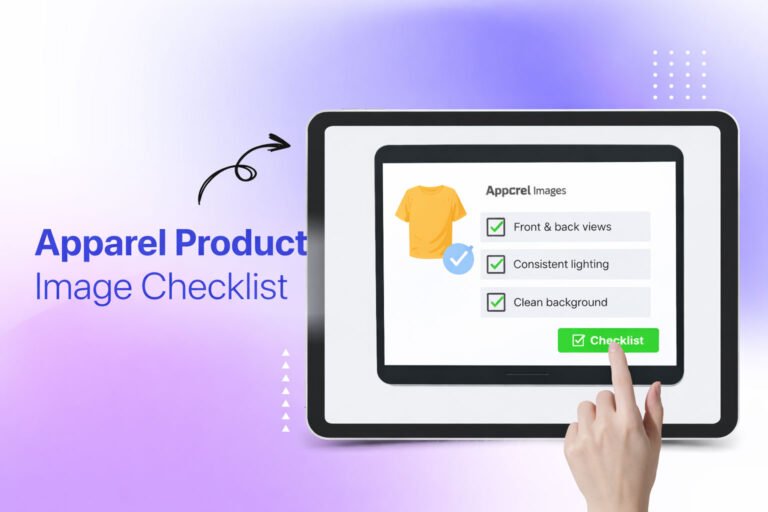
An apparel product image checklist ensures your collection launches with consistent color, clear fabric texture, realistic garment shape, and conversion-ready presentation.
Launching a new collection is exciting.
New designs.
New campaign.
New revenue opportunity.
But here’s what many clothing brands underestimate:
Collections rarely underperform because of the product.
They underperform because of the presentation.
Before you activate ads, send email campaigns, or post your launch across social media, your product images must pass a structured visual audit.
Because in fashion ecommerce, customers don’t touch first.
They look first.
And what they see determines whether they trust your brand enough to buy.
A single inconsistency in color.
A slightly unrealistic silhouette.
A fabric texture that looks unclear or over-edited.
Individually, they seem small.
Collectively, they create hesitation.
And hesitation reduces conversion.
That’s why a pre-launch visual system isn’t optional for scaling apparel brands.
It’s a revenue safeguard.
Why a Product Image Checklist Matters
When a collection launches, buyers evaluate:
-
Color accuracy
-
Fabric texture
-
Garment shape
-
Brand consistency
-
Professionalism
If even one of those feels “off,” hesitation begins.
And hesitation reduces:
-
Conversion rate
-
Average order value
-
Return confidence
We’ve already discussed how weak presentation affects performance in:
-
Why Clothing Product Photos Don’t Convert
-
Why Apparel Product Colors Look Wrong Online
-
Why Online Clothing Stores Get High Return Rates
A pre-launch checklist prevents those problems before they impact revenue.
✅ Section 1: Color Accuracy Check
Before publishing any product:
Ask:
-
Do whites look truly white?
-
Do blacks appear deep and natural?
-
Do similar shades match across products?
-
Is lighting consistent between SKUs?
Color inconsistency is one of the biggest silent trust killers in fashion ecommerce.
Even small shifts can increase returns and reduce conversion.
If your collection includes similar tones (beige, cream, taupe, charcoal), consistency matters even more.
✅ Section 2: Fabric Texture Clarity
Zoom into your images.
Can customers clearly see:
-
Fabric weave?
-
Stitching details?
-
Thickness and structure?
Over-smoothing removes realism.
Under-editing reduces clarity.
Your goal is:
Clear — not artificial.
Texture clarity directly impacts perceived quality.
And perceived quality impacts pricing power.
✅ Section 3: Garment Shape & Structure
Whether you use model, flat lay, or ghost mannequin photography:
Ask:
-
Does the garment look natural?
-
Are sleeves aligned properly?
-
Is the silhouette realistic?
-
Are collars and hems balanced?
Distorted shape creates unrealistic expectations.
We’ve explored this in
Why Ghost Mannequin Photos Look Unprofessional.
Shape realism reduces “not as expected” returns.
✅ Section 4: Background & Shadow Consistency
Look at your entire collection grid view.
Ask:
-
Do shadows look similar across SKUs?
-
Is brightness balanced?
When collections look visually inconsistent, brands feel smaller and less premium.
Consistency builds trust.
Trust improves conversion.
✅ Section 5: Multi-Angle Coverage
Before launch, ensure every product includes:
-
Front view
-
Back view
-
Side or angle view
-
Close-up detail
-
Zoom-enabled clarity
Customers can’t touch your product.
Images must replace physical interaction.
Incomplete galleries increase hesitation.
The Mistake Most Brands Make
They check if images “look good.”
They don’t check if images:
✔ Communicate clearly
✔ Match brand tone
✔ Align across SKUs
✔ Remove buyer doubt
“Looks good” is subjective.
Conversion-ready is strategic.
Key Takeaway
Before launching a new apparel collection, your product images must pass a structured visual checklist covering color accuracy, texture clarity, garment shape, background consistency, and image completeness.
Because in online fashion, presentation determines performance.
A strong collection deserves strong visual execution.
The Advanced Pre-Launch Image System for Scaling Brands
If you manage more than 50–100 SKUs per collection, a simple checklist isn’t enough.
At scale, you need a system.
Because the biggest launch problems don’t happen at the single-product level.
They happen at the collection level.
And when inconsistencies show up across 200+ SKUs, they quietly damage brand perception.
Step 1: Collection-Wide Color Calibration
Don’t review products individually.
Open your entire collection in grid view.
Ask:
-
Do all whites match?
-
Do similar tones (beige, taupe, charcoal) look consistent?
-
Does lighting shift between batches?
-
Do black garments look equally deep across SKUs?
Color inconsistency is rarely obvious on one product.
It becomes visible across a collection.
As explained in Why Apparel Product Colors Look Wrong Online, even subtle lighting shifts can distort customer expectations and increase return rates.
Consistency reduces doubt.
Doubt reduces conversion.
Step 2: Cross-Collection Visual Alignment
Many brands focus only on the current launch.
But customers browse across categories.
Compare:
-
New collection vs previous collection
-
Studio shoot vs outdoor shoot
-
Model photos vs ghost mannequin photos
If tone and lighting differ too much, your store feels fragmented.
We’ve already discussed how inconsistency affects performance in Why Fashion Brands Lose Sales Because of Bad Product Images.
Brand trust is built across the entire store — not one product page.
Step 3: Ghost Mannequin & Shape QA
Before launch, review silhouette consistency:
-
Are waists naturally shaped?
-
Are shoulders proportionate?
-
Are collars symmetrical?
-
Do garments look realistic when compared side-by-side?
Unnatural shape exaggeration may increase clicks — but it can increase returns later.
We covered this risk in Why Ghost Mannequin Photos Look Unprofessional.
Realistic presentation reduces “not as expected” complaints.
Step 4: Zoom & Detail Inspection
Most buyers zoom.
Before launch:
-
Test zoom quality on desktop and mobile
-
Check stitching visibility
-
Ensure fabric texture remains sharp
-
Confirm no compression artifacts
Low-quality zoom images reduce perceived value.
Texture clarity supports premium pricing.
This connects directly to what we discussed in Why Clothing Product Photos Don’t Convert — buyers need visual confidence.
Step 5: Ad Alignment Check (Before Campaign Goes Live)
One of the biggest launch mistakes:
Ads go live before product page visuals are aligned.
Before launching campaigns, ask:
-
Does the product page image match ad brightness?
-
Is color identical?
-
Is styling consistent?
If ad creative feels premium but product page feels flat, trust breaks.
We explored this dynamic in Why Your Clothing Ads Don’t Convert (Image Problems Brands Ignore).
Expectation mismatch hurts both conversion and retention.
Step 6: Return-Prevention Review
Before launching a collection, ask:
-
Would any product appear different in natural light?
-
Is fabric thickness clearly visible?
-
Does shape reflect real fit?
-
Could any image exaggerate structure?
As discussed in Why Online Clothing Stores Get High Return Rates, expectation gaps are often visual.
Launch clarity reduces refund risk.
Refund reduction protects margins.
The Launch Rule Most Brands Ignore
Don’t ask:
“Do these images look good?”
Ask:
“Do these images remove uncertainty?”
That shift changes everything.
Because in fashion ecommerce:
Attractive images drive clicks.
Accurate images drive retention.
And retention drives profit.
Key Takeaway
A successful apparel launch requires more than strong photography.
It requires a structured visual system that ensures:
✔ Collection-wide consistency
✔ Accurate color calibration
✔ Realistic garment shape
✔ Clear fabric texture
✔ Ad-to-product alignment
When images are standardized before launch, conversion improves and return risk decreases.
And that’s what scaling brands need.
Building a Repeatable Visual System for Every Launch
A checklist is helpful.
But scaling clothing brands don’t rely on checklists alone.
They build systems.
Because if you launch 4–8 collections per year, visual inconsistency compounds fast.
And once inconsistency spreads across categories, it becomes difficult to reverse.
The goal isn’t to fix images after launch.
The goal is to prevent visual problems before they go live.
Step 1: Create a Visual Standard Guide
Before editing begins, define:
✔ Color temperature reference
✔ Exposure range
✔ Shadow density level
✔ Background brightness value
✔ Fabric texture clarity threshold
✔ Shape realism standard
Without defined benchmarks, editing becomes subjective.
Subjective editing leads to:
-
Color drift
-
Lighting variation
-
Inconsistent silhouette correction
We’ve already seen how color inconsistency impacts performance in
Why Apparel Product Colors Look Wrong Online.
A written standard eliminates guesswork.
Step 2: Implement Pre-Publish Quality Control
Before publishing any SKU:
Review:
-
Grid consistency
-
Zoom clarity
-
Shape alignment
-
Color match with similar SKUs
-
Mobile presentation
This quality check prevents the issues discussed in
Why Clothing Product Photos Don’t Convert.
Most conversion problems begin with small visual doubts.
Removing doubt before launch protects performance.
Step 3: Align Editing With Return-Prevention Strategy
If your return rate is above industry comfort levels, your visual system must reflect that.
Before approving images, ask:
-
Does fabric thickness look accurate?
-
Is the silhouette realistic?
-
Is any color slightly exaggerated?
As covered in
Why Online Clothing Stores Get High Return Rates,
expectation gaps are usually visual.
A pre-launch review focused on accuracy reduces refund risk.
Step 4: Ensure Cross-Team Alignment
One of the most overlooked issues:
Marketing and editing operate separately.
Before launch:
-
Ad creatives should match product page visuals
-
Social imagery should align with catalog tone
-
Influencer visuals should not distort expectations
We explored this in
Why Your Clothing Ads Don’t Convert (Image Problems Brands Ignore).
If ads over-promise visually, product pages must confirm that promise.
Consistency across channels protects trust.
Step 5: Decide When to Systemize Internally — or Outsource
At smaller scale, manual oversight may work.
But when you manage:
-
300+ SKUs
-
Frequent collection drops
-
Paid acquisition channels
-
Multiple editing batches
Consistency becomes difficult without process.
This is where the comparison in
DIY vs Professional Apparel Photo Editing: Cost, ROI & What Actually Saves You Money
becomes relevant.
Professional systems are built around:
✔ Defined standards
✔ Multi-layer quality control
✔ Color calibration workflows
✔ Batch consistency
✔ Fast turnaround
Scaling brands benefit from process — not just effort.
The Launch Framework Used by Growing Brands
Before every collection launch, successful brands run this 5-step review:
1️⃣ Color calibration check
2️⃣ Texture clarity inspection
3️⃣ Shape realism review
4️⃣ Collection-wide consistency audit
5️⃣ Ad-to-product alignment verification
Only after passing all five do they activate campaigns.
This prevents:
-
Post-launch re-editing
-
Ad inefficiency
-
Conversion dips
-
Return spikes
The Bigger Picture
A product image checklist is not about perfection.
It’s about predictability.
Predictable visual quality leads to:
✔ Stronger brand perception
✔ Higher conversion consistency
✔ Lower return rates
✔ Faster campaign execution
And over time, that creates operational stability.
Final Takeaway
Launching a clothing collection without a structured visual system is risky.
At scale, small inconsistencies become revenue leaks.
A repeatable image standard — supported by quality control and alignment across teams — protects conversion, reduces returns, and strengthens brand trust.
In fashion ecommerce:
Good images launch products.
Consistent systems launch growth.
Case Study: How One Apparel Brand Improved Collection Launch Performance by Standardizing Product Images
Brand Profile
Business Type: Growing women’s apparel brand
Platform: Shopify
Monthly Traffic: ~95,000 visitors
Collection Size: 120–180 SKUs per launch
Previous Process: Shoot → Edit → Publish (no formal visual QA system)
🚨 The Problem Before Launch
The brand wasn’t struggling with design.
They were struggling with performance consistency.
During previous launches, they noticed:
-
Conversion fluctuated between collections
-
Some SKUs sold fast, others stalled
-
Return rates increased after major drops
-
Ads performed well initially but tapered quickly
After reviewing analytics and customer feedback, patterns emerged:
-
Slight color variation between batches
-
Inconsistent brightness across product pages
-
Ghost mannequin shape differences
-
Fabric texture over-smoothed in some categories
None of these issues were obvious individually.
But together, they weakened brand trust.
We’ve discussed how these small inconsistencies impact results in:
-
Why Apparel Product Colors Look Wrong Online
-
Why Clothing Product Photos Don’t Convert
-
Why Online Clothing Stores Get High Return Rates
The brand didn’t need better products.
They needed visual consistency.
🔧 The System Applied Before the Next Collection Launch
Instead of reshooting everything, they implemented a structured pre-launch visual system.
Step 1: Color Calibration Across Entire Collection
All SKUs were reviewed in grid view.
Tone mismatches were corrected to ensure:
✔ Whites matched
✔ Blacks were consistent
✔ Neutrals stayed balanced
Step 2: Texture & Zoom Quality Audit
Close-up clarity was standardized.
Over-smoothed fabrics were corrected to restore natural texture.
Zoom performance was tested on both desktop and mobile.
Step 3: Ghost Mannequin Shape Standardization
Silhouettes were reviewed side-by-side.
Unnatural tapering and asymmetry were corrected to reflect realistic structure.
As explained in Why Ghost Mannequin Photos Look Unprofessional, silhouette distortion creates expectation gaps.
Step 4: Ad-to-Product Alignment
Before launching campaigns, product page images were compared to ad creatives.
Brightness, tone, and styling were aligned.
This prevented the mismatch issue discussed in Why Your Clothing Ads Don’t Convert.
📈 Results After Collection Launch
Without increasing ad spend:
-
Conversion rate increased from 2.0% → 2.6%
-
Return rate dropped from 19% → 14%
-
Average order value increased slightly
-
Product page engagement time improved
-
ROAS became more stable
Most importantly:
Revenue became more predictable across launches.
The founder said:
“We didn’t realize how much inconsistency was quietly hurting trust. Standardizing images made our brand feel more premium.”
🎯 Why It Worked
Because the brand stopped treating editing as a final step.
They treated it as a system.
Consistency created:
-
Visual confidence
-
Stronger perception of quality
-
Fewer expectation gaps
-
Lower return friction
And those improvements compounded.
FAQs
Why is product image consistency important when launching a clothing collection?
Product image consistency builds trust across a collection. When color, lighting, and garment shape vary between SKUs, customers perceive lower brand quality, which reduces conversion and increases return rates.
How can inconsistent product images affect collection launch performance?
Inconsistent product images create visual doubt. This lowers conversion rates, weakens ad performance, and increases refund risk due to mismatched expectations.
What should apparel brands check before launching a new collection?
Before launching, apparel brands should review color calibration, fabric texture clarity, garment shape realism, background consistency, zoom quality, and alignment between ad creatives and product pages.
Can improving product images increase collection conversion rate?
Yes. Standardizing product images across a collection improves trust and perceived professionalism, which increases conversion rate and stabilizes launch performance.
Does image optimization reduce clothing return rates?
Image optimization reduces return rates by aligning customer expectations with real product appearance, especially in color accuracy and garment structure.
Launching a New Collection Soon?
Before turning on ads, make sure your product images support your growth — not limit it.
If you manage 100+ SKUs per launch, small inconsistencies can quietly reduce conversion and increase return rates.
Instead of guessing, test your visual system.
Send us 2–3 images from your upcoming collection.
We’ll review them for:
✔ Color consistency
✔ Texture clarity
✔ Shape realism
✔ Collection alignment
✔ Launch-readiness
You’ll receive practical feedback — and if needed, a professionally optimized version to compare.
No contracts.
No obligation.
Just clarity before you scale.
👉 Request your pre-launch apparel image review and protect your next drop.