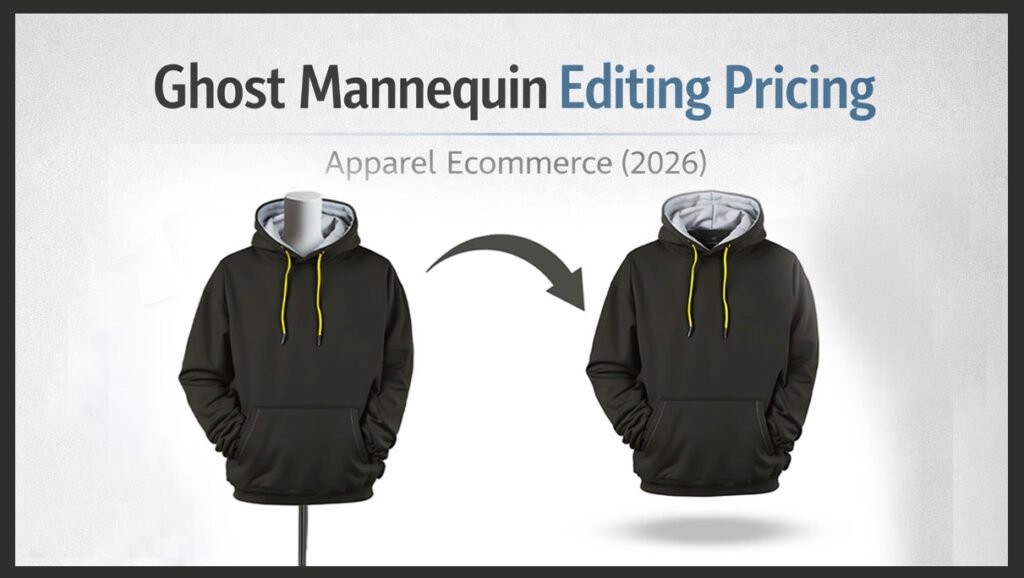
How Much Does Ghost Mannequin Editing Cost & What Really Affects the Price?
For apparel ecommerce brands, ghost mannequin editing pricing is one of the most confusing topics in 2026.
Some services charge extremely low rates.
Others charge significantly more — for what looks like the same result.
So sellers naturally ask:
-
How much does ghost mannequin editing cost?
-
Why do prices vary so much?
-
What am I actually paying for?
-
Is cheaper ghost mannequin editing worth it?
This guide explains ghost mannequin editing pricing for apparel ecommerce step by step, so you understand real costs, quality differences, and what affects pricing before choosing a service.
Who This Ghost Mannequin Pricing Guide Is For
This pricing guide is written for:
-
Apparel ecommerce brand owners
-
Fashion & DTC brands
-
Amazon and Shopify clothing sellers
-
Ecommerce managers handling product catalogs
-
Agencies outsourcing ghost mannequin editing
If you’re comparing ghost mannequin editing cost, this guide will help you:
-
Avoid cheap but risky services
-
Understand pricing differences
-
Choose the right quality level
-
Protect conversion and brand trust
Why There Is No “One Fixed” Ghost Mannequin Editing Price
Many sellers search for: “ghost mannequin editing price”
Expecting a single number.
In reality, ghost mannequin editing pricing depends on multiple variables, just like photography, manufacturing, or design.
Two images that look similar can require very different amounts of work.
That’s why professional services don’t use flat pricing blindly.
What Most Sellers Get Wrong About Ghost Mannequin Editing Cost
The biggest misconception is: “All ghost mannequin editing is the same.”
It’s not.
Pricing differences come from:
-
Editing depth
-
Apparel complexity
-
Accuracy requirements
-
Consistency standards
-
Platform expectations
Low-cost services often skip steps that sellers don’t notice immediately — but customers do.
Cheap vs Professional Ghost Mannequin Editing (Cost Reality)
Understanding price vs value is critical.
Low-Cost Ghost Mannequin Editing Usually Means:
-
Auto background removal
-
Basic mannequin removal
-
Fake or flat neck joints
-
Over-smoothed fabric
-
Minimal quality control
-
Inconsistent results across products
These services may look acceptable at first glance — but often lead to:
-
Lower conversion rate
-
Higher returns
-
Brand inconsistency
-
Re-editing costs later
Professional Ghost Mannequin Editing Pricing Covers:
-
Manual mannequin removal
-
Realistic neck joint reconstruction
-
Shape-accurate editing (no slimming)
-
Fabric texture preservation
-
Consistency across SKUs
-
Platform-specific checks
-
Quality control review
You’re paying for process, accuracy, and reliability, not just time.
Why Ghost Mannequin Editing Pricing Matters for Ecommerce ROI
Ghost mannequin editing is not a cost — it’s an investment.
Accurate, professional images:
-
Improve click-through rate
-
Increase conversion rate
-
Reduce customer confusion
-
Lower return rates
-
Strengthen brand credibility
Cheap editing that misrepresents products often costs more in lost sales than it saves upfront.
Pricing vs Turnaround Time: The Hidden Trade-Off
Another factor affecting ghost mannequin editing pricing is turnaround speed.
Faster delivery often means:
-
More editors per image
-
Shortcuts in quality checks
-
Less attention to detail
Professional services balance:
-
Speed
-
Accuracy
-
Consistency
Rushed editing increases risk.
Why Apparel Type Changes Ghost Mannequin Editing Cost
Not all clothing is equal.
A basic T-shirt costs less to edit than:
-
Jackets
-
Dresses
-
Hoodies
-
Layered garments
-
Structured apparel
Complex apparel requires:
-
More masking
-
More reconstruction
-
More texture work
-
More time per image
This directly impacts pricing.
Ghost Mannequin Editing Pricing Is About Risk Reduction
Professional pricing reflects:
-
Reduced rejection risk
-
Reduced return risk
-
Reduced rework
-
Reduced brand damage
When pricing is too low, risk is usually shifted to the seller.
Step 1: Image Review & Preparation (The Most Ignored Step)
Before any editing begins, professionals analyze the raw images.
What Editors Check First
-
Is the garment photographed correctly?
-
Is lighting consistent across images?
-
Are front, back, and inner neck shots available?
-
Are sleeves, hems, and collars clearly visible?
Why This Step Matters
Poor source images cause:
-
Fake neck joints
-
Distorted shapes
-
Excessive retouching
-
Unnatural results
A strong ghost mannequin image starts with correct preparation, not Photoshop.
Step 2: Base Background Cleanup & Rough Masking
Before mannequin removal, editors clean the image foundation.
What Happens in This Step
-
Initial background separation
-
Rough masking of the garment
-
Removal of visible distractions
-
Basic alignment correction
This is not the final cut-out — it’s groundwork.
Common Amateur Mistake
Using auto background removal and skipping refinement.
Professionals treat masking as a multi-stage process, not one click.
Step 3: Complete Mannequin Removal (Critical Step)
This is the core of the ghost mannequin editing process.
What “Complete Removal” Really Means
-
No visible mannequin edges
-
No neck rings or shoulder hints
-
No shadow revealing mannequin shape
-
No color reflection from the mannequin
How Professionals Do It
-
Manual masking around complex edges
-
Pixel-level cleanup
-
Careful reconstruction where the mannequin overlaps fabric
If this step fails, everything else fails.
Step 4: Neck Joint Creation & Inner Garment Reconstruction
This is where ghost mannequin editing becomes reconstruction, not removal.
Why Neck Joints Matter So Much
The neckline:
-
Defines fit perception
-
Affects realism
-
Is where buyers focus subconsciously
Professional Neck Joint Workflow
-
Extract inner neck image
-
Align fabric texture and stitching
-
Match lighting and shadow depth
-
Blend seamlessly with the outer garment
A good neck joint should look photographed, not edited.
Step 5: Garment Shape & Structure Correction
Once the mannequin is gone, the garment often needs structural refinement.
What Professionals Adjust (Carefully)
-
Shoulder alignment
-
Sleeve balance
-
Natural drape
-
Symmetry (without distortion)
What Professionals Never Do
-
Slim the garment
-
Stretch proportions
-
“Improve” fit unrealistically
Accuracy is more important than style in ecommerce.
Step 6: Fabric Texture & Detail Preservation
Clothing buyers rely on texture cues.
This Step Ensures:
-
Fabric grain remains visible
-
Stitching lines stay sharp
-
Wrinkles look natural
-
Material thickness feels realistic
Over-smoothing kills trust.
Professional editors preserve imperfections that feel real.
Step 7: Final Background Perfection
Now the background is finalized.
For Ecommerce-Ready Images:
-
Background is uniform and clean
-
No halos around edges
-
Shadows stay inside garment boundaries
-
Image looks clean at thumbnail size
This step is often what determines:
-
Approval vs rejection
-
Amateur vs professional appearance
Step 8: Consistency Check Across Product Sets
Single images don’t sell catalogs — consistent sets do.
Professionals Check:
-
Same scale across all products
-
Same angle and orientation
-
Same neck depth
-
Same lighting feel
Consistency improves:
-
Brand trust
-
Catalog professionalism
-
Conversion rate
Step 9: Platform-Readiness Validation
Before delivery, images are reviewed based on where they will be used.
Editors Ask:
-
Is this image safe for marketplaces?
-
Does it scale well on mobile?
-
Is it accurate enough to reduce returns?
-
Does it meet platform expectations?
This step separates generic editing from ecommerce editing.
Why Skipping Steps Breaks the Final Image
Many low-cost services:
-
Skip preparation
-
Rush mannequin removal
-
Fake neck joints
-
Ignore consistency
-
Deliver fast but flawed images
These images:
-
Look edited
-
Reduce trust
-
Increase returns
-
Damage brand perception
The ghost mannequin editing process is sequential — not optional.
Professional vs DIY Ghost Mannequin Editing Process (Honest Comparison)
Many apparel brands start with DIY editing to save money. Some succeed short term — most don’t scale.
DIY Ghost Mannequin Process (Reality)
-
Uses auto tools for background removal
-
Relies on basic masking
-
Creates flat or fake neck joints
-
Inconsistent results across products
-
High revision time as catalog grows
DIY works only for:
-
Very small catalogs
-
Non-critical listings
-
Temporary use
Professional Ghost Mannequin Process (What’s Different)
-
Manual mannequin removal at pixel level
-
Accurate neck joint reconstruction
-
Shape preservation (no slimming)
-
Fabric texture protection
-
Consistency across SKUs
-
Platform-readiness checks
Professional workflow is built for:
-
Scaling catalogs
-
Multi-platform selling
-
Brand trust and long-term performance
Red Flags That Signal Poor Ghost Mannequin Editing
Before trusting any editor or service, look for these warning signs:
❌ Visual Red Flags
-
Flat, paper-like garments
-
Obvious cut lines at the neckline
-
Over-smoothed fabric
-
Unnatural symmetry
-
Inconsistent scale between products
❌ Process Red Flags
-
No mention of workflow steps
-
“One-click” or “instant” ghost mannequin promises
-
No quality control stage
-
No apparel-specific examples
If a service can’t explain how they edit, results are unpredictable.
When Apparel Brands Should Outsource Ghost Mannequin Editing
Outsourcing makes sense when:
-
You upload products weekly or monthly
-
You manage dozens or hundreds of SKUs
-
You sell on multiple platforms
-
You want consistent brand visuals
-
You want to reduce returns and revisions
At scale, professional editing is usually more cost-effective than in-house DIY.
How the Right Editing Process Improves Ecommerce Performance
A proper ghost mannequin editing process does more than make images “look nice”.
It Directly Improves:
-
Click-through rate (clear silhouettes)
-
Conversion rate (accurate fit perception)
-
Customer trust (realistic presentation)
-
Return rate (correct expectations)
-
Brand credibility (professional consistency)
Platforms reward listings that convert well and reduce complaints.
Process Quality vs Speed: What Actually Matters
Speed is important — but process quality protects revenue.
Fast, poor editing:
-
Causes rework
-
Creates rejection risks
-
Damages trust
A structured process:
-
Reduces revisions
-
Saves time long term
-
Scales safely with growth
Professional brands choose repeatability over shortcuts.
How This Process Adapts Across Platforms
While the workflow stays the same, final validation changes depending on where images are used.
-
Marketplaces emphasize accuracy and compliance
-
Brand stores emphasize clarity and consistency
-
Mobile shoppers emphasize visibility and realism
A strong process adapts outputs without changing fundamentals.
Common Myths About Ghost Mannequin Editing (Debunked)
Myth: “Ghost mannequin editing is just background removal.”
Truth: It’s image reconstruction.
Myth: “Auto tools are good enough now.”
Truth: They fail on apparel complexity.
Myth: “Perfect-looking images convert better.”
Truth: Accurate images convert better.
Final Advice for Apparel Brands (2026)
Ghost mannequin editing is not a trend — it’s a standard.
Brands that succeed in apparel ecommerce:
-
Respect image accuracy
-
Follow structured processes
-
Maintain consistency
-
Treat visuals as business assets
Understanding the process helps you:
-
Choose better partners
-
Evaluate quality properly
-
Scale without visual chaos
Need Professional Ghost Mannequin Editing?
At Clipping Area, our ghost mannequin editing follows a structured, apparel-first workflow:
-
Complete mannequin removal
-
Natural neck joint reconstruction
-
Shape-accurate editing
-
Fabric texture preservation
-
Consistent results at scale
If you’re a clothing brand looking for clean, natural ghost mannequin edits at scale, Clipping Area offers professional ghost mannequin photo editing with fast turnaround and consistent quality.
👉 Start with a free ghost mannequin editing trial
See the process quality before you commit.