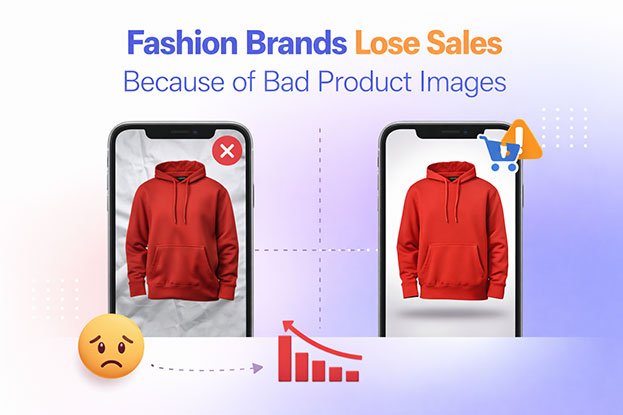
Fashion brands lose sales because of bad product images that fail to build trust and clearly show quality, color, and fit. The Problem Most Brands Don’t Know They Have
Most fashion brands don’t think they have an image problem.
They think they have a:
• traffic problem
• pricing problem
• ad problem
• competition problem
But in reality, many brands are losing sales before price, ads, or marketing even matter.
They’re losing sales because their product images are quietly working against them.
Why Bad Images Don’t Look Like the Real Problem
Bad product images are dangerous because they don’t fail loudly.
Your store doesn’t crash.
Your ads still run.
People still visit your site.
What you see instead is:
• low conversion
• high bounce rate
• people browsing but not buying
• carts abandoned
• few repeat customers
So brands start guessing.
They lower prices.
They increase ad spend.
They run discounts.
But sales don’t improve the way they should.
Because the real problem is still there:
the images are not doing their job.
In Fashion, Images Are the Product
Customers don’t touch fabric online.
They don’t feel weight.
They don’t try fit.
They decide using only one thing:
👉 what they see.
That means your product images must:
• explain the product
• show quality
• show shape
• show color
• build trust
If they fail at any of these, buyers hesitate.
And hesitation means:
no sale.
This is exactly why we explained earlier that clothing product photos don’t convert when images fail to communicate clearly.
How Bad Images Change How Buyers Feel (Without Them Knowing)
Buyers don’t think:
“These photos are bad.”
They feel:
• “This looks cheap.”
• “I’m not sure about this.”
• “Something feels off.”
And feeling beats logic every time.
Even if:
• the price is good
• the design is nice
• the brand looks okay
If the image creates doubt, the buyer leaves.
Bad images quietly:
❌ reduce desire
❌ increase risk
❌ lower trust
That’s how sales disappear without obvious warning signs.
Why Fashion Brands Misjudge Image Quality
Many brands judge images like this:
“Is it clear enough?”
Buyers judge images like this:
“Do I trust this?”
That’s a huge difference.
A photo can be:
• sharp
• high resolution
• technically okay
And still fail to sell.
Because selling images must do more than look clear —
they must feel reliable.
This is why professional fashion brands invest heavily in presentation, not just photography.
The Hidden Cost of “Good Enough” Images
“Good enough” images cost more than bad ones.
Why?
Because brands keep spending money on:
• ads
• influencers
• promotions
While conversion stays weak.
You’re paying to send traffic to a page that creates doubt.
And doubt kills ROI.
This is the same pattern we saw in:
• wrong colors
• unprofessional ghost mannequin photos
• inconsistent lighting
Each one alone seems small.
Together, they destroy trust.
Why New and Growing Brands Lose the Most
Big brands can survive image mistakes.
New and growing brands can’t.
When you’re not established:
• buyers don’t know you
• trust is fragile
• first impression matters
If your images look:
• inconsistent
• rushed
• cheap
Buyers don’t think:
“They’ll improve later.”
They think:
“I’ll shop somewhere safer.”
That’s how bad images block growth.
Key Takeaway:
Fashion brands lose sales because bad product images create doubt, reduce trust, and make good products feel risky — even when traffic and pricing are fine.
Images don’t just show products.
They decide whether buyers feel safe buying them.
How Bad Product Images Reduce Conversion (Real Buyer Behavior)
Bad product images don’t fail loudly.
They don’t crash your site.
They don’t stop ads from running.
They don’t show an error message.
They fail quietly — inside the buyer’s head.
This is the same pattern we explained in why clothing product photos don’t convert:
buyers don’t reject products logically, they reject them emotionally.
What Happens in a Buyer’s Mind When Images Are Bad
When a buyer lands on a product page, their brain asks silent questions:
• Is this good quality?
• Is this worth the price?
• Can I trust this brand?
• Will this look like the photo?
Bad images don’t answer these questions clearly.
So instead of excitement, the buyer feels:
• uncertainty
• hesitation
• risk
And risk stops purchases.
Why Buyers Leave Without Knowing Why
Most buyers won’t say:
“The image quality is bad.”
They just leave.
They think:
“I’ll check another store.”
“I’m not sure about this.”
“I’ll come back later.”
But “later” almost never happens.
This is why fashion brands see:
• high bounce rates
• short time on page
• low add-to-cart rates
And assume it’s a traffic or pricing problem.
When in reality, the image didn’t make the buyer feel safe.
How Small Image Problems Add Up to Big Losses
One issue alone might not kill the sale.
But fashion stores rarely have just one issue.
They often have:
• slightly wrong colors
• inconsistent lighting
• awkward ghost mannequin images
• messy backgrounds
• unclear fabric texture
Each one adds a small layer of doubt.
Together, they create:
“I don’t trust this.”
We broke these problems down individually in:
• why apparel product colors look wrong online
• why ghost mannequin photos look unprofessional
And when they stack together, conversion drops fast.
Why Bad Images Increase Cart Abandonment
Here’s a common pattern:
1️⃣ Buyer likes the product
2️⃣ Buyer scrolls through images
3️⃣ Something feels off
4️⃣ Buyer adds to cart
5️⃣ Buyer hesitates
6️⃣ Buyer leaves
Later, brands blame:
• shipping cost
• checkout flow
• payment options
But the hesitation started earlier —
when the images didn’t fully convince the buyer.
Images should remove doubt.
Bad images plant it.
Why Buyers Compare Images Before They Compare Prices
Most brands think price is the main deciding factor.
It’s not.
Buyers compare presentation first.
If a competitor shows:
• cleaner images
• clearer color
• better shape
• more consistency
Buyers assume:
“That brand is safer.”
Even if the price is higher.
This is why professional presentation often beats discounts —
a point we also explained in how professional apparel photo editing increases online sales.
Why Bad Images Hurt Repeat Sales and Brand Loyalty
Even if a buyer purchases once, bad images still hurt you.
If the product arrives and:
• looks different than the photo
• color feels off
• quality feels lower than expected
The buyer feels disappointed.
They may not complain.
They may not return.
But they won’t come back.
That’s how bad images silently destroy:
• repeat purchases
• brand loyalty
• lifetime value
Why Brands Keep Fixing the Wrong Things
Because image problems don’t look like image problems.
They look like:
• low conversion
• weak ads
• high returns
• poor growth
So brands:
increase ad spend
run promotions
change pricing
But sales don’t scale.
Because the core issue — trust — hasn’t been fixed.
And trust starts with images.
Key Takeaway
Bad product images reduce conversion by creating hesitation, uncertainty, and silent doubt — long before buyers think about price or checkout.
When images don’t clearly communicate quality, color, and shape, buyers don’t feel safe buying.
And when buyers don’t feel safe, sales stop.
How Professional Image Editing Stops Sales Loss and Builds Trust
Bad product images don’t just need to be “fixed.”
They need to be corrected in a way that restores confidence.
Because confidence — not beauty — is what sells clothing online.
Professional image editing isn’t about making products look flashy.
It’s about removing every visual reason a buyer might hesitate.
This is the same principle we discussed in why clothing product photos don’t convert — buyers don’t need perfect images, they need clear and believable ones.
How Editing Fixes the Exact Problems That Block Sales
When fashion brands lose sales because of images, it’s almost always due to one (or more) of these issues:
• unclear fabric texture
• wrong or inconsistent color
• awkward product shape
• distracting backgrounds
• uneven lighting
• inconsistent presentation
Professional editing targets these exact pain points, not surface-level polish.
How Color Correction Restores Buyer Trust
Color is one of the biggest trust triggers in fashion.
When editing is done correctly:
• whites look white
• blacks look deep
• colors look realistic
• tones stay consistent across products
This reduces:
• fear of wrong color
• hesitation to buy
• return risk
Which is why we dedicated an entire guide to why apparel product colors look wrong online — and how fixing color accuracy directly improves conversion.
Buyers don’t think:
“Nice color correction.”
They think:
“This looks like what I’ll receive.”
That’s trust.
How Shape and Structure Fix Fit Anxiety
Clothing photos must show how a garment sits.
Professional editing:
• corrects alignment
• restores natural shape
• removes collapse and distortion
• improves balance
This is especially important for ghost mannequin images.
Poor execution creates fit anxiety —
while clean execution builds confidence.
That’s why brands using ghost mannequin must understand why ghost mannequin photos look unprofessional and how proper editing fixes it.
When shape looks right, buyers imagine wearing it.
And imagination leads to purchase.
Why Clean Backgrounds Increase Focus and Value
Backgrounds don’t sell products —
they support them.
Professional editing:
• removes distractions
• creates visual separation
• keeps lighting consistent
• maintains platform standards
This allows buyers to focus on:
• design
• fabric
• shape
• color
And when focus increases, so does perceived value.
This is a core reason professional apparel photo editing increases online sales — clarity always beats clutter.
How Consistency Turns Browsers Into Buyers
Buyers don’t judge one image.
They judge your entire store.
When photos are:
• inconsistent
• mismatched
• visually unstable
The brand feels risky.
Professional editing creates consistency across:
• lighting
• color tone
• scale
• composition
Which makes the store feel:
✔ established
✔ reliable
✔ trustworthy
Consistency doesn’t scream.
It reassures.
Why Editing Is Cheaper Than Losing Sales
Many brands hesitate to invest in editing.
But the real cost isn’t editing —
it’s lost conversion.
Bad images mean:
• more ad spend for the same sales
• higher returns
• weaker reviews
• slower growth
Professional editing fixes the foundation.
Once images stop creating doubt:
• ads perform better
• conversion improves
• trust builds faster
That’s ROI.
What Professional Editing Is (And What It’s Not)
Professional image editing:
✔ removes doubt
✔ shows reality clearly
✔ supports honest selling
It does not:
❌ fake products
❌ exaggerate quality
❌ mislead buyers
The goal is alignment —
between photo and real product.
When expectation matches reality, sales follow.
Key Takeaway
Fashion brands lose sales when product images create doubt.
Professional image editing removes that doubt by fixing color, shape, lighting, and consistency — so buyers feel confident instead of cautious.
When images build trust:
✔ hesitation drops
✔ conversion rises
✔ brands grow
That’s how editing stops sales loss and turns images into selling tools.
Case Study: How Fixing Bad Product Images Recovered Lost Sales for a Fashion Brand
Client Profile
Business Type: Online fashion brand (mid-range women’s apparel)
Products: Dresses, blouses, outerwear
Platform: Shopify
Market: US & EU
Main Problem: Traffic was growing, but sales were not
The brand was doing many things right:
• consistent ad spend
• influencer collaborations
• seasonal collections
• competitive pricing
But conversion stayed low.
They were getting visitors —
just not buyers.
❌ The Real Problem: Product Images Were Quietly Blocking Sales
At first, the brand believed the issue was marketing.
They tested:
• new ads
• new copy
• discounts
• bundles
But results barely improved.
After a full product-page review, the real issue became clear:
their product images were hurting trust.
Common Image Issues Found
• inconsistent lighting across products
• dull fabric texture
• slightly incorrect colors
• busy or uneven backgrounds
• awkward garment shape
• different photo styles in the same category
None of these problems were extreme on their own.
But together, they made the store feel:
• inconsistent
• rushed
• less professional
From a buyer’s perspective, the brand felt risky.
This matched exactly what we explained in:
-
why clothing product photos don’t convert
-
why apparel product colors look wrong online
-
why ghost mannequin photos look unprofessional
🔧 What Was Done: Professional Image Editing Strategy
Instead of reshooting everything, the brand applied professional apparel photo editing across their catalog.
The focus was not “making images prettier.”
The focus was removing doubt.
Editing Work Included
✔ color correction for accuracy and consistency
✔ light balancing to reveal fabric texture
✔ background cleanup for clarity
✔ shape correction for natural presentation
✔ ghost mannequin refinement where needed
✔ matching all images to one visual standard
No filters.
No exaggeration.
No misleading edits.
Only alignment between:
photo → product → buyer expectation.
This is the same approach used in how professional apparel photo editing increases online sales.
🧠 Before vs After: Buyer Perception Shift
Before Editing
Buyers felt:
• unsure about quality
• hesitant about color
• confused by presentation
• less confident to buy
After Editing
Buyers felt:
• images looked clear and consistent
• products looked higher quality
• brand felt more established
• purchasing felt safer
One internal comment from the brand team:
“Now the store looks like one brand — not many different shoots.”
That’s a powerful trust signal.
📈 Results (Within 45 Days)
After updating product images:
• +29% increase in conversion rate
• +19% increase in average order value
• noticeable drop in bounce rate
• fewer customer questions about color & quality
• improved ad performance (same traffic, more sales)
Most importantly:
sales began to scale without increasing ad spend.
🧠 Key Insight from This Case
The brand didn’t change:
• pricing
• products
• ads
• audience
They only fixed how products were presented.
And that was enough to:
✔ restore trust
✔ reduce hesitation
✔ improve conversion
Bad images weren’t just “not helping.”
They were actively blocking sales.
✅ Final Lesson for Fashion Brands
If your store has:
• traffic but weak sales
• visitors but low conversion
• ads that don’t scale
• customers who hesitate
Your biggest leak may not be marketing.
It may be your product images.
Fixing image quality:
• removes doubt
• builds confidence
• makes products feel worth buying
That’s how fashion brands stop losing sales —
without changing everything else.
FAQs
Topic: Why Fashion Brands Lose Sales Because of Bad Product Images
These FAQs are:
✔ based on real search intent
✔ written for apparel brands & store owners
✔ clean for FAQ schema
✔ natural (no keyword stuffing)
Why do fashion brands lose sales because of bad product images?
Fashion brands lose sales because bad product images create doubt about quality, color, and fit. When buyers don’t trust what they see, they hesitate or leave without purchasing.
Can bad product images really reduce conversion rates?
Yes. Even small image issues like poor lighting, wrong colors, or awkward shape can reduce conversion by increasing buyer hesitation and perceived risk.
What makes a product image “bad” for fashion eCommerce?
A product image is considered bad when it has:
• inaccurate color
• unclear fabric texture
• inconsistent lighting
• messy background
• unnatural shape
• poor presentation
These issues make products feel less trustworthy.
Why do customers leave fashion websites without buying?
Customers leave when product images don’t answer key questions about color, fit, and quality. If images feel unclear or inconsistent, buyers don’t feel safe completing a purchase.
Are bad product images worse than high prices?
Often yes. Buyers usually compare presentation before price. A higher-priced product with better images often outsells cheaper products with poor images.
Do bad images increase clothing returns?
Yes. When images don’t match the real product, customers feel misled. This leads to more returns, complaints, and negative reviews.
Can professional photo editing fix bad product images?
Yes. Professional apparel photo editing fixes color, lighting, shape, and consistency issues that block trust and reduce conversion.
Do I need to reshoot my fashion products if sales are low?
Usually not. Most image problems can be fixed through professional editing without reshooting, saving time and money.
Why do big fashion brands have better product images?
Big brands follow strict image standards, including consistent lighting, color correction, and presentation. This builds trust and improves sales.
How do product images affect brand trust?
Product images are often the first impression of a brand. Clean, consistent images make a brand feel professional and reliable, while bad images make it feel risky.
What is the fastest way to improve fashion eCommerce sales?
One of the fastest ways is fixing product images. Improving clarity, color accuracy, and consistency often increases conversion without changing ads or pricing.
Are professional product images expensive?
No. Compared to lost sales, ad spend, and returns, professional image editing is affordable and provides strong return on investment.
How often should fashion brands update their product images?
Any time images look inconsistent, outdated, or inaccurate. New collections should always follow the same image standards for consistency.
See How Better Product Images Can Recover Lost Sales — Free
If your fashion store has traffic but low sales, your images may be the reason.
Instead of guessing, see the difference for yourself.
We’ll professionally edit one of your product images for free —
no payment, no obligation.
What You Get in the Free Trial
✅ Professional apparel photo editing
✅ Color correction for accuracy
✅ Lighting and contrast improvement
✅ Shape and presentation refinement
✅ Clean, distraction-free background
✅ Before vs after comparison
So you can clearly see how trust and clarity improve.
Why Smart Fashion Brands Try First
Most brands lose money by:
• running more ads
• lowering prices
• offering discounts
When the real problem is image trust.
A free trial lets you:
✔ test quality without risk
✔ see real improvement
✔ avoid unnecessary reshoots
✔ decide with confidence
No pressure.
No hidden cost.
How the Free Trial Works
1️⃣ Send us one fashion product image
2️⃣ We professionally edit it
3️⃣ You receive the improved version
4️⃣ You compare before vs after
5️⃣ You decide if it helps your sales
That’s it.
Who This Is For
✔ Online clothing stores
✔ Fashion brands
✔ Shopify & WooCommerce sellers
✔ Private label apparel brands
✔ DTC fashion businesses
If product images matter to your sales, this is for you.
🚀 Start Your Free Trial Today
Stop losing sales because of bad product images.
👉 Request Your Free Trial Now
and see how professional image editing can turn hesitation into confidence — and confidence into sales.