Amazon Ghost Mannequin Image Rules (2026)
What Apparel Sellers Must Know to Avoid Rejections and Increase Sales
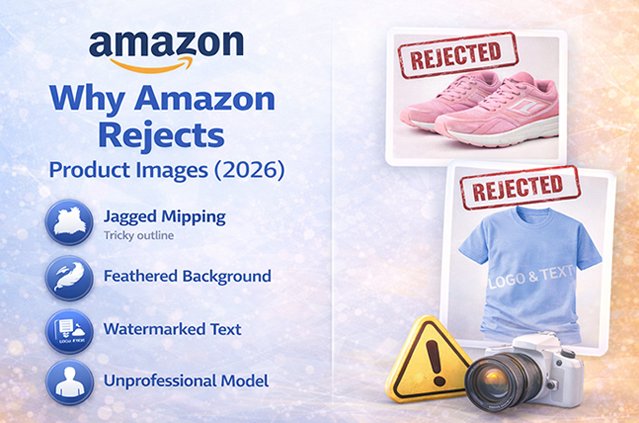
Amazon ghost mannequin image rules are critical for apparel sellers in 2026 who want their product images approved without rejection. Amazon allows ghost mannequin editing only when the mannequin is completely invisible and the clothing shape remains accurate. This guide explains the latest Amazon ghost mannequin image rules, common rejection reasons, and how to fix ghost mannequin images the right way.
Selling apparel on Amazon is very different from selling electronics or home goods. Clothing buyers care about fit, shape, and realism, and Amazon is extremely strict about how apparel images are presented.
One of the biggest confusion points for sellers in 2026 is this: Is ghost mannequin editing allowed on Amazon?
The short answer is YES.
The long answer is only if it follows Amazon’s invisible mannequin rules perfectly.
This guide explains Amazon ghost mannequin image rules (2026) in plain language, why apparel images get rejected, and how sellers can use ghost mannequin editing safely, compliantly, and profitably.
Why Amazon Is Extra Strict With Apparel Images
Amazon’s number one priority is customer trust.
For apparel, trust problems usually lead to:
-
High return rates
-
“Item not as described” complaints
-
Size and fit confusion
-
Negative reviews
To reduce this, Amazon closely analyzes apparel images to ensure they:
-
Represent the real product
-
Show accurate proportions
-
Do not mislead buyers visually
Ghost mannequin images are allowed only when they help clarity, not when they manipulate appearance.
Is Ghost Mannequin Editing Allowed on Amazon in 2026?
✅ Yes — but with strict conditions
Amazon does not ban ghost mannequin (invisible mannequin) images. However, Amazon does reject ghost mannequin images that:
-
Look unnatural
-
Alter the garment’s real shape
-
Show editing mistakes
-
Misrepresent fit or size
In 2026, Amazon’s automated image review systems are far better at detecting poor ghost mannequin editing than before.
What Amazon Means by “Invisible Mannequin”
Many sellers misunderstand this rule.
❌ What Amazon Does NOT Allow
-
Visible mannequin parts (neck, arms, shoulders)
-
Floating garments with no depth
-
Fake or distorted neck joints
-
Clothing that looks “reshaped”
✅ What Amazon Allows
-
Completely invisible mannequin
-
Natural garment depth
-
Realistic neckline and inner labels
-
Accurate proportions
Ghost mannequin editing must reveal, not re-design, the garment.
Amazon Main Image Rules for Ghost Mannequin Apparel
Your main image is where most rejections happen.
Amazon Main Image Requirements (Apparel)
-
Pure white background (RGB 255,255,255)
-
Garment fills at least 85% of the frame
-
No text, logos, or graphics
-
No visible mannequin or model
-
Accurate color and shape
If your ghost mannequin image violates any one of these rules, Amazon may suppress the listing.
The Most Common Ghost Mannequin Mistakes That Cause Rejection
This section is critical. These are real-world rejection triggers we see again and again.
1️⃣ Visible Mannequin Edges (Even Slight)
This includes:
-
Neck rings
-
Shoulder edges
-
Black or gray mannequin shadows
Amazon’s system detects these as mannequin visibility.
✅ Fix:
Professional masking and edge cleanup — not auto tools.
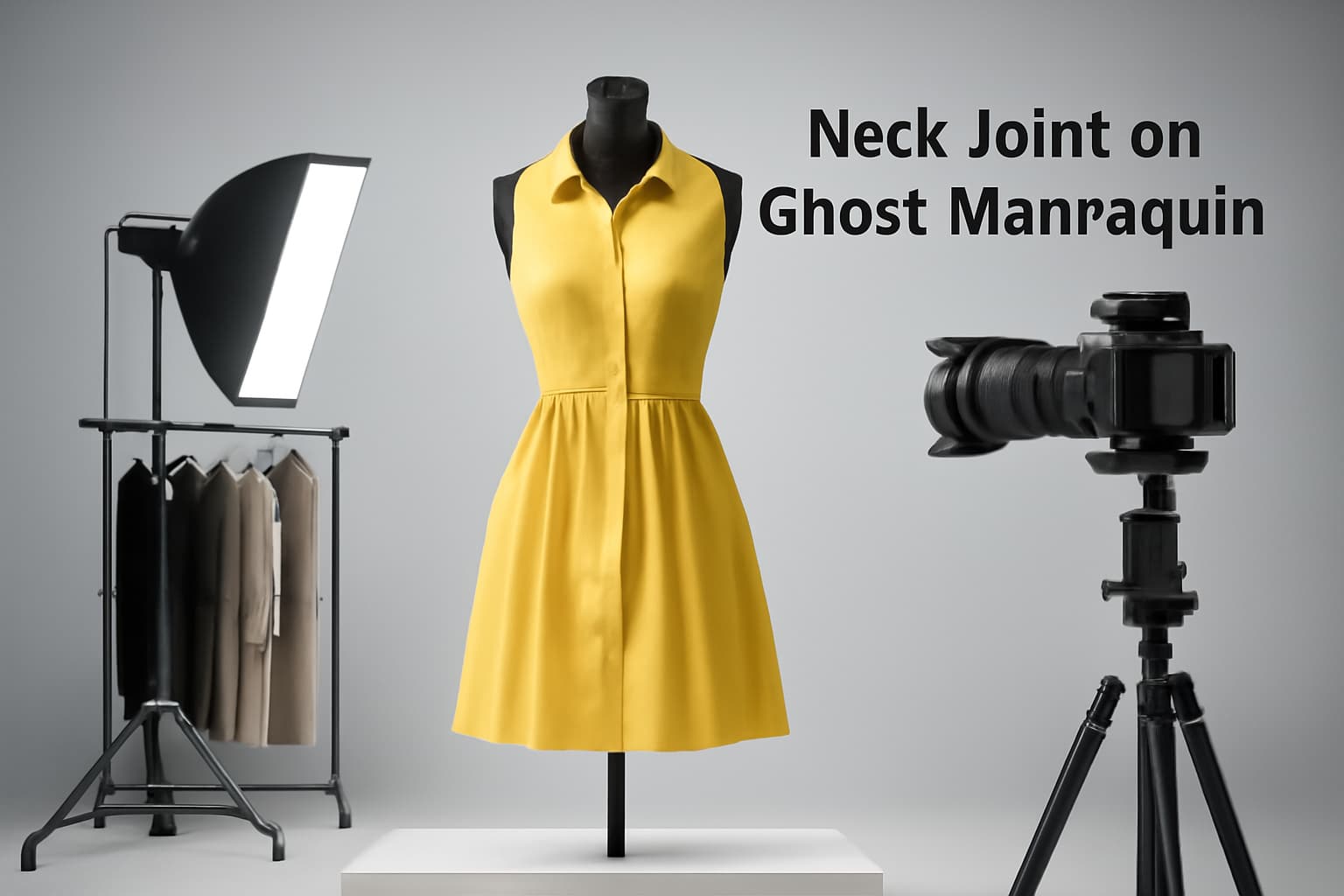
2️⃣ Fake or Unnatural Neck Joint
A poor neck joint is the #1 reason ghost mannequin images get rejected.
Common issues:
-
Wrong fabric alignment
-
Missing inner collar detail
Amazon expects the neckline to look exactly like a real worn garment.
3️⃣ Garment Shape Manipulation (Slimming, Reshaping)
Many sellers unintentionally break Amazon rules by:
-
Slimming waists
-
Sharpening shoulders
-
Making clothing look more fitted than reality
Amazon considers this misleading representation.
✅ Ghost mannequin editing must preserve true proportions.
4️⃣ Floating or “Paper-Flat” Clothing
If the garment looks:
-
Flat like a cutout
-
Without depth
-
Without natural folds
Amazon may flag it as unrealistic.
Professional ghost mannequin editing adds natural depth, not fake shadows.
5️⃣ Inconsistent Ghost Mannequin Style Across Variations
If your red shirt and blue shirt:
-
Have different depths
-
Different neck shapes
Amazon may reject variation images.
Consistency is mandatory.
Why DIY Ghost Mannequin Editing Fails on Amazon
Many sellers try to save money by:
-
Using Photoshop auto tools
-
Hiring low-cost editors
-
Using flat lay replacements
The result:
-
Higher rejection rate
-
Lost listing time
-
Lower conversion
Ghost mannequin editing for Amazon is technical compliance work, not just design.
Ghost Mannequin vs Flat Lay vs Model Images (Amazon View)
Amazon does not “prefer” a style — it prefers accuracy.
-
Flat lay: Safe but less conversion for apparel
-
Model photography: Often restricted on main images
-
Ghost mannequin: Best balance if done correctly
That’s why professional apparel sellers use ghost mannequin images with strict compliance.
What Amazon’s AI Looks for in Ghost Mannequin Images (2026)
In 2026, Amazon uses automated checks to analyze:
-
Edge consistency
-
Color accuracy
-
Shape realism
-
Background purity
-
Visual anomalies
Even small editing errors can trigger silent rejection.
This is why many sellers don’t get clear explanations.
Approved vs Rejected Ghost Mannequin Images (Concept)


Approved images look natural.
Rejected images look edited.
That difference matters.
What Apparel Sellers Should Do BEFORE Uploading Ghost Mannequin Images
Before uploading to Amazon, always check:
-
Is the mannequin truly invisible?
-
Does the garment shape match the real product?
-
Does the neckline look natural?
-
Is the background pure white?
-
Does the product fill most of the frame?
If any answer is “not sure” — Amazon may reject it.
Why Professional Ghost Mannequin Editing Works on Amazon
Professional editors:
-
Reconstruct missing garment parts accurately
-
Preserve true garment proportions
-
Remove mannequins completely
-
Follow Amazon image rules exactly
This reduces:
-
Rejection risk
-
Listing delays
-
Return rates
And increases:
-
Buyer trust
-
Conversion rate
-
Long-term listing stability
Amazon-Safe Ghost Mannequin Checklist (2026 Edition)
Before uploading any apparel image to Amazon, use this checklist.
Sellers who pass this checklist rarely face rejections.
✅ Main Image Checklist
-
☐ Background is pure white (RGB 255,255,255)
-
☐ Mannequin is 100% invisible
-
☐ No neck rings, shadows, or mannequin edges
-
☐ Garment fills at least 85% of the frame
-
☐ No text, logos, or badges
-
☐ Accurate color and fabric texture
-
☐ Realistic garment proportions (no slimming)
✅ Ghost Mannequin Quality Checklist
-
☐ Natural-looking neckline and inner collar
-
☐ Correct sleeve length and alignment
-
☐ No flat or “paper-cut” appearance
-
☐ Subtle, realistic depth (no fake shadows)
-
☐ Consistent style across all variations
If you fail even one of these points, Amazon may reject or suppress the image.
How to Fix Rejected Ghost Mannequin Images (Step-by-Step)
Good news: most rejected ghost mannequin images can be fixed without re-shooting.
Step 1: Identify the Rejection Trigger
Amazon usually doesn’t explain, but the most common triggers are:
-
Background not pure white
-
Visible mannequin edges
-
Unrealistic neck joint
-
Shape manipulation
Compare your rejected image against the checklist above.
Step 2: Correct Background & Edges
-
Remove gray or off-white tones
-
Clean edge halos around sleeves and neckline
-
Ensure shadows do not touch the image border
This alone fixes a large percentage of rejections.
Step 3: Rebuild the Neck Joint Properly
A professional fix includes:
-
Matching fabric texture
-
Natural stitching flow
Neck joints should look photographed, not edited.
Step 4: Restore True Garment Proportions
If the clothing looks slimmer, longer, or sharper than reality:
-
Undo shape distortion
-
Match original product measurements visually
-
Keep folds and wrinkles realistic
Amazon prioritizes accuracy over beauty.
Step 5: Re-upload and Monitor
After fixes:
-
Upload images again
-
Wait for approval
-
Monitor for suppression warnings
In most cases, approval happens within hours.
DIY vs Professional Ghost Mannequin Editing (Amazon Reality)
This comparison explains why many sellers struggle when doing it themselves.
| Factor | DIY Editing | Professional Editing |
|---|---|---|
| Amazon compliance | ❌ Inconsistent | ✅ Reliable |
| Neck joint realism | ❌ Often fake | ✅ Natural |
| Rejection risk | 🔴 High | 🟢 Low |
| Time investment | High | Low |
| Conversion impact | Uncertain | High |
| Long-term scalability | Poor | Excellent |
DIY editing often costs more in lost sales than professional services.
Case Example: Rejected → Approved Amazon Apparel Listing
Product: Men’s cotton t-shirt
Problem:
-
Listing images rejected twice
-
Amazon cited “image does not meet requirements”
Issues Found:
-
Slight mannequin shadow at neckline
-
Background RGB not pure white
-
Shirt slightly reshaped to look slimmer
Fix Applied:
-
Full mannequin removal
-
Neck joint reconstruction
-
Accurate shape restoration
-
Background correction
Result:
-
Images approved within 24 hours
-
Listing restored
-
Improved click-through and engagement
This is a very common scenario.
Approved vs Rejected Ghost Mannequin Images (Visual Difference)
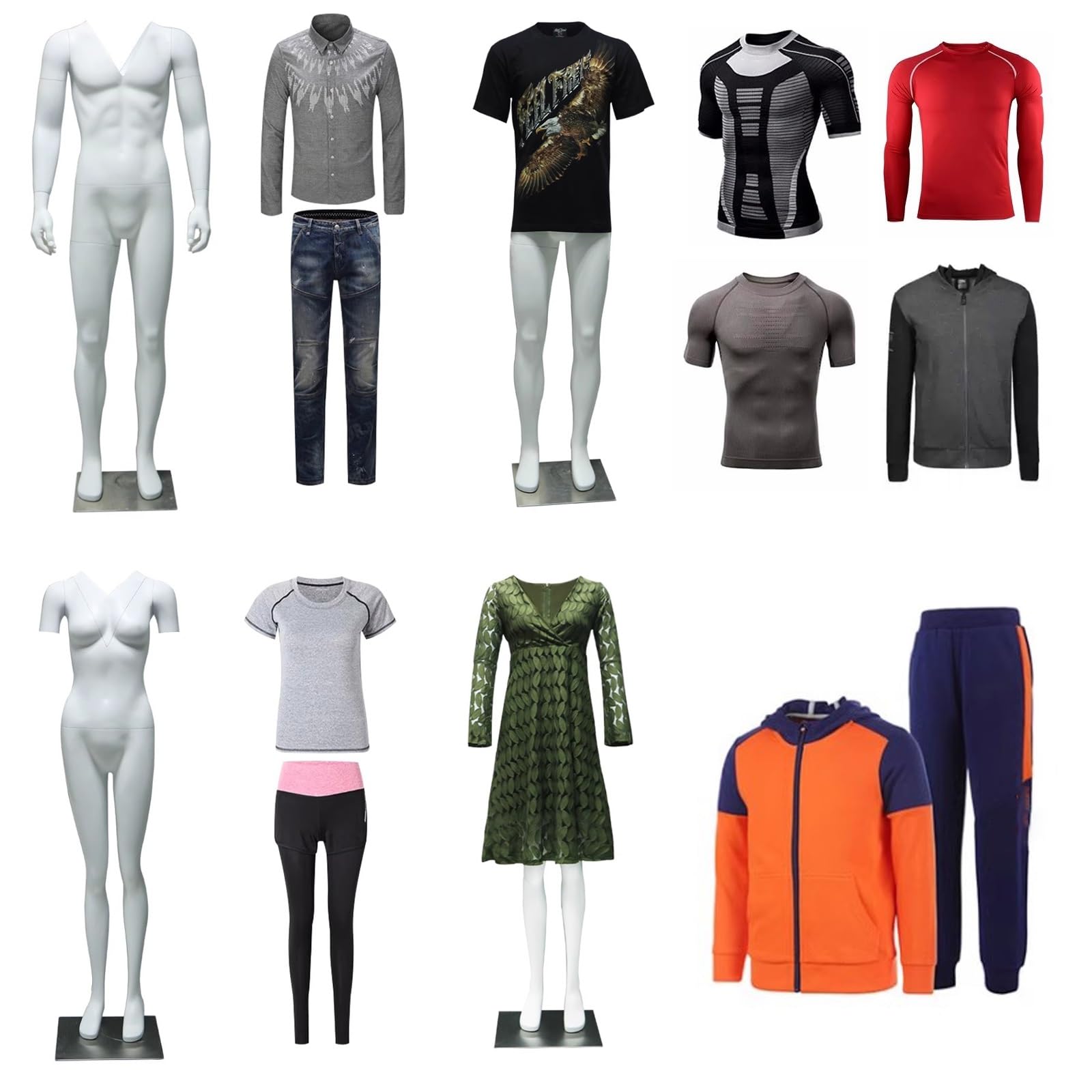
Key takeaway:
If an image looks edited, Amazon likely rejects it.
If it looks photographed, Amazon usually approves it.
How Ghost Mannequin Images Affect Apparel Conversion on Amazon
When done correctly, ghost mannequin images:
-
Show accurate fit and shape
-
Improve buyer confidence
-
Reduce uncertainty
-
Lower return rates
Flat or rejected images cause:
-
Buyer hesitation
-
More questions
-
More returns
-
Negative reviews
Amazon rewards listings that reduce friction.
Common Seller Questions About Amazon Ghost Mannequin Images
Are ghost mannequin images allowed on Amazon in 2026?
Yes — if they are realistic, accurate, and fully compliant.
Why does Amazon reject ghost mannequin images without explanation?
Most rejections are automated. Minor visual issues trigger the system.
Can I use ghost mannequin images for all apparel types?
Yes, including shirts, jackets, dresses, and sportswear — if edited correctly.
Do ghost mannequin images rank better than flat lay?
Ranking depends on performance. Ghost mannequin images often convert better, which helps ranking indirectly.
Can rejected images hurt my listing?
Yes. Repeated rejections can lead to suppression and lost visibility.
Best Practices for Apparel Sellers Going Forward
If you sell clothing on Amazon in 2026:
-
Treat images as compliance assets
-
Follow Amazon rules precisely
-
Avoid shortcuts and auto tools
-
Use consistent editing across catalogs
-
Fix issues early before rejections stack up
Image quality is not optional anymore — it’s a competitive advantage.
Fix Amazon Ghost Mannequin Image Rejections the Right Way
At Clipping Area, we help apparel sellers:
-
Fix rejected ghost mannequin images
-
Create Amazon-compliant apparel photos
-
Preserve realistic garment shape
-
Improve conversion while staying policy-safe
👉 Start with a free ghost mannequin editing trial
See the quality before you invest.