Great wedding photo backdrops can turn a nice picture into a frame the couple hangs on their wall for life. The backdrop sets the mood, guides the eye, and tells the story of the day. Yet many photographers still treat it as an afterthought. They focus on the dress, the rings, and the light, then shoot against a messy wall or a crowded hallway.
This guide fixes that. Below you will find 15 creative wedding backdrop ideas, practical shooting tips, and a clear look at how post-production can rescue a backdrop that did not go as planned. It is written for working wedding photographers, second shooters, and studio owners who want stronger portfolios and happier clients.
Quick answer: The best wedding photo backdrops are simple, match the couple’s style, and do not compete with the subjects. Popular choices include floral walls, greenery arches, draped fabric, string lights, natural landscapes, and architectural details. Shoot with soft light, keep a clean background, and plan for editing to remove distractions.
Why the Backdrop Matters in Wedding Photography
A wedding photography backdrop does more than fill space behind the couple. It shapes how people feel when they look at the image.
Here is what a good backdrop does for you:
- It frames the subjects. Lines, arches, and shapes pull the eye toward the couple.
- It sets the tone. A rustic barn feels warm and relaxed. A marble staircase feels formal and grand.
- It adds context. Guests remember the venue. The backdrop helps the photo hold that memory.
- It keeps the gallery consistent. One strong backdrop for portraits, the ceremony, and the photo booth ties the whole set together.
- It sells your work. Couples browse portfolios fast. Clean, striking backgrounds stop the scroll.
A bad backdrop does the opposite. Exit signs, trash bins, parked cars, and stray guests pull focus away from the moment. Fixing those later costs time, so it pays to plan ahead.
How to Choose the Right Wedding Photo Backdrop
Before picking an idea from the list below, ask four simple questions:
- What is the couple’s style? Boho, classic, modern, rustic, or glam. The backdrop should match their look, not yours.
- What does the venue already offer? Many venues have a garden wall, a grand door, or a view. Use what is free first.
- Where will the light come from? A pretty backdrop in harsh midday sun will still look flat. Check the light at the hour you will shoot.
- How much space do you have? You need room to step back and use a longer lens. Tight spaces limit your options.
When you answer these, choosing a backdrop becomes easy. Now let us get into the ideas.
15 Creative Wedding Photo Backdrop Ideas
These ideas work for portraits, ceremony shots, family groups, and photo booth setups. Some cost nothing. Others need a planner or florist. Pick the ones that fit the couple and the venue.
1. Floral Wall
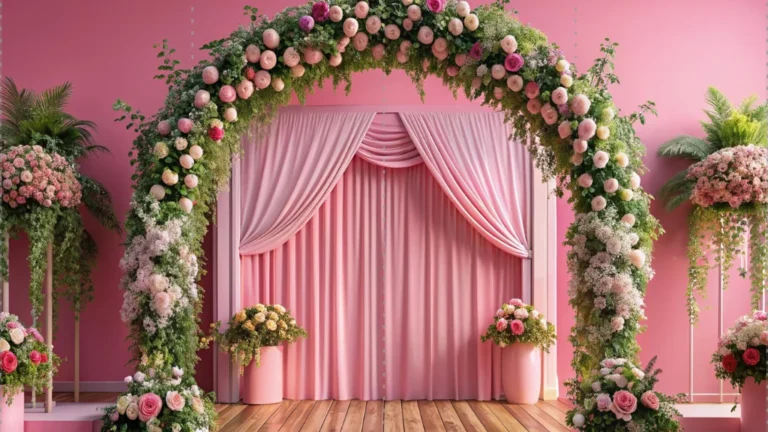
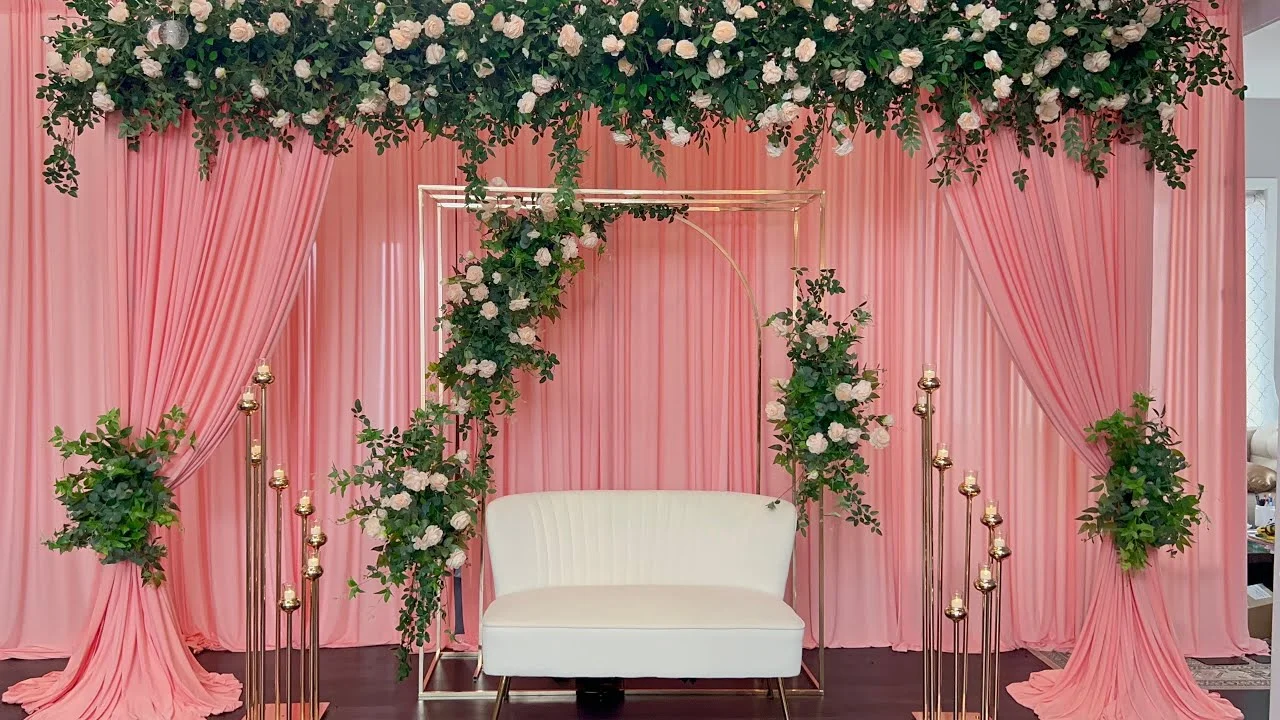
A wall of fresh or faux flowers is one of the most loved wedding backdrop ideas. It looks rich, photographs well from any angle, and works for both couple portraits and guest photo booths.
Pro tip: Ask the florist to keep colors close to the bouquet. Too many bright tones can make skin look off. Keep the couple at least 1 to 2 meters in front of the wall so you can soften it with a wide aperture.
2. Greenery Arch
A simple arch covered in eucalyptus, olive branches, or ivy feels fresh and timeless. It frames the couple in a natural curve and suits garden, boho, and outdoor weddings.
Pro tip: Shoot straight on and center the couple under the arch. The symmetry makes a clean, classic portrait.
3. Draped Fabric and Chiffon
Soft fabric in white, blush, or sage adds movement and light. It is cheap, easy to set up, and perfect for a DIY wedding backdrop.
Pro tip: Backlight thin fabric with the sun or a small LED. The glow behind the couple looks dreamy and hides wrinkles.
4. String Lights and Fairy Lights
Nothing says evening reception like warm string lights. Hang them in vertical strands or a canopy, then open your aperture wide. The lights turn into soft bokeh circles.
Pro tip: Use f/1.8 to f/2.8 and keep space between the couple and the lights. The more distance, the bigger and softer the bokeh.
5. Golden Hour Landscape
Open fields, hills, beaches, and lakes are free and stunning. Golden hour, the hour before sunset, gives warm, flattering light and long shadows.
Pro tip: Place the sun behind the couple for rim light. Add a reflector in front to keep faces bright.
6. Architectural Details
Old doors, stone arches, staircases, columns, and church windows give structure and elegance. They suit classic and city weddings.
Pro tip: Use leading lines. A staircase or long hallway draws the eye straight to the couple.
7. Rustic Wood and Barn Walls
Weathered wood, barn doors, and hay bales bring warmth and texture. They pair well with lace dresses, suspenders, and earthy colors.
Pro tip: Wood can cast a warm or green tint on skin. Shoot in RAW so you can correct white balance later.
8. Neon Sign Backdrop
A custom neon sign with the couple’s names or a short phrase feels modern and fun. It is a favorite for photo booth backdrops and reception corners.
Pro tip: Expose for the neon, then lift the couple with a soft fill light. Otherwise the sign glows but faces go dark.
9. Balloon Garland Wall
Balloon walls in muted tones like cream, sand, and dusty rose look playful but still stylish. They are great for casual weddings and guest photos.
Pro tip: Matte balloons reduce glare. Glossy ones reflect flash and create hot spots.
10. Mirror or Acrylic Panels
Mirrors and clear acrylic signs add depth and a touch of luxury. You can write a welcome message or the wedding date on them.
Pro tip: Watch your own reflection. Shoot at a slight angle so you and your gear stay out of frame.
11. Pampas Grass and Dried Flowers
Pampas grass, dried palms, and bunny tails are the core of boho style. They hold up in heat and wind, so they work well outdoors.
Pro tip: Backlight them. The fluffy texture glows and adds a soft haze.
12. Candlelit Wall
Rows of candles on shelves or the floor make a romantic, intimate scene. This is ideal for evening ceremonies and first dance portraits.
Pro tip: Raise your ISO instead of using direct flash. Flash kills the candle glow.
13. Painted or Printed Canvas
A hand-painted canvas or a large printed backdrop gives you full control. It is the closest thing to a studio wedding photography backdrop on location.
Pro tip: Choose matte material. Shiny vinyl reflects light and shows creases.
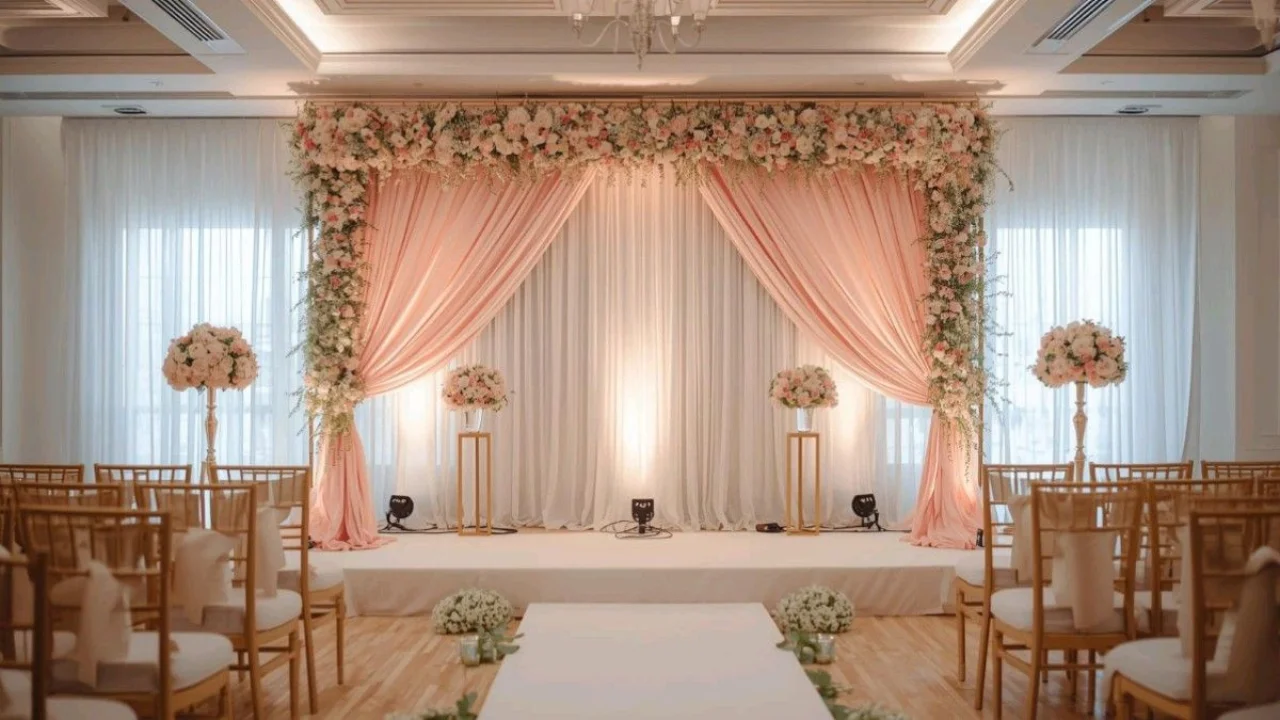
14. Ceremony Altar Setup
The ceremony backdrop is often the most styled spot of the day. Use it again for portraits after guests leave, when the space is empty and calm.
Pro tip: Ask the planner for 10 minutes at the altar before the decor is packed away.
15. Seasonal and Cultural Backdrops
Autumn leaves, winter snow, spring blossoms, or a decorated mandap or stage at a South Asian wedding all carry strong meaning. These backdrops honor the season and the couple’s culture.
Pro tip: Learn the key rituals in advance. Some cultural backdrops are only fully lit or dressed for a short window, so be ready.
Backdrop Ideas at a Glance
| Backdrop | Best for | Budget | Light tip |
|---|---|---|---|
| Floral wall | Portraits, photo booth | High | Soft open shade |
| Greenery arch | Ceremony, garden weddings | Medium | Even daylight |
| Draped fabric | DIY, boho | Low | Backlight |
| String lights | Evening reception | Low | Wide aperture |
| Golden hour landscape | Couple portraits | Free | Sun behind couple |
| Architecture | Classic, city weddings | Free | Leading lines |
| Rustic wood | Barn, country weddings | Low | Fix white balance |
| Neon sign | Reception, photo booth | Medium | Fill light on faces |
| Balloon garland | Casual, guest photos | Low | Use matte balloons |
| Mirror or acrylic | Luxury, modern | Medium | Shoot at an angle |
| Pampas grass | Boho, outdoor | Medium | Backlight |
| Candles | Evening, intimate | Low | Higher ISO, no flash |
| Painted canvas | Studio look on location | Medium | Matte surface |
| Ceremony altar | Ceremony, portraits | Included | Shoot after guests leave |
| Seasonal or cultural | All styles | Varies | Plan around rituals |
Pro Tips for Shooting Wedding Photo Backdrops
A great backdrop only works if you shoot it well. These tips come from real wedding days, where time is short and nothing goes exactly to plan.
Scout the Venue Early
Visit the venue or ask for recent photos. Note the best walls, doors, windows, and views. Check where the sun will be at portrait time. A free sun tracking app helps a lot here.
Make a short shot list with two or three backdrop spots. Share it with the planner so they know where you need to be and when.
Create Distance Between Couple and Backdrop
This is the simplest trick for a clean background. Move the couple a few steps forward. Then use a wide aperture like f/2 or f/2.8. The backdrop softens, and the couple pops.
More distance also stops shadows from falling on the wall behind them.
Pick the Right Lens
- 35mm: Shows more of the scene. Good for venues and wide landscapes.
- 50mm: Natural look, close to what the eye sees. Great all-rounder.
- 85mm: Flattering for portraits. Compresses the background and makes it look fuller.
- 70 to 200mm: Pulls a distant backdrop closer and blurs it heavily. Ideal for outdoor sessions.
A longer lens also helps crop out clutter at the edges of a backdrop.
Control the Light
Light decides whether a backdrop looks magical or flat.
- Open shade gives soft, even light on faces.
- Backlight adds glow to hair, veils, and fabric.
- Off-camera flash lifts the couple in dark receptions without killing ambient light.
- Reflectors bounce light back into faces when the sun is behind the couple.
Avoid harsh overhead sun. It creates dark eye sockets and blown highlights on white dresses.
Match Colors and Mood
Check how the backdrop colors work with the dress, suits, and bridesmaid outfits. A red wall next to a pink gown can clash. Neutral backdrops are the safest choice when you are unsure.
Also think about the editing style. If your brand uses light and airy edits, pick bright backdrops. If you edit moody and dark, deep greens and wood tones fit better.
Watch the Edges of the Frame
Most distractions hide at the edges. Before you press the shutter, scan all four corners. Look for:
- Exit signs and fire alarms
- Power cables and extension cords
- Guests, staff, and phones
- Water bottles, bags, and chairs
- Tape, clips, and loose fabric on the backdrop
Fix what you can on the spot. Note what you cannot, so your editor knows what to remove later.
Pose for the Backdrop
Let the backdrop guide the pose. A tall arch suits standing, close poses. A wide field suits walking shots. A staircase suits a seated or tiered group pose. Keep hands relaxed and give the couple simple prompts, like “walk toward me and whisper something funny.”
Plan for a Budget
Not every couple can afford a large floral wall. Offer simple options:
- Use free venue features first.
- Suggest fabric, candles, or string lights for low-cost DIY setups.
- Reuse the ceremony backdrop for portraits and the photo booth.
- Rent backdrops from local event companies instead of buying.
A smart backdrop plan saves the couple money and gives you better photos.
Fixing Wedding Backdrops in Post-Production
Even with perfect planning, real weddings bring surprises. A guest walks into the frame. Rain moves the shoot indoors. The florist runs late and the arch is half finished. This is where professional wedding photo editing saves the gallery.
Common Backdrop Problems Editors Fix
| Problem | What the editor does |
|---|---|
| Exit signs, cables, outlets | Removes them cleanly with retouching tools |
| Photobombing guests or staff | Erases people and rebuilds the background |
| Wrinkled fabric or creased vinyl | Smooths folds while keeping natural texture |
| Gaps in a floral wall or arch | Fills empty spots so the decor looks full |
| Harsh color casts from walls or lights | Corrects white balance and skin tones |
| Dull or overcast sky | Replaces or enhances the sky in a natural way |
| Busy, cluttered background | Adds soft blur or cleans up the scene |
| Uneven light across the backdrop | Balances exposure so the scene looks even |
Background Removal and Replacement
Sometimes the backdrop cannot be saved. In that case, editors can separate the couple from the scene with a precise clipping path or mask, then place them on a cleaner background. This is common for album covers, save-the-date cards, and printed thank-you cards.
The key is fine detail. Veils, flyaway hair, and lace edges need careful masking. A rough cutout looks fake right away.
Color Correction and Consistency
A wedding gallery often has 500 to 1,500 final images. They are shot in different rooms, under different light, on more than one camera. Color correction makes them look like one story. Skin tones stay true, whites stay white, and backdrops keep their real colors.
Why Many Photographers Outsource Editing
Culling and editing can take two to three times longer than the shoot itself. During peak season, that time adds up fast. Many wedding photographers now outsource retouching so they can focus on booking clients and shooting.
Clipping Area has worked with photographers, studios, and agencies worldwide since 2014. Our team handles wedding photo retouching, background removal, object removal, color correction, and clipping path work at scale. We match your editing style, keep turnaround fast, and handle large galleries without losing quality.
What we help wedding photographers with:
- Removing distractions from wedding photo backgrounds
- Cleaning up and completing backdrops and decor
- Skin retouching that looks natural, not plastic
- Color correction across full galleries
- Background replacement for albums and prints
- Batch editing in your preset style
You can send a few test images and see the results before committing to a full gallery.
Frequently Asked Questions
What is the best backdrop for wedding portraits?
The best backdrop for wedding portraits is simple, well lit, and matches the couple’s style. Greenery arches, floral walls, architectural doors, and golden hour landscapes are reliable choices. Keep space between the couple and the backdrop for a soft, clean look.
How do I make a cheap DIY wedding backdrop?
Use draped fabric, string lights, candles, or a wooden frame with a few flowers. Free venue features like brick walls, doors, and gardens also work well. Keep it simple and focus on good light.
What size should a wedding photo booth backdrop be?
A backdrop about 2.4 meters wide and 2.4 meters tall (around 8 by 8 feet) fits most couples and small groups. Go wider for large group photos.
What camera settings work best for backdrop photos?
For portraits, use f/1.8 to f/2.8 to blur the backdrop. For group shots, use f/4 to f/5.6 so everyone stays sharp. Keep the shutter speed at 1/200 or faster for handheld shots, and raise ISO in low light instead of using direct flash.
How do I remove distractions from a wedding photo background?
Small items can be removed in Lightroom or Photoshop with healing and content-aware tools. For larger fixes like people, cables, or gaps in decor, a professional photo retouching service such as Clipping Area can clean the background while keeping the image natural.
Can a wedding photo backdrop be replaced after the shoot?
Yes. Editors can cut out the couple with precise masking and place them on a new background. It works best when the original light direction is similar to the new scene.
Should the ceremony backdrop and portrait backdrop be the same?
Not always, but reusing the ceremony backdrop saves time and money. Shoot portraits there after guests leave, then use a second spot for variety.
Key Takeaways
- Wedding photo backdrops shape the mood and story of every image.
- Choose backdrops that match the couple’s style, the venue, and the light.
- Free options like landscapes and architecture often look the best.
- Distance, a wide aperture, and good light keep backgrounds clean.
- Scan frame edges before every shot to avoid distractions.
- Post-production can fix most backdrop problems when they slip through.
Final Thoughts
The right backdrop does not need to be big or expensive. It needs to fit the couple, sit in good light, and stay out of the way of the moment. Plan two or three spots, shoot with intent, and leave room to refine the images in editing.
When your schedule fills up and editing starts to pile up, let a trusted partner handle it. Clipping Area helps wedding photographers deliver clean, consistent, and polished galleries on time. Send us a free trial set and see how your wedding photos look with professional post-production.