Most home buyers decide whether a real estate listing feels trustworthy in less than five seconds. Before they read the price, check the location, or open the gallery, their brain reacts to one thing first: color.
When real estate photos look orange or unnaturally warm, buyers notice immediately—even if they can’t explain why. That subtle color issue creates doubt, makes interiors feel outdated, and often causes buyers to scroll past without engaging further.
Orange-tinted photos aren’t just a visual problem. They directly affect click-through rates, perceived property value, and buyer confidence. In this guide, we’ll explain why real estate photos look orange, why buyers react so quickly, and how professional color correction helps listings perform better in competitive markets.
Why Buyers Instantly React to Orange-Tinted Real Estate Photos
Buyers don’t consciously look for color problems. Their brain flags them automatically.
Color Is Processed Before Detail
The human brain processes color faster than sharpness, composition, or layout. Even a perfectly exposed photo feels “wrong” when color balance is off. Orange walls, yellow ceilings, or warm shadows trigger discomfort before buyers can logically identify the issue.
Orange Feels Artificial, Not Natural
There is a clear difference between natural warmth and color inaccuracy. Buyers associate excessive orange tones with:
Artificial or mixed lighting
Heavy or careless editing
Homes that may look different in person
When scrolling through similar listings, buyers instinctively trust images with neutral, realistic color.
Orange Photos Lower Perceived Value
Incorrect color balance makes interiors feel older. White walls appear yellow, cabinetry loses clarity, and flooring looks dull. Even newly renovated homes can appear dated simply because the colors are inaccurate. Compared side by side, neutral photos consistently feel cleaner, brighter, and more valuable.
The Real Reasons Real Estate Photos Look Orange
Orange real estate photos are rarely caused by one mistake. They usually result from lighting conflicts combined with camera limitations.
Mixed Lighting (Daylight + Indoor Bulbs)
This is the most common cause. Cool daylight entering through windows mixes with warm indoor bulbs. Cameras cannot balance both accurately, so the entire image shifts toward orange.
Auto White Balance Misjudgment
Auto white balance works reasonably well outdoors but struggles indoors. When multiple light sources are present, the camera guesses—and usually guesses warm—creating orange color casts across the image.
Incorrect White Balance Settings
Using the wrong white balance preset or Kelvin temperature instantly affects color accuracy. Daylight presets used indoors or tungsten presets used near windows often produce orange or yellow results.
Warm or Inconsistent LED Lighting
Not all LED bulbs share the same color temperature. Small variations become highly visible in photos, especially after HDR processing, creating uneven warm tones across walls and ceilings.
HDR Blending and Tone Mapping
HDR techniques can exaggerate warmth if color harmony is not controlled carefully. Walls and ceilings are particularly vulnerable during tone mapping.
Golden Hour Light Entering Interiors
Late-afternoon sunlight introduces warm exterior light. Without selective correction, that warmth spreads across the entire room.
Quick Summary: Why Real Estate Photos Look Orange
Mixed daylight and indoor lighting
Auto white balance errors
Incorrect white balance settings
Warm or mismatched LED bulbs
HDR color exaggeration
Sunset or golden-hour light spill
How Orange Photos Hurt Real Estate Listing Performance
On platforms like MLS and Zillow, buyers often compare listings side by side, making accurate color one of the fastest trust signals in real estate photography.
Orange color casts directly affect buyer behavior.
Lower Click-Through Rates
On MLS, Zillow, and other listing platforms, buyers scroll quickly. Listings with unnatural color tones lose attention at thumbnail level.
Fewer Showing Requests
If interiors feel poorly lit or artificially colored, buyers subconsciously assume the home won’t match expectations in person.
Reduced Perceived Property Value
Accurate color makes materials feel premium. Orange casts make finishes appear cheaper, older, or worn—even when they are not.
Lost Trust Before the First Visit
Once buyers feel photos may be misleading, trust is lost before they ever step inside the property.
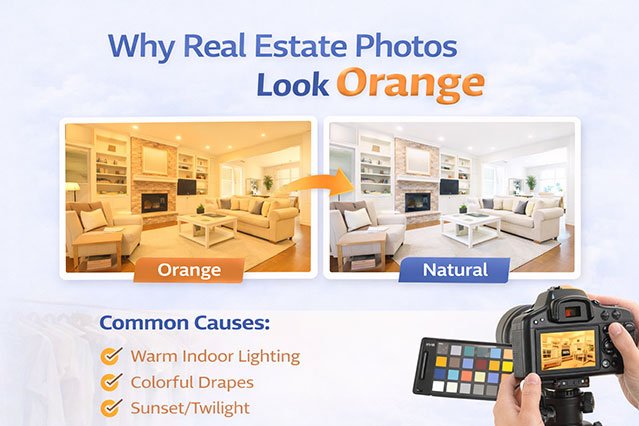
Orange vs Color-Corrected Real Estate Photos (What Changes)
Before correction:
White walls look yellow or orange
Cabinets lose their true color
Flooring appears dull or inaccurate
Lighting feels heavy and artificial
After professional color correction:
Whites appear clean and neutral
Wall and cabinet colors match reality
Flooring regains depth and texture
The space feels brighter, larger, and more inviting
This difference often determines whether a buyer clicks, saves the listing, or books a showing.
How Professionals Fix Orange Real Estate Photos
Correcting orange color casts requires more than global sliders or presets. Professional real estate photo editing focuses on precision, consistency, and realism.
Custom White Balance Calibration
Professionals manually adjust temperature and tint to remove unwanted warmth without making images look cold or lifeless.
Selective Color Cast Correction
Different light sources are corrected independently using masks. Window light, walls, ceilings, and floors are balanced separately instead of forcing one global adjustment.
True-to-Life Color Accuracy
Paint colors, cabinetry, and flooring are corrected to reflect how the home actually looks, which is critical for buyer trust and accurate representation.
Consistent Editing Workflow
A controlled Lightroom and Photoshop workflow ensures color consistency across the entire listing—one of the strongest signals of a professional presentation.
This level of correction is difficult to achieve during shooting alone and is where professional real estate photo editing adds the most value.
Can Photographers Prevent Orange Photos While Shooting?
Good shooting practices reduce the problem, but they don’t eliminate it entirely.
Use bulbs with matching color temperatures
Turn off unnecessary warm lights near windows
Shoot in RAW format
Avoid auto white balance indoors
Use a grey card for accurate reference
Even with careful shooting, mixed lighting often still requires professional post-processing.
A Risk-Free Way to See the Difference
If you’re unsure whether professional color correction is worth it, the most reliable approach is to see the results on your own photos.
Many photographers, realtors, and agencies start with a completely free trial, allowing them to:
Upload real listing images
Receive professionally color-corrected photos
Compare before-and-after results with no cost or obligation
Seeing your own property images professionally corrected is the easiest way to judge quality, accuracy, and consistency—without any risk or obligation.
Frequently Asked Questions
Why do my real estate photos look orange indoors?
Indoor lighting is warmer than daylight, and cameras struggle to balance mixed light sources correctly.
Is orange lighting bad for real estate listings?
Yes. It reduces trust, lowers perceived value, and decreases buyer engagement.
Can orange photos reduce buyer interest?
Yes. Listings with unnatural colors receive fewer clicks and fewer showing requests.
How can I fix orange real estate photos quickly?
Professional color correction is the fastest and most reliable solution.
Should I reshoot or edit orange photos?
In most cases, professional editing is faster, more consistent, and more cost-effective than reshooting.
Final Thoughts: Accurate Color Builds Buyer Confidence
In 2026, buyers compare listings faster and more critically than ever. Orange real estate photos create instant doubt, while accurate color builds confidence and trust.
Natural, balanced images don’t just look better—they feel honest, highlight value, and encourage action. Correcting orange color casts is one of the simplest ways to improve real estate listing performance, and a free trial makes it easy to experience the difference without commitment.