Why Good Clothes Still Don’t Sell Online
Clothing product photos often fail to convert when buyers cannot clearly see the fabric, color, and fit in online images.
In many cases, the problem isn’t the product itself.
A clothing brand can have:
-
trendy designs
-
high-quality fabric
-
fair pricing
Yet sales still stay low.
Why?
Because the product photos don’t explain the product clearly enough.
Online shoppers cannot touch fabric, check stitching, or try clothing on. The only way they judge a product is through what they see on the screen.
If the images look unclear, dull, or unprofessional, buyers simply move on.
That’s why many apparel store owners ask the same question:
“Why are people visiting my store but not buying?”
Very often, the answer is simple:
Your product photos are blocking the sale.
How Buyers Really Judge Clothing Photos
Buyers don’t think in technical terms like:
“lighting is bad” or “white balance is wrong.”
They feel things like:
-
“This looks cheap.”
-
“The color seems off.”
-
“I can’t tell how it fits.”
-
“This doesn’t look like a real brand.”
When clothing photos don’t convert, it’s usually because:
-
The fabric texture is not clear
-
The color doesn’t look trustworthy
-
The background feels messy
-
The lighting feels flat
-
The product shape looks distorted
Even small visual problems create doubt.
And doubt kills sales.
Why Clothing Product Photos Don’t Convert Online
A mistake many brands make is focusing entirely on the product and forgetting about presentation.
In ecommerce, the photo is the product.
If an image looks:
-
dull
-
wrinkled
-
badly cropped
-
inconsistent with other images
Buyers subconsciously assume:
-
the quality is low
-
the brand is inexperienced
-
the product might disappoint
Even when they like the design, they may hesitate to buy.
This problem affects many types of sellers:
-
new fashion brands
-
small online clothing stores
-
private label brands
-
dropshipping businesses
Because in online fashion retail, trust is everything.
Why Raw Clothing Photos Rarely Work Online
Most product photos come straight from:
-
camera
-
phone
-
studio shoot
But raw photos are not made for selling.
They are made for editing.
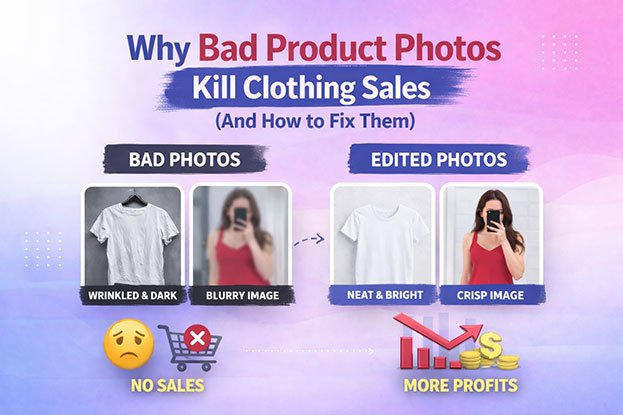
Without proper editing, clothing photos often look:
-
too dark
-
too warm or too cool
-
wrinkled
-
dusty
-
uneven
In real life, the shirt looks clean and smooth.
Online, it looks rough and unprofessional.
That gap between real product and photo is what stops buyers.
Why Background and Shape Matter More Than You Think
Buyers don’t want to think hard.
If the background is:
-
busy
-
gray
-
uneven
-
full of shadows
The product doesn’t stand out.
If the clothing shape looks:
-
bent
-
folded badly
-
misaligned
Buyers can’t imagine how it will look on them.
They don’t say:
“this image needs editing.”
They feel:
“I’m not sure about this.”
And they leave.
Why Inconsistent Photos Hurt Your Brand
Another problem I see often:
every product photo looks different.
Some are bright.
Some are dark.
Some are warm.
Some are cold.
That makes the store feel:
-
unprofessional
-
rushed
-
untrusted
Strong brands look consistent.
Consistency tells buyers:
“This brand knows what it’s doing.”
Inconsistent photos say:
“This might be risky.”
What Most Brands Don’t Realize
Most people don’t realize this:
Bad product photos don’t just look bad.
They make your clothes feel:
-
lower quality
-
less valuable
-
less fashionable
Even when the product itself is good.
So when sales are low, many brands:
-
lower prices
-
run ads
-
blame traffic
But the real problem is:
the images are not helping the product sell.
How Bad Clothing Photos Quietly Kill Sales
In my experience, most clothing brands don’t notice the damage bad photos are doing — because it happens silently.
You don’t get an error message that says:
“Your photos are stopping sales.”
Instead, you see:
-
Visitors but no orders
-
People adding to cart but not checking out
-
High bounce rate
-
Low conversion rate
And you start thinking:
“Maybe my price is wrong.”
“Maybe my ads are bad.”
“Maybe people don’t like my design.”
But very often, the real problem is simpler:
your photos don’t make buyers feel safe to buy.
Why Clothing Photos Must Do More Than Look Nice
For fashion products, photos must answer silent questions:
-
Is this fabric thick or thin?
-
Is this color real?
-
Will it look good on me?
-
Is this brand trustworthy?
If your photos don’t answer these clearly, buyers hesitate.
And hesitation means:
no purchase.
This is why even small issues like:
-
dull lighting
-
weak contrast
-
messy background
-
unclear shape
can reduce sales more than you expect.
How Buyers Think (Without Realizing It)
Buyers don’t say:
“The lighting is wrong.”
They think:
“This looks cheap.”
They don’t say:
“The background is messy.”
They think:
“This store feels unprofessional.”
They don’t say:
“The color might be off.”
They think:
“I don’t want to risk a return.”
Bad photos create fear:
-
fear of wrong size
-
fear of wrong color
-
fear of bad quality
And fear always beats desire.
Why Color Problems Are So Dangerous for Apparel
Clothing is about color and style.
If a red dress looks orange,
or a black jacket looks gray,
or a white shirt looks yellow…
Buyers assume:
“The real product will be different.”
That leads to:
-
fewer purchases
-
more returns
-
more complaints
This is one of the biggest hidden problems in fashion eCommerce:
wrong color = broken trust.
Why Shape and Fit Must Be Clear
Another mistake I see all the time:
clothes don’t look straight or balanced.
If:
-
sleeves look bent
-
collars look twisted
-
the body shape looks uneven
Buyers can’t imagine how it will look on them.
Even if the product is good,
the photo makes it look wrong.
That’s why clean alignment and proper presentation matter so much for clothing photos.
Why Background and Lighting Control Attention
Buyers should look at the clothes —
not at shadows, wrinkles, or floor marks.
If the background is:
-
dirty
-
uneven
-
too dark
-
full of distractions
The product loses power.
Good clothing photos:
-
guide the eye
-
make the item feel important
That’s how attention turns into interest.
Why Brands Lose Money Without Knowing It
Here’s the painful part:
many brands lose sales without realizing the reason.
They think:
“Traffic is low.”
“Competition is high.”
“Marketing is hard.”
But the real issue is:
their photos are not doing their job.
Photos are supposed to:
-
build desire
-
build trust
-
remove doubt
When they fail at that, no campaign can save the sale.
How Professional Editing Fixes These Problems (Without Misleading Buyers)
In my experience, the goal of editing is not to make clothes look fake or perfect.
The goal is to make them look clear, honest, and easy to understand.
Good editing doesn’t change the product.
It removes the things that distract buyers from the product.
That’s an important difference.
How Editing Fixes Clothing Product Photos That Don’t Convert
In my experience, clothing photos don’t fail because the product is bad — they fail because the image doesn’t explain the product clearly enough.
Professional editing fixes this by removing the visual issues that create doubt in a buyer’s mind.
Here’s what it improves:
1. Fabric looks clearer and more detailed
Balanced lighting and gentle clarity help buyers see:
-
texture
-
stitching
-
folds
-
material quality
So they understand what they’re paying for.
2. Colors look true to life
Color correction removes yellow or dull tones so:
-
white looks white
-
black looks black
-
red doesn’t turn orange
This reduces fear of receiving the wrong color.
3. Shape and fit look more natural
Editing straightens collars, sleeves, and hems so clothing looks:
-
balanced
-
properly shaped
-
ready for display
This helps buyers imagine wearing it.
4. Distractions are removed
Dust, wrinkles, shadows, and messy backgrounds pull attention away from the product.
Editing cleans these up so the focus stays on the clothing.
5. Images become consistent across the store
When every photo has:
-
similar lighting
-
similar background
-
similar color tone
the brand feels:
-
more professional
-
more reliable
-
more premium
Buyers don’t think, “this was edited.”
They think, “this looks like a real brand.”
6. Buyer hesitation is reduced
Clear and natural images answer silent questions like:
-
“Is this good quality?”
-
“Will it look like this in real life?”
-
“Can I trust this store?”
When those doubts disappear, buying feels safer.
How Color Correction Restores Trust
Clothing is emotional.
People choose based on color.
When editing is done properly:
-
whites look white
-
blacks look deep
-
reds look red
-
skin tones and fabric tones stay natural
This reduces:
-
fear of wrong color
-
fear of returns
-
fear of disappointment
Buyers feel safer because the photo feels honest.
And honest photos sell better than dramatic ones.
How Shape and Alignment Make Clothes Look Right
Another thing professional editing fixes is shape.
Small issues like:
-
tilted shoulders
-
uneven hems
-
twisted collars
may seem minor, but they make the product feel off.
Editing corrects:
-
alignment
-
symmetry
-
presentation
So the clothing looks:
-
balanced
-
well prepared
-
store-ready
That helps buyers imagine wearing it.
Why Clean Backgrounds Increase Focus
When the background is:
-
pure
-
neutral
-
consistent
The eye goes straight to the clothing.
Good editing:
-
removes messy backgrounds
-
keeps lighting even
-
avoids heavy shadows
This makes:
-
catalogs look professional
-
product pages look organized
-
the brand feel serious
And serious brands get more trust.
How Consistency Builds a Stronger Brand Image
Here’s something most people don’t realize:
Buyers don’t look at one product photo.
They look at the whole collection.
When every photo:
-
has similar lighting
-
similar color tone
-
similar background
-
similar style
The store feels:
-
bigger
-
more reliable
-
more premium
Editing creates that consistency.
And consistency creates confidence.
Why Editing Should Support Sales, Not Just Beauty
The purpose of editing is not art.
It’s communication.
It should:
-
remove doubt
-
show details
-
protect color accuracy
-
improve clarity
-
guide attention
When editing does this well, buyers don’t think about editing at all.
They think:
“This looks good.”
“This looks safe.”
“I can buy this.”
And that is what conversion really means.
Key Takeaway:
Professional editing fixes lighting, color, shape, and background problems so clothing photos feel clear and trustworthy, helping buyers feel confident enough to purchase.
Case Study: How Better Photo Editing Increased Apparel Sales
Client Profile
An online fashion store similar like MANGO selling casual women’s wear (tops, dresses, and outerwear).
Business Type: Small fashion eCommerce brand
Platform: Shopify
Main Problem: Good traffic but low sales
❌ The Problem
The brand owner noticed:
-
Visitors were browsing but not buying
-
Many products had views but no orders
-
Customers complained that colors looked different in real life
-
Return rate was increasing
The photos had these issues:
-
Fabric looked flat and dull
-
Colors appeared slightly yellow and inconsistent
-
Backgrounds were not clean
-
Clothes looked wrinkled and uneven
-
Each product page looked different in style
In real life, the clothes were well made.
Online, they looked cheap and unclear.
The owner first thought:
“Maybe my prices are too high.”
But competitors with similar prices were selling better.
The real issue was presentation.
✅ What Was Done
The store used professional apparel photo editing focused on:
-
Color correction so fabric looked true to life
-
Wrinkle and dust removal
-
Background cleanup for consistency
-
Shape correction so garments looked straight
-
Light balancing to improve texture
-
Matching all photos to the same visual style
No new photos were taken.
No models were changed.
Only professional editing was applied.
🔁 Before Editing
Photos looked:
-
Dark and flat
-
Slightly yellow
-
Inconsistent from product to product
-
Low quality on zoom
Buyers felt:
-
Unsure about fabric quality
-
Uncertain about real color
-
Less confident to buy
✨ After Editing
Photos looked:
-
Bright but natural
-
Clean white backgrounds
-
Accurate colors
-
Clear fabric texture
-
Consistent across the store
Buyers felt:
-
The brand looked more professional
-
The clothes looked higher quality
-
The store looked more trustworthy
📈 Results (Within 30 Days)
-
+28% increase in conversion rate
-
+22% increase in average order value
-
Fewer color-related returns
-
More product saves and shares
-
Positive feedback like:
“The product looks exactly like the photo.”
Key Insight:
The clothes didn’t change.
Only the photo editing changed — and buyer behavior improved.
Frequently Asked Questions (FAQs)
Why don’t my clothing product photos convert?
Because buyers can’t feel fabric or try clothes on. If photos don’t clearly show color, shape, and texture, buyers hesitate and leave.
Can photo editing really increase clothing sales?
Yes. Better photos improve trust, reduce doubt, and help buyers imagine wearing the product — which directly improves conversion.
Is editing allowed for fashion eCommerce photos?
Yes. Editing for lighting, color accuracy, and background cleanup is standard practice and allowed on all eCommerce platforms.
Will editing make my clothes look fake?
No. Good editing keeps colors and textures natural. It removes distractions without changing the product itself.
Do I need to reshoot my product photos?
Usually not. Most issues can be fixed with professional editing without another photoshoot.
Why is color correction important for apparel?
Because wrong color leads to:
-
lower trust
-
more returns
-
unhappy customers
Correct color builds confidence.
Is professional clothing photo editing expensive?
No. Compared to ad spend or lost sales, professional editing is very affordable and has strong return on investment.
Can I try your service before ordering?
Yes. A free trial lets you test quality before committing.
Free Trial Call-to-Action
See How Better Photos Can Increase Your Clothing Sales — Free
Not sure if your product photos are hurting your sales?
Try professional apparel photo editing for free and see the difference yourself.
✅ Send us one of your clothing product photos
✅ Get a professionally edited sample
✅ Compare before and after
✅ No payment required
✅ No obligation
Clean, clear, and accurate photos make your clothes look more valuable and your brand more trustworthy.
👉 Request Your Free Trial Now
and see how professional editing can turn your product photos into sales tools.