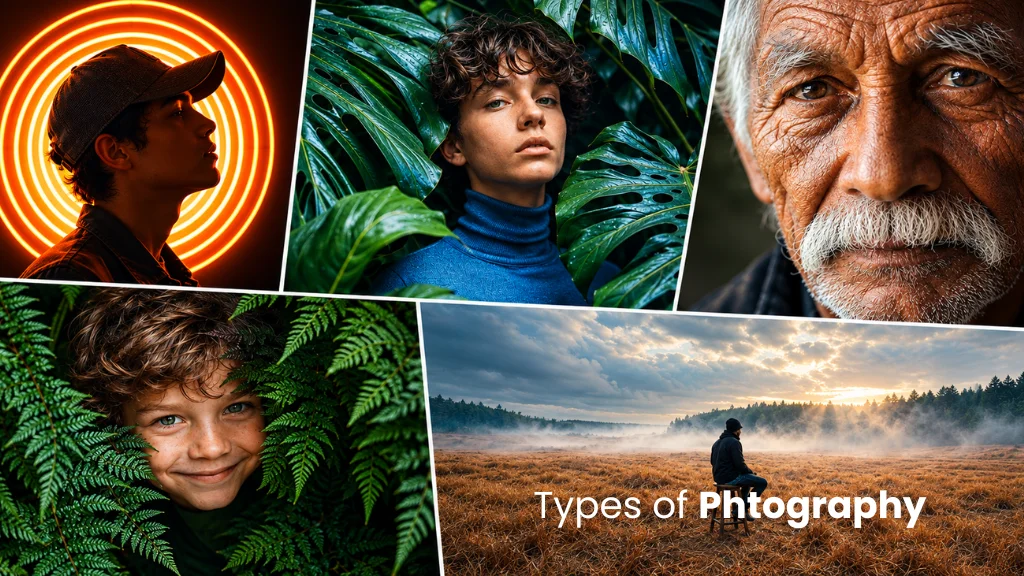
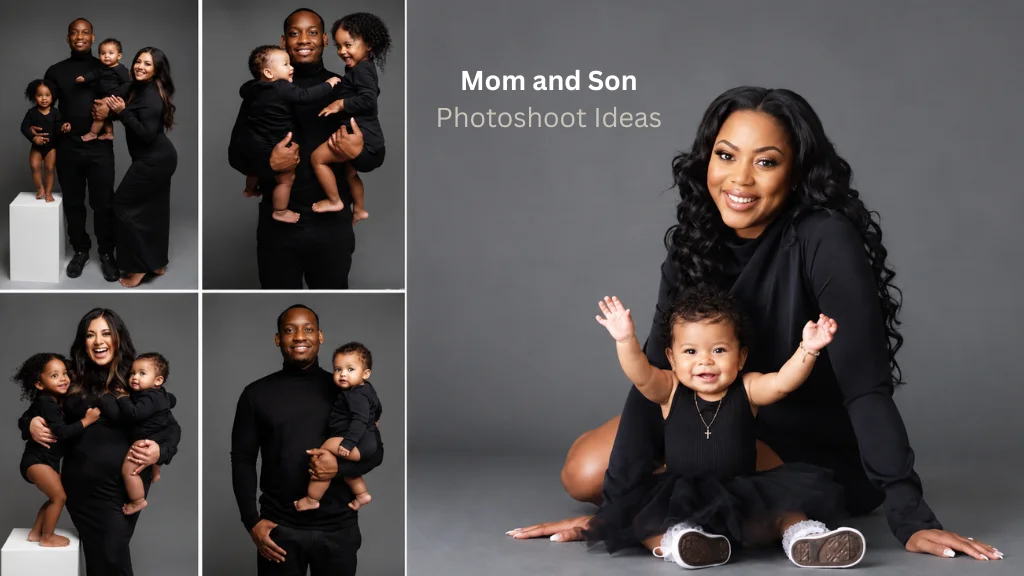
Two photographers can shoot the same model, in the same light, with cameras that have nearly identical megapixel counts, and still walk away with very different portraits. One set has crisp eyes, smooth tonal transitions and natural skin. The other has soft focus on the lashes, clipped highlights on the forehead and skin that looks slightly gray. The difference rarely comes down to one number on a spec sheet.
That is why choosing the Best Camera for Portrait and Headshot Photography in 2026 is about more than resolution. Autofocus reliability, sensor size, dynamic range, color science for skin tones, lens choice and how the camera feels in your hands all shape the final image. So does what happens after the shoot, in RAW editing and retouching.
In this guide, you will learn how to evaluate a portrait camera, how full frame, APS-C, medium format and DSLR systems compare, which current models suit studio, outdoor, headshot and budget work, and which lenses actually make the biggest difference. Prices mentioned are launch or list prices in US dollars and vary by country, retailer, bundle and promotion, so always check your local market before buying.
What Makes a Camera Good for Portrait and Headshot Photography?
A good portrait photography camera does three jobs well: it focuses on the eye every time, it records skin and light with enough tonal information to edit cleanly, and it stays out of your way while you direct the person in front of it. Everything below supports one of those jobs.
Image quality and sensor size. A larger sensor collects more light per frame. That usually means cleaner high ISO files, smoother gradations and an easier path to shallow depth of field. Full-frame and medium format sensors have an edge here, but a modern APS-C sensor with good light and a fast lens can produce beautiful portraits.
Resolution. For most portraits and headshots, 24 to 33 megapixels is plenty. Higher resolution (45MP and up) helps when you crop heavily, print large or deliver beauty and advertising work where retouchers zoom to 200 percent. The trade-off is bigger files, slower culling and every skin flaw recorded in detail.
Dynamic range. Portraits often mix bright skin highlights with dark hair, clothing or backgrounds. Wider dynamic range lets you recover a hot cheekbone or lift shadows under the chin without noise or color shifts.
Autofocus, eye detection and face detection. For headshots, a missed eye is a rejected frame. Modern eye autofocus and subject tracking lock onto the nearest eye even at f/1.4 or f/1.8, where depth of field can be thinner than an eyelash. This is arguably the single biggest reason mirrorless cameras took over portrait work.
Skin tone rendering and color science. Each brand interprets skin differently. Canon files are often described as warmer, Sony as cooler and more neutral, and Fujifilm as film-like thanks to its film simulations. In RAW, all of them can be corrected, but a camera whose default color you like saves time in post-production.
Low-light performance. Indoor sessions, events and evening outdoor portraits push ISO higher. Clean files at ISO 3200 to 6400 keep skin texture natural instead of blotchy.
Lens selection. The lens shapes perspective, background blur and bokeh more than the body does. A camera system with affordable, sharp 50mm, 85mm and 105mm primes is worth more than a slightly better sensor with poor lens options.
Ergonomics, battery life and reliability. A comfortable grip, a clear electronic viewfinder, dual card slots and a battery that lasts a full session all matter on long headshot days. Weather sealing matters for outdoor work.
RAW capability, file quality and connectivity. Every serious portrait camera shoots RAW, but bit depth, compression options and tethering support differ. Tethered shooting to Lightroom or Capture One is standard in professional headshot studios, so check USB-C tethering and software support.
None of this means the highest specification produces the best portrait. Lighting, posing, lens choice and expression matter more than any sensor. A great camera simply removes technical obstacles.
Best Camera Types for Portrait Photography in 2026
Mirrorless dominates new camera releases in 2026, and almost every current portrait-focused body is mirrorless. Still, the right type depends on your budget, existing lenses and the kind of work you deliver.
Full-Frame Mirrorless Cameras
For most working photographers, the best full frame camera for portraits is also the most practical choice. Full-frame sensors give strong image quality, clean low-light performance and easy subject separation at f/1.4 to f/2.8. Canon RF, Sony E and Nikon Z mounts all offer deep portrait lens lineups, from budget f/1.8 primes to premium f/1.2 glass. Autofocus is where this category shines, with deep-learning eye and face detection now standard even in entry-level full-frame bodies.
APS-C Mirrorless Cameras
APS-C cameras are smaller, lighter and usually cheaper, as are their lenses. The 1.5x crop factor (1.6x on Canon) means a 56mm lens frames like an 85mm on full frame, which is ideal for compact outdoor and travel portrait kits. You get slightly less background blur at the same aperture and a bit more noise at high ISO, but good light and fast primes close most of that gap.
Medium Format Cameras
Medium format sensors are physically larger than full frame, typically around 44 x 33mm in today’s mirrorless systems from Fujifilm and Hasselblad. The result is exceptional tonal depth, very high resolution and a distinctive, dimensional look that commercial, fashion and beauty clients love. The trade-offs are cost, larger files, slower handling and a smaller lens range. These cameras are most at home in the studio.
DSLR Cameras
DSLRs have not disappeared. Many photographers still own excellent EF or F-mount lens collections, and used DSLRs like full-frame Canon and Nikon models remain capable portrait tools. Optical viewfinders show the scene with zero lag, and battery life is usually longer than mirrorless. The limitation is autofocus: DSLR face and eye detection through the optical viewfinder is far less advanced, and manufacturers are now releasing almost all new bodies and lenses for mirrorless mounts. If you are buying new in 2026, mirrorless is the safer long-term investment. If you are on a tight budget and already own lenses, a used DSLR is still a sensible portrait photography camera.
Best Cameras for Portrait and Headshot Photography in 2026
There is no single best portrait camera 2026 for everyone. The right pick depends on whether you shoot studio headshots, outdoor sessions, commercial beauty work or a mix of photo and video. Here is a quick overview, followed by the reasoning for each category.
| Camera | Sensor | Resolution | Best for |
|---|---|---|---|
| Sony a7R VI | Full frame, fully stacked | 66.8MP | High-resolution commercial and beauty portraits |
| Canon EOS R5 Mark II | Full frame | 45MP | Studio portraits and professional headshots |
| Nikon Z8 | Full frame, stacked | 45.7MP | All-round professional portrait and wedding work |
| Sony a7 V | Full frame, partially stacked | 33MP | Natural light portraits and hybrid photo/video |
| Canon EOS R6 Mark III | Full frame | 32.5MP | Portrait, event and wedding workhorse |
| Fujifilm GFX100 II / GFX100S II | Medium format | 102MP | Fashion, advertising and studio portraits |
| Nikon Z6III | Full frame | 24.5MP | Mid-range portraits and video |
| Fujifilm X-T5 | APS-C | 40MP | Detailed portraits in a compact APS-C body |
| Nikon Z5II / Z5IIC | Full frame | 24.5MP | Affordable full-frame portraits |
| Canon EOS R8 / Sony a6700 | Full frame / APS-C | 24.2MP / 26MP | Beginner portrait photographers |
Professional Full-Frame Portrait Cameras
The Sony a7 V and Canon EOS R6 Mark III are the two most talked-about all-rounders of this cycle. Sony announced the a7 V in December 2025 with a 33MP partially stacked sensor, while the R6 Mark III uses a 32.5MP sensor. For portraits, that resolution is ideal: enough detail for cropping and retouching without huge files. Independent testing has credited the a7 V with roughly a stop more dynamic range, which helps in contrasty outdoor light. The Canon offers stronger video features and stabilization rated up to 8.5 stops, and many shooters prefer its warmer default skin tones.
The Nikon Z8 remains one of the strongest professional portrait cameras available. Its 45.7MP stacked sensor and the same deep-learning subject detection as Nikon’s flagship make it reliable for weddings, editorial and studio work. Nikon also includes portrait-specific tools such as Skin Softening and Portrait Impression Balance for JPEG shooters.
Panasonic (Lumix S series) and Leica (SL system) also make current full-frame bodies with excellent color and build. They are worth considering if you value their rendering or already own L-mount lenses, though their portrait-focused autofocus ecosystems have historically trailed Sony, Canon and Nikon.
High-Resolution Portrait Cameras
For commercial portraits, large prints, beauty photography and advertising, resolution and tonal depth matter more. The Sony a7R VI, announced in May 2026 with a list price of $4,499 in the US, pairs a 66.8MP fully stacked sensor with up to 30fps shooting and 8.5 stops of in-body stabilization. It is currently the highest-resolution full-frame camera, which gives retouchers enormous room to work.
The Canon EOS R5 Mark II (45MP) is the standard high-resolution choice in the Canon ecosystem and a favorite in studios. For the ultimate tonal quality, medium format bodies like the Fujifilm GFX100 II and the more compact GFX100S II deliver around 102MP. These are the best camera for studio portraits when the client is a fashion label or beauty brand, but they are overkill for most headshot sessions.
Professional Headshot Cameras
The best camera for professional headshots is the one that never misses an eye, renders skin accurately under strobes and tethers reliably. In practice, that means a full-frame mirrorless body with dependable eye autofocus, a 30 to 45MP sensor and solid USB-C tethering. The Canon EOS R5 Mark II, Nikon Z8, Sony a7 V and Canon EOS R6 Mark III all fit. Headshot studios that shoot hundreds of corporate portraits a week often prefer 33MP over 60MP+, because smaller files keep culling, tethering and retouching fast.
Mid-Range Portrait Cameras
Serious enthusiasts and part-time professionals get the best value here. The Nikon Z6III (24.5MP) is a capable portrait and video hybrid. The Sony a7 IV (33MP) is still widely sold and has a huge lens ecosystem. On the APS-C side, the Fujifilm X-T5 offers 40MP and Fujifilm’s popular film simulations. Fujifilm’s expected successor, the X-T6, has been reported as postponed with no official announcement, and Fujifilm has confirmed the X-T5 is not discontinued.
Best Affordable Cameras for Beginner Portrait Photographers
If you want full-frame portraits on a budget, the Nikon Z5II and the Canon EOS R8 (24.2MP) are strong entry points. In September 2026 Nikon announced the Z5IIC, a compact full-frame body without a viewfinder, at $1,399.95 body-only in the US with availability from mid-October. It suits beginners who frame on the rear screen. For APS-C, the Sony a6700 (26MP) and Fujifilm X-T30 III (26.1MP) offer good face and eye detection in small, affordable bodies.
One camera to avoid for stills-first portrait work is Canon’s new EOS R6 V. It shares the R6 Mark III sensor but is a video-first body with no electronic viewfinder.
Best Lenses for Portrait and Headshot Photography
If you have a fixed budget, spend more on the lens than the body. A mid-range camera with a sharp 85mm prime will usually produce better portraits than a flagship body with a kit zoom.
| Focal length (full frame) | What it does well | Typical use |
|---|---|---|
| 50mm | Natural perspective, compact, affordable | Environmental portraits, half-body, small studios |
| 85mm | Flattering facial proportions, strong background blur | Classic headshots and head-and-shoulders portraits |
| 105mm | Slight compression, comfortable working distance | Beauty, tight headshots, outdoor portraits |
| 135mm | Strong compression, very smooth bokeh | Outdoor portraits with distant backgrounds |
| 24-70mm f/2.8 / 70-200mm f/2.8 zooms | Flexibility without changing lenses | Events, weddings, fast-paced sessions |
Is 85mm better than 50mm for portraits? For tight headshots, usually yes. At 85mm you stand farther back, which flattens facial features slightly and avoids the enlarged-nose effect a 50mm can create up close. A 50mm is better for full-body and environmental portraits, or for small rooms where you cannot step back.
Prime vs zoom. A prime lens (fixed focal length) is typically sharper, lighter and offers wider apertures such as f/1.4 or f/1.8 for creamy background blur. A zoom lens gives framing flexibility, which helps at events and outdoor shoots. Many headshot photographers shoot an 85mm or 105mm prime at f/4 to f/8 in the studio, because they want the whole face sharp, not just one eye.
APS-C equivalents. On APS-C, a 33mm to 35mm lens frames like a 50mm on full frame, and a 50mm to 56mm lens frames like an 85mm.
Studio vs Outdoor Portraits: What Changes?
Studio portraits and headshots. With strobe lighting you control the light, so low-light performance matters less. What matters more is flash sync, reliable eye autofocus at f/5.6 to f/8, accurate color under strobes and tethering. A 33 to 45MP full-frame body with an 85mm or 105mm prime is the sweet spot for the best camera for studio portraits. Headshot lighting setups (key light, fill or reflector, hair light and background light) will influence the result more than any camera upgrade.
Outdoor portraits. Natural light changes constantly, and backgrounds are harder to control. Here, dynamic range, subject tracking, weather sealing and image stabilization (IBIS) matter more. A wide aperture lens lets you blur busy backgrounds. The best camera for outdoor portraits is usually a lighter full-frame or APS-C body with a 50mm, 85mm or 135mm prime and a battery that lasts a long golden-hour session.
Portrait photography and video. If clients also want behind-the-scenes clips or short brand videos, look at hybrid bodies such as the Sony a7 V, Canon EOS R6 Mark III or Nikon Z6III, which combine strong stills autofocus with advanced 4K recording.
What to Look For When Buying a Portrait Camera
Use this checklist before you buy:
- Autofocus: reliable eye and face detection, including with glasses, side profiles and backlight.
- Resolution: 24 to 33MP for most portraits and headshots, 45MP and up for commercial, beauty and large prints.
- Sensor size: full frame for the best balance, APS-C for budget and travel, medium format for high-end studio work.
- Lens ecosystem: affordable, sharp 50mm, 85mm and 105mm primes in your chosen mount.
- Dynamic range and color: clean shadows, smooth highlight roll-off and skin tones you like.
- Workflow: tethering, dual card slots, battery life and file sizes your computer can handle.
- Budget: include lenses, lighting, memory cards and editing software, not just the body price.
Is a full-frame camera necessary for professional headshots? No. Studio headshots are usually shot at f/4 to f/8 under controlled light, where APS-C cameras perform very well. Full frame gives more flexibility in low light and with shallow depth of field, which is why most professionals still prefer it.
Why Post-Production Still Matters
Even the best camera for professional portraits captures exactly what is in front of it: stray hairs, uneven skin, color casts from mixed lighting and distracting backgrounds. High-resolution sensors make those details even more visible. That is why professional portrait retouching remains part of every serious workflow.
A typical post-production pass includes RAW editing in Lightroom or Capture One, color correction, skin retouching in Photoshop that keeps natural texture, blemish and flyaway cleanup, background cleanup or replacement and consistent color across an entire headshot set. Shooting RAW gives the retoucher the dynamic range and color data needed for subtle, believable results.
At Clipping Area, our retouching team has handled professional portrait and headshot editing for photographers, agencies and brands since 2014. If you shoot high volumes of headshots or high-resolution beauty work, outsourcing post-production lets you spend more time behind the camera and less time in Photoshop.
Frequently Asked Questions
What is the best camera for portrait photography in 2026?
For most professionals, a full-frame mirrorless body such as the Sony a7 V, Canon EOS R6 Mark III or Nikon Z8 offers the best balance of autofocus, image quality and lens choice. For high-resolution commercial work, the Sony a7R VI and Canon EOS R5 Mark II stand out.
What is the best camera for headshot photography in 2026?
A full-frame camera with reliable eye autofocus, 33 to 45MP and good tethering support, such as the Canon EOS R5 Mark II, Nikon Z8 or Sony a7 V, paired with an 85mm or 105mm lens.
What megapixel camera is best for portraits?
Between 24 and 33MP covers most portraits and headshots. Choose 45MP or more for large prints, heavy cropping or beauty and advertising retouching.
Is a mirrorless camera good for portrait photography?
Yes. Mirrorless cameras offer eye detection, accurate exposure previews in the viewfinder and the newest portrait lenses, which is why most new portrait cameras are mirrorless.
Is autofocus important for headshot photography?
Very. At close distances and wide apertures, focus must land precisely on the nearest eye. Modern eye autofocus dramatically reduces rejected frames.
What camera do professional portrait photographers use?
Most use full-frame mirrorless bodies from Sony, Canon or Nikon. Fashion and commercial specialists often add medium format systems from Fujifilm or Hasselblad.
What is the best affordable camera for portraits in 2026?
The Nikon Z5II, Nikon Z5IIC and Canon EOS R8 are affordable full-frame options. The Sony a6700 and Fujifilm X-T30 III are strong APS-C choices.
Final Thoughts
The Best Camera for Portrait and Headshot Photography in 2026 is the one that matches your work, not the one with the biggest numbers. Start with reliable eye autofocus and a sensor that fits your output, then invest in a great 85mm lens and good lighting. Finish with careful RAW editing and professional retouching, because that is where a good portrait becomes a client-ready one.