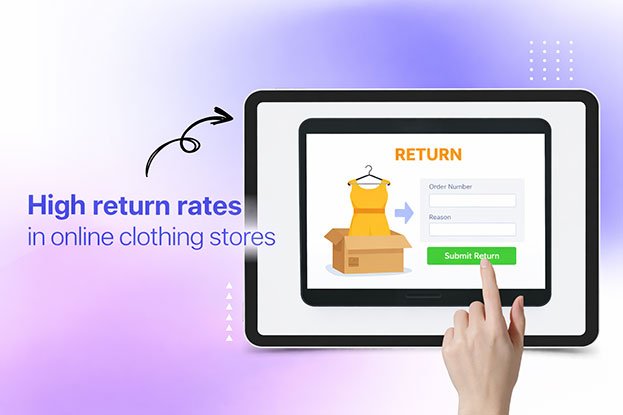
Every fashion brand selling online eventually faces the same frustrating pattern: orders go out, and a noticeable share of them come back. Online clothing store return rates tend to run higher than in many other ecommerce categories, and the reason is simple. Customers cannot touch the fabric, try on the garment, or see the true color under natural light before they buy. They rely almost entirely on what the product page shows them.
That makes the product page, and especially the product images, one of the most important tools a clothing store has for setting accurate expectations. When images are clear, consistent, and true to the real garment, customers can make a more confident buying decision. When images are unclear, inconsistent, or misleading, the gap between what customers expect and what they receive grows wider.
This guide explains why customers return clothes, which return reasons are connected to product presentation, and how professional apparel photo editing can help reduce avoidable returns. It also covers what images cannot fix, so you can build a realistic, complete strategy for your store.
The Real Cause of Most Clothing Returns: The Expectation Gap
To understand high return rates in fashion ecommerce, it helps to think about the buying journey in three stages:
What customers expect → What customers see online → What customers receive
A customer arrives with a need or an idea. Maybe they want a relaxed linen shirt for summer, or a fitted black dress for an event. They browse product pages and form a mental picture of each item based on photos, descriptions, size charts, and reviews. Then the package arrives, and they compare the real product against that mental picture.
If the real garment matches or exceeds what they pictured, they keep it. If it falls short in color, fit, fabric, or overall appearance, the return process begins.
Many online clothing return problems come from a breakdown in the middle stage. The customer saw something online that did not accurately represent what they later received. That is why improving product representation is one of the most practical ways to reduce clothing returns. It works on the part of the journey that a store controls directly.
Why Customers Return Clothes: The Most Common Reasons
Clothing return reasons vary by brand, product type, and customer base, but most fall into three broad groups.
1. Product Understanding Problems
These returns happen because the customer misunderstood something about the product before purchasing.
Incorrect size. The customer ordered a size that did not fit. This often happens when size guides are missing, generic, or inconsistent with the brand’s actual cut.
Poor fit. The size may be technically correct, but the garment fits differently than expected. A shirt may be boxier, a pair of jeans may sit higher on the waist, or a dress may be shorter than it looked on the model.
Color differences. The garment arrives in a shade that looks different from the photo. A navy that looked almost black online, a beige that turned out more yellow, or a red that appeared brighter on screen are all common complaints.
Product looks different from the images. The overall look of the item does not match the photos. This can involve shape, drape, length, or styling.
Misleading product presentation. Heavy editing, aggressive pinning on the model, or flattering angles can make a garment look more tailored or luxurious than it really is.
Unclear product details. Customers could not see important details like pocket placement, closures, lining, neckline shape, or back design.
Fabric expectations. The fabric feels thinner, stiffer, shinier, or more see-through than the customer expected from the images and description.
Poor product descriptions. Missing or vague information about material, measurements, stretch, and care leaves customers guessing.
2. Operational Problems
These returns come from issues after the purchase decision.
Quality issues. Loose threads, weak seams, or inconsistent manufacturing.
Shipping problems. Late deliveries that miss an event date or arrive after the customer no longer needs the item.
Damaged products. Items that were stained, torn, or crushed during handling or transit.
Incorrect items shipped. The wrong size, color, or product was sent.
3. Customer Behavior
Customer changed their mind. Some returns simply reflect a change of heart, budget reconsideration, or impulse purchases.
Bracketing. Some shoppers order multiple sizes or colors intending to keep only one. This behavior is often a response to uncertainty about fit or color, which means better product information can sometimes reduce it.
Notice that the first group, product understanding problems, is heavily influenced by what customers see on the product page. That is where product images play their biggest role.
Why Product Images Matter So Much in Fashion Ecommerce
In a physical store, a shopper can pick up a sweater, feel the knit, hold it against their body, check the color under daylight near the window, and try it on in a fitting room. Online clothing shopping removes almost all of those sensory checks.
Product images become the substitute for that in-store experience. They have to answer questions such as:
- What does the fabric look like up close?
- How does the garment hang and drape?
- What is the true color?
- How long is it, and where does it fall on the body?
- What do the front, back, and side look like?
- What details, trims, and hardware are included?
Mobile shopping makes this even more important. Many customers browse fashion product pages on a phone screen, often quickly, and often without reading every line of the description. For these shoppers, images carry most of the information load. If the images are small, dark, cluttered, or inconsistent, the customer is left filling gaps with assumptions, and assumptions are where returns start.
Strong apparel product images do more than make a product look attractive. They reduce uncertainty. They help customers form an accurate picture of the item before they commit, which supports purchase confidence and customer trust.
How Poor Product Images Contribute to Clothing Returns
Before looking at solutions, it is worth identifying the specific image problems that can lead to ecommerce clothing returns.
Inaccurate Color
Color is one of the most common reasons customers return clothes. Photos can shift color because of lighting setups, camera white balance, mixed light sources, or inconsistent editing. A garment photographed under warm studio lights may appear more orange or yellow than it really is. Without proper color correction, the product image may not match the physical item.
Hidden or Blurry Details
If buttons, zippers, stitching, prints, or textures are not visible, customers cannot judge quality or design. Low resolution images and poor focus make it hard to evaluate what they are paying for.
Distorted Shape
Garments photographed flat, crumpled, or badly pinned may not show their true silhouette. On the other hand, heavy pinning on a model can make a loose garment look tailored. Both create a mismatch.
Inconsistent Presentation Across the Catalog
When some products are shot on white backgrounds, some on gray, some with shadows and some without, and at different crop sizes, the store looks less professional. Inconsistency also makes it harder for customers to compare items, sizes, and colors.
Distracting Backgrounds
Cluttered or colored backgrounds can pull attention away from the garment and may even affect how the eye perceives its color.
Over-Retouching
Excessive smoothing can remove the real texture of a fabric, making a textured knit look like a smooth jersey or making a cotton blend look like silk. This can raise expectations that the real product cannot meet.
Missing Angles
A single front-facing image rarely tells the full story. Without back views, side views, close-ups, and on-body shots, customers are forced to guess.
Each of these problems increases the distance between what customers see online and what they receive. That distance is what professional editing aims to reduce.
How Professional Apparel Photo Editing Can Help Reduce Avoidable Returns
Professional apparel photo editing is not about making products look better than reality. Its value lies in making products look like reality, presented clearly and consistently. Here is how specific editing services can support a clearer buying decision.
Color Correction for True-to-Life Clothing Color
Color correction adjusts white balance, exposure, and hue so the product image matches the actual garment as closely as possible. Skilled editors compare the image against the physical sample or a reference color and correct any shifts caused by lighting or camera settings.
This is especially important for:
- Neutral shades like beige, cream, gray, and taupe, where small shifts are very noticeable
- Dark colors like navy, charcoal, and forest green, which can easily read as black
- Bright or saturated colors, which cameras sometimes exaggerate
- Products sold in multiple colorways, where each variant needs to look distinct and accurate
Accurate color can help reduce one of the most common return reasons in fashion ecommerce. It is worth noting that customers view images on different screens, so perfect color matching on every device is not possible. Still, a correctly edited master image gives every customer the best possible starting point.
Background Removal and Clipping Path
Background removal isolates the garment from its original setting and places it on a clean, consistent background, usually white or light gray. Clipping path and image masking techniques allow editors to cut out the product precisely, including fine edges like fringe, lace, fur trims, or loose threads.
Clean backgrounds improve product visibility, remove distractions, and help the garment’s true color and shape stand out. They also meet the image requirements of many marketplaces and keep the product catalog visually consistent.
Ghost Mannequin Editing for Realistic Garment Shape
Ghost mannequin editing, sometimes called the invisible mannequin effect, removes the mannequin from the photo while keeping the garment’s three-dimensional shape. Editors typically combine the main shot with an inside shot of the neckline or back to show the interior of the garment.
This technique helps customers see:
- How the garment holds its shape when worn
- The true neckline, collar, and shoulder structure
- The fit silhouette without the distraction of a model or mannequin
- Interior details like labels and lining
Ghost mannequin images sit between flat lays and model shots. They show structure and shape more clearly than a flat garment, while keeping the focus entirely on the product. For many clothing product pages, they can improve product understanding significantly.
Model Image Retouching
Model photography and lifestyle photography show customers how clothing looks on a real body and how it moves in real settings. Professional retouching for model images can include skin cleanup, removal of stray hairs or lint, background cleanup, and correction of distracting creases.
The key is balance. Retouching should clean up distractions without altering the garment’s fit, length, or proportions. If a dress is reshaped digitally to look more fitted than it is, the image becomes misleading, and misleading images can increase returns rather than reduce them.
Wrinkle Removal and Fabric Enhancement
Garments often arrive at a photo shoot with folds, creases, and packing marks. Wrinkle removal cleans up these temporary flaws so customers see the garment as it looks when properly worn or steamed.
Fabric enhancement can bring out texture, weave, and surface detail that may look flat in an unedited photo. A good editor will sharpen and clarify texture rather than smooth it away. This helps customers understand whether a fabric is ribbed, brushed, knitted, woven, matte, or glossy, which directly supports accurate fabric expectations.
Editors should remove temporary wrinkles, not natural characteristics. Linen, for example, naturally creases. Removing every crease from a linen shirt could set an unrealistic expectation.
Detail Visibility and Close-Up Shots
Close-up images of stitching, prints, buttons, zippers, embroidery, and fabric texture give customers the information they would normally gather by touching the garment in store. Professional product image retouching ensures these close-ups are sharp, well lit, and accurate.
Detail shots can help answer the quality questions that often lead to returns, such as “Is this fabric thin?” or “Is the print actually crisp?”
Image Consistency Across the Catalog
Consistent images make a store feel trustworthy and make products easier to compare. Professional editing services can standardize:
- Background color and tone
- Product alignment and positioning
- Margins, padding, and crop ratios
- Shadow style (natural shadow, drop shadow, or none)
- Color and exposure balance across similar products
When every product follows the same visual rules, customers can compare lengths, silhouettes, and colors across items more reliably. This consistency also supports size comparison when similar garments are photographed at the same scale.
Image Cropping, Resolution, and Optimization
Product image optimization ensures images are high enough in resolution for zoom, correctly cropped for different placements, and compressed for fast loading. Fast loading matters for mobile shopping, where slow pages can cause customers to skip images entirely. High resolution matters for zoom, where customers inspect fabric and details.
A good ecommerce photo editing workflow produces image sets that serve both needs: sharp enough to inspect closely and light enough to load quickly.
The Honesty Rule: Edit to Clarify, Not to Mislead
The most important principle in fashion product photo editing is accuracy. Editing that clarifies the product helps customers. Editing that exaggerates the product hurts both customers and the business.
Editing that helps set accurate expectations:
- Correcting color to match the real garment
- Removing dust, lint, and temporary creases
- Cleaning up distracting backgrounds
- Showing the garment’s true shape through ghost mannequin editing
- Sharpening fabric texture and details
Editing that can increase returns:
- Shifting colors to look more vibrant than the real product
- Digitally slimming or reshaping garments to look more fitted
- Smoothing fabric texture so it looks more premium than it is
- Hiding flaws in construction or design
- Using images of a sample that differs from the production version
A product image is essentially a promise. Every edit should make that promise clearer, not bigger. When customers receive exactly what they saw, the chance of a disappointment-driven return drops.
Building Product Pages Where Images and Information Work Together
Images are powerful, but they work best alongside strong written information. To reduce ecommerce return rates effectively, clothing product pages should combine clear visuals with detailed, accurate content.
Size Guides and Garment Measurements
Generic size charts often cause sizing returns. Wherever possible, provide garment-specific measurements such as chest width, waist, hip, length, sleeve length, and inseam. Explain how measurements were taken. If a style runs small or large, say so directly.
Fit Information
Describe the intended fit clearly: slim, regular, relaxed, oversized, cropped, or high-rise. Pair this with model information, such as the model’s height and the size they are wearing. This helps customers translate the model image to their own body.
Fabric Details
List the fabric composition, weight where relevant, stretch level, opacity, and texture. Words like “lightweight,” “sheer,” “structured,” or “soft brushed finish” help customers form accurate fabric expectations that images alone may not fully communicate.
Clear Product Descriptions
Good product descriptions answer practical questions: Where does the hem fall? Is there a lining? Does the neckline sit high or low? How should it be washed? Avoid vague marketing language that does not add information.
Multiple Image Types
A well-rounded image set for a clothing product page might include:
- Front view on a clean background
- Back view
- Side or three-quarter view
- Ghost mannequin shot showing structure
- On-model shot showing fit and length
- Close-up of fabric texture
- Close-up of key details like closures, trims, or prints
- Lifestyle shot showing the garment in context
- Colorway images for every available color
Customer Reviews and Photos
Reviews that mention fit (“runs small,” “true to size”) and customer-submitted photos add real-world context. They complement professional images by showing the garment on different body types.
Short Product Videos
Brief videos showing movement, drape, and fabric behavior can add information that still images cannot fully capture. Even simple clips of a model turning around can help.
A Practical Image Checklist for Clothing Product Pages
Use this checklist to review your current product images and identify gaps that may be contributing to avoidable returns.
- Does the color in the image match the physical garment in natural light? Compare side by side.
- Is the background clean and consistent with the rest of your catalog?
- Can customers see the front, back, and side of the garment?
- Is the fabric texture visible when zoomed in?
- Are key details (closures, pockets, trims, prints) shown clearly?
- Does at least one image show the garment’s true shape and structure?
- Does an on-model image show realistic fit and length?
- Are temporary wrinkles and lint removed without erasing natural fabric character?
- Is every colorway photographed and edited accurately?
- Are images high resolution for zoom but optimized for fast mobile loading?
- Are crop ratios and product positioning consistent across similar items?
- Does anything in the images exaggerate or misrepresent the real product?
If several answers are “no,” your product images may be adding to customer uncertainty, and improving them is a sensible place to start.
What Product Images Cannot Fix
It is important to be realistic. Better images can help reduce avoidable returns, but return rates are influenced by the entire customer experience. Images cannot solve:
- Manufacturing quality problems. If seams fail or fabrics pill quickly, no image will prevent those returns.
- Fulfillment errors. Shipping the wrong size or color is an operational issue.
- Shipping delays and damage. These depend on logistics partners and packaging.
- Genuine changes of mind. Some customers will return items regardless of how accurate the presentation was.
- Inconsistent sizing between production batches. If sizes vary from batch to batch, even perfect size guides become unreliable.
- Return policy incentives. Very lenient policies can encourage bracketing and impulse buying.
The most effective approach combines accurate images, detailed product information, consistent manufacturing, reliable fulfillment, and a clear return policy. Images are one important piece of a larger system.
How to Measure the Impact of Better Product Images
If you invest in improving apparel product images, track results carefully so you can see what is actually changing.
Collect specific return reasons. Replace vague options like “didn’t like it” with specific choices such as “color different than expected,” “fabric different than expected,” “fit too small,” “fit too large,” and “looked different from photos.”
Segment by product. Look at return rates per product or category rather than store-wide averages. This shows which product pages may have presentation problems.
Compare before and after. When you update images for a set of products, compare their image-related return reasons over a similar period before and after the change. Account for seasonality and promotions, which can affect results.
Read customer feedback. Reviews, support tickets, and return comments often reveal exactly what customers expected versus what they got.
Watch conversion alongside returns. Better images may improve conversions as well. Tracking both gives a fuller picture of how product presentation affects performance.
Results will vary by store, product type, and customer base, so treat improvements as something to test and measure rather than assume.
Frequently Asked Questions
Why are online clothing store return rates higher than in other categories?
Clothing depends heavily on fit, fabric feel, and color, which customers cannot fully evaluate online. Sizing also varies between brands. This uncertainty leads to more mismatches between expectations and the delivered product, and some shoppers order multiple sizes intending to return the extras.
Can better product images eliminate clothing returns?
No. Better images can help reduce avoidable returns caused by color, detail, fabric, and presentation issues, but they cannot prevent returns caused by quality problems, fulfillment errors, shipping issues, or customers changing their minds.
What type of image editing is most useful for reducing apparel returns?
Color correction, ghost mannequin editing, clean background removal, detail enhancement, and consistent catalog styling are especially useful, because they help customers understand the true color, shape, and detail of the garment.
Is heavy retouching bad for ecommerce clothing returns?
Retouching that removes temporary distractions like lint or packing creases is helpful. Retouching that changes the garment’s shape, color, or texture beyond reality can raise expectations the product cannot meet, which may increase returns.
How many images should a clothing product page have?
There is no fixed number, but a strong page usually shows the front, back, and side, at least one on-model image, close-ups of fabric and details, and images of every available color.
Do ghost mannequin images help customers understand fit?
Ghost mannequin images show the garment’s structure, neckline, and silhouette clearly. They work best alongside on-model images, which show how the garment fits on a body.
Conclusion: Close the Gap Between Expectation and Reality
High return rates for online clothing stores are rarely caused by a single factor. They come from a combination of sizing uncertainty, fit differences, color mismatches, fabric surprises, operational errors, and ordinary customer behavior. Still, a large share of avoidable returns traces back to one core problem: the customer’s expectation, built from the product page, did not match the garment they received.
Accurate, consistent, professionally edited product images are one of the most direct ways to narrow that gap. True-to-life color, clean backgrounds, realistic shape through ghost mannequin editing, visible fabric texture, and clear detail shots all help customers understand what they are buying. Combined with detailed size guides, honest descriptions, and reliable operations, strong visuals can support better buying decisions and more satisfied customers.
If your product images are inconsistent, inaccurate in color, or missing important details, Clipping Area can help. Since 2014, our team has provided professional apparel photo editing services for ecommerce brands, fashion labels, and photographers worldwide, including color correction, ghost mannequin editing, background removal, clipping path, and product image retouching. Get a free trial and see how accurate product presentation can support a clearer buying experience for your customers.