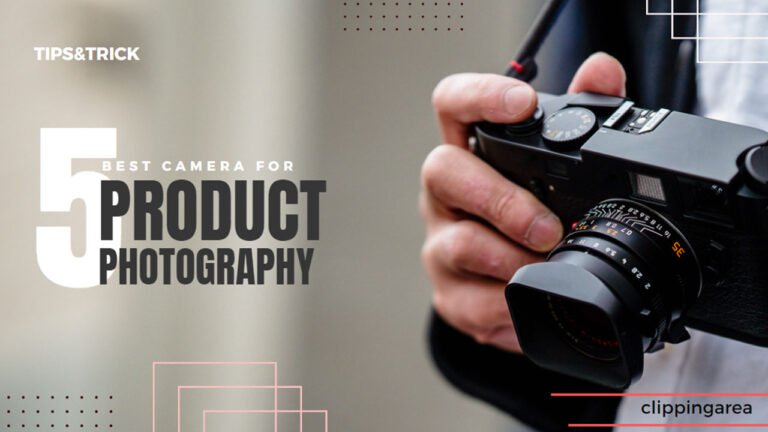
I’ve lost count of how many times someone has asked me, “Which camera should I buy for product photos?” It sounds like a simple question. It isn’t.
After years of shooting products and editing thousands of ecommerce images every month at Clipping Area, here’s what I’ve learned: the best camera for product photography is rarely the most expensive one. It’s the one that fits your products, your sales channels, your workflow, and your budget.
A $1,000 camera with the right lens and decent lighting will beat a $5,000 camera used carelessly. Every single time.
This guide won’t just throw a list of camera models at you. Instead, it walks you through how to evaluate a product photography camera, which features actually matter, which ones are marketing noise, and how much you really need to spend in 2026.
The Short Answer
If you want the quick version, here it is.
For most ecommerce sellers and product photographers, a mirrorless camera with 24 to 45 megapixels, a macro lens in the 60mm to 105mm range, support for tethered shooting, and built-in focus bracketing covers almost everything. Full-frame is nice but not required. 4K video is worth having. The rest of your money should go into lighting, a solid tripod, and professional post-production.
Now let’s break down why.
Start With Your Products, Not the Camera
Before you look at a single spec sheet, answer three questions.
What are you photographing?
Jewelry, watches, and cosmetics need sharp close-up detail. Clothing and shoes need accurate color and texture. Furniture and large items need a wider view and good edge-to-edge sharpness. Food needs natural color and shallow depth control.
Where will the images be used?
An Amazon listing, a Shopify store, an Instagram feed, and a printed catalog all have different needs. Web images are small. Print images are large. Zoom-enabled product pages sit somewhere in between.
How many images do you shoot?
Ten products a month is a hobby-level workload. Five hundred products a week is a production line. High volume means you care more about speed, battery life, tethering, and a consistent workflow than about tiny image-quality gains.
Once you know these answers, choosing a camera gets much easier. You stop asking “What’s the best camera?” and start asking “What’s the best camera for this job?”
How Many Megapixels Do You Need for Product Photography?
Megapixels are the most overhyped number on any camera box.
A megapixel is simply one million pixels. More megapixels means a bigger image file with more detail. That sounds great, but it comes with bigger files, slower editing, and more storage costs.
Here’s what ecommerce platforms actually ask for. Amazon requires at least 1,000 pixels on the longest side for zoom to work and recommends 1,600 pixels or more. Shopify recommends square images around 2,048 x 2,048 pixels. A 24-megapixel camera produces images around 6,000 x 4,000 pixels. That’s already three times more than most stores need.
So why would anyone want more?
Cropping room. If you shoot small items like rings or earrings, you often can’t get close enough to fill the frame. Extra megapixels let you crop in and still keep a sharp, high-resolution result.
Multiple outputs from one shot. One high-resolution image can become a main listing photo, a detail crop, a banner, and a social post.
Print work. Catalogs, packaging, and large-format retail displays benefit from 45 megapixels or more.
My practical rule:
- 20 to 26MP: Enough for most ecommerce stores, marketplaces, and social media.
- 30 to 45MP: The sweet spot for professional product photographers who crop often or deliver to multiple channels.
- 50MP and above: Useful for jewelry, luxury goods, catalogs, and print. Overkill for a typical online store.
One more thing. Higher megapixels demand better lenses and more careful technique. A 61MP sensor shows every tiny bit of camera shake and every soft lens corner. If your setup isn’t ready for it, you’ll just get bigger blurry files.
Do You Need a Full-Frame Camera for Product Photography?
Short answer: no.
Sensor size refers to the physical size of the chip that captures light. The main options are:
- Micro Four Thirds: Smallest of the common interchangeable-lens formats. Compact and affordable.
- APS-C (crop sensor): Middle ground. Very popular and good value.
- Full-frame: Same size as a 35mm film frame. The professional standard for many photographers.
- Medium format: Larger than full-frame. Used for high-end fashion, luxury, and advertising work.
Full-frame sensors shine in low light and give you slightly better dynamic range (the ability to hold detail in both bright highlights and dark shadows at the same time). They also make it easier to get that creamy blurred background.
But here’s the thing about product photography. You’re usually in a controlled studio. You’re shooting on a tripod at the lowest ISO setting with strobes or continuous lights. Low-light performance barely matters when you control the light.
In fact, smaller sensors have a hidden advantage for product work. At the same framing and aperture, they give you more depth of field. That means more of your product stays in focus from front to back. For a bottle, a shoe, or a watch, that’s often exactly what you want.
When full-frame is worth it:
- You shoot lifestyle and on-model content with blurred backgrounds.
- You work in mixed or natural light.
- You want the widest choice of professional lenses.
- You also shoot video in varied conditions.
When APS-C is the smarter buy:
- You’re shooting mostly white background ecommerce images.
- Your budget is limited and you’d rather spend on lenses and lighting.
- You want a lighter, more affordable system.
I’ve seen excellent Amazon listings shot on APS-C cameras and poor ones shot on full-frame. Sensor size is not what separates them.
Mirrorless vs DSLR for Product Photography in 2026
This debate is mostly over.
The major camera brands have shifted almost all of their development to mirrorless systems. New lenses, new bodies, and new firmware features are going to mirrorless. DSLRs still work perfectly well, but they’re a shrinking platform.
Here’s why mirrorless is better for product photography specifically:
What you see is what you get. The electronic viewfinder and rear screen show a live preview of your exposure and white balance. You see problems before you press the shutter, not after.
Focus peaking and magnification. These tools highlight exactly what’s in focus and let you zoom in on the screen. For manual focus on a tripod, they’re incredibly helpful.
Built-in focus bracketing. Many mirrorless cameras can automatically shoot a series of images at different focus distances. You then blend them into one fully sharp image (a technique called focus stacking). For jewelry, cosmetics, and small products, this is a huge time saver.
Silent shooting. Useful when you’re shooting video alongside stills or working in quiet spaces.
Better tethering support. Most modern mirrorless cameras connect smoothly to capture software on a laptop or desktop.
Is a used DSLR still an option? Yes, if money is tight. A good used DSLR with a quality macro lens can still produce professional product images. Just know that you’re buying into a system that isn’t growing. If you plan to upgrade later, a mirrorless mount gives you a better long-term path.
The Lens Matters More Than the Camera Body
If I could give only one piece of advice, it would be this: spend more on the lens than you think you should.
Camera bodies get replaced every few years. A good lens can serve you for a decade. And the lens has a bigger effect on sharpness, distortion, and the overall look of your product images than the body does.
Best Lens Types for Product Photography
Macro lens (60mm to 105mm on full-frame, around 60mm on APS-C)
This is the workhorse of product photography. A true macro lens can focus very close and reproduce small objects at life size. It’s also extremely sharp and has very little distortion. A 90mm or 100mm macro on full-frame is the lens I’d buy first for most ecommerce work. It lets you stand back from the product a little, which keeps shapes natural and gives you room to place lights.
Standard zoom (24-70mm or 24-105mm)
Great for larger products, group shots, furniture, and flat lays. It gives you flexibility without swapping lenses. Just avoid shooting products at the widest end, because wide angles stretch and bend shapes.
50mm prime
Affordable, sharp, and a good all-rounder for medium-sized items and lifestyle shots. Not ideal for small products because it can’t focus close enough.
Tilt-shift lens
A specialist tool used for advanced control over focus planes and perspective. Great for packaging, architecture-style product shots, and high-end commercial work. Expensive and not necessary for most sellers.
A Quick Note on Kit Lenses
The zoom lens that comes bundled with most cameras is fine for learning. But it usually can’t focus close, and it’s not as sharp as a macro lens. If your images look “almost professional” but not quite, the kit lens is often the reason.
Why Focal Length Changes the Look of Your Product
Shooting a product close up with a wide lens makes the front of it look bigger than the back. A perfume bottle starts to look like it’s leaning toward the viewer. A longer focal length (like 90mm or 100mm) keeps proportions accurate, which is exactly what customers need to see before buying.
How Important Is Autofocus for Product Photography?
Less than camera ads suggest.
For classic ecommerce work (a product on a white background, camera locked on a tripod), most experienced photographers switch to manual focus. You set focus once, check it with magnification, and shoot. The product isn’t moving. The camera isn’t moving. Fancy subject-tracking autofocus doesn’t help much here.
What does help:
- Focus peaking to confirm sharp areas at a glance.
- Focus magnification to check fine detail on the screen.
- Focus bracketing for stacking.
- Reliable touch-to-focus on the rear screen for quick adjustments.
Autofocus becomes important when you move into:
- On-model fashion photography, where the model moves.
- Lifestyle product shots, where products are handled or used.
- Product video, where focus has to shift smoothly from one point to another.
If your work includes any of these, strong eye detection and smooth video autofocus are worth paying for. If you only shoot packshots, don’t let autofocus specs drive your decision.
Do You Need 4K Video for Product Photography?
In 2026, the honest answer is: probably yes.
Product video has moved from “nice to have” to expected. Amazon listings support video. Shopify product pages support video. TikTok Shop, Instagram Reels, and YouTube Shorts are major sales channels for many brands. Short clips showing texture, movement, and scale convert well.
The good news is that 4K is now standard on almost every modern camera. You don’t need to hunt for it. What you should check instead:
- Recording limits and overheating. Some compact bodies stop recording after a certain time or get hot during long sessions.
- 10-bit recording. This stores more color information, which gives you more room to adjust color in editing without banding (those ugly stripes in smooth gradients).
- Frame rates. 60 frames per second or higher lets you create smooth slow motion, which looks great for pouring liquids, fabric movement, and cosmetics.
- Clean HDMI output. Useful if you want to record to an external monitor or stream product demos.
- Crop in 4K. Some cameras crop the image when recording 4K, which makes your lens act longer than it is. Worth knowing before you plan a tight studio space.
You don’t need 8K for product video. Very few people watch product clips on screens that benefit from it, and the file sizes are huge.
Camera Features That Actually Matter for Product Photography
Spec sheets list dozens of features. Only a handful really change your day-to-day product work.
Tethered Shooting
Tethering means connecting your camera to a computer so images appear instantly on a large screen. You can check focus, lighting, reflections, and color at full size while you shoot. For product photography, this is one of the most valuable features you can have. It catches mistakes early and saves hours of reshoots.
Check that the camera works with the capture software you plan to use before you buy. Support varies between brands and models.
RAW File Quality
Always shoot RAW. A RAW file holds much more information than a JPEG, which gives you and your editor far more room to fix white balance, recover highlights, and refine color. Look for cameras that shoot 14-bit RAW for the best editing flexibility.
This matters more than people realize. When clients send us RAW files at Clipping Area, we can match brand colors more accurately and clean up backgrounds more cleanly than with compressed JPEGs.
Dynamic Range
Dynamic range is how well a camera captures detail in both bright and dark areas. It matters for shiny products like jewelry, chrome, glass, and glossy packaging, where you have bright reflections next to deep shadows. Most modern cameras are very good here, so you don’t need to chase the top score.
Color Accuracy
Customers return products when colors don’t match the photo. That makes color one of the most important things in ecommerce photography.
In practice, color accuracy depends more on your lighting, your white balance, and your editing than on the camera brand. Use a color checker card, set a custom white balance, and keep your lights consistent. Any modern camera can deliver accurate color with that workflow.
Pixel Shift
Some cameras can move the sensor slightly between several shots and combine them into one very high-resolution, highly detailed image. It’s impressive for fabric texture, artwork, and fine jewelry detail.
The catch: nothing can move during the capture. Not the camera, not the product, not even a light breeze on a fabric edge. It’s a studio-only tool, and processing can be slow. Nice to have, not a must.
Flash Sync and Lighting Compatibility
If you use strobes, make sure the camera works with your wireless flash triggers. Also note that most cameras can’t sync flash properly when using the fully electronic shutter. You’ll usually shoot with the mechanical shutter for flash work.
Articulating Screen
A screen that flips out and rotates makes overhead flat lays and low-angle shots far easier. You’ll use it more than you expect.
Continuous Power
For long studio days, look for a camera that can run on AC power through a dummy battery or USB power delivery. Swapping batteries mid-session can knock your camera slightly and ruin alignment across a product series.
Features You Can Mostly Ignore
- In-body image stabilization (IBIS): Great for handheld shooting. Almost irrelevant on a tripod, and many photographers turn it off in the studio.
- High burst rates: Shooting 30 frames per second doesn’t help when your product sits still.
- Very high ISO performance: You’ll rarely go above ISO 400 in a lit studio.
- Weather sealing: Useful outdoors, not important in a studio.
What About Smartphones?
Phones have come a long way. For small sellers just starting out, social media content, and quick marketplace listings, a recent flagship phone with good lighting can produce usable results.
But phones have real limits for professional product photography:
- Heavy automatic processing that changes colors and textures.
- Wide lenses that distort product shapes up close.
- Limited control over focus and depth of field.
- No real tethering or flash sync for studio lighting.
If you’re serious about growing a brand or running a product photography business, a dedicated camera is worth it. The consistency alone pays off across a large catalog.
How Much Should You Spend on a Product Photography Camera?
Here’s a realistic way to think about budget. These are rough ranges for body plus a suitable lens.
Under $1,000: Starter setup
An entry-level APS-C mirrorless camera or a used DSLR paired with an affordable macro lens. Perfect for small online stores, marketplace sellers, and people learning product photography. Pair it with two basic continuous lights and a sturdy tripod.
$1,000 to $2,500: Serious seller setup
A mid-range APS-C or entry full-frame mirrorless camera with a quality macro lens. This is where most growing ecommerce brands should be. You get excellent image quality, tethering, focus bracketing, and strong 4K video.
$2,500 to $5,000: Professional studio setup
A high-resolution full-frame body (around 40 to 60MP) with a premium macro lens and a standard zoom. Ideal for product photographers serving multiple clients, catalog work, and jewelry or luxury brands.
$5,000 and up: High-end commercial setup
Medium format systems or top-tier full-frame bodies with specialty lenses like tilt-shift. Best suited for advertising agencies, luxury brands, and large print campaigns.
How to Split Your Budget
This is where many people go wrong. They spend 80 percent on the camera body and leave almost nothing for everything else.
A better split for most product photographers:
- Around 35 to 40 percent on the camera body
- Around 30 to 35 percent on lenses
- Around 20 to 25 percent on lighting, modifiers, and a solid tripod
- The rest on backgrounds, color checker, reflectors, and small accessories
Lighting shapes a product. A cheap camera with great light looks professional. An expensive camera with bad light looks amateur.
Is an Expensive Camera Necessary for Professional Product Images?
No. And I say this as someone who sees the raw files behind a lot of professional ecommerce work.
Many of the product images you admire on major retail sites started as fairly ordinary shots. What makes them look polished is a combination of:
- Good lighting that shows shape and texture.
- Stable, consistent camera setup across the whole product range.
- Correct white balance and exposure at capture.
- Professional post-production that handles background removal, clipping paths, dust and scratch cleanup, color correction, shadow creation, and ghost mannequin effects.
The camera captures the raw material. Editing turns it into a finished product image that meets marketplace rules and matches your brand.
A mid-range camera paired with skilled retouching will usually outperform a flagship camera with no editing. That’s not a sales pitch. It’s just how commercial product photography works.
A Practical Checklist Before You Buy
Run through this list before you spend any money:
- Do I know what products I’m shooting and where the images will be used?
- Does the camera have enough resolution for my output? (24MP for most web use, 40MP or more if I crop heavily or print.)
- Is it mirrorless with a lens system that’s still growing?
- Is there a good macro lens available for this mount within my budget?
- Does it support tethered shooting with my preferred software?
- Does it offer focus bracketing?
- Does it shoot 14-bit RAW?
- Does it record 4K video without heavy crop or overheating?
- Does it have an articulating screen?
- Can it run on continuous power for long sessions?
- Have I set aside enough budget for lighting and a tripod?
If you can tick most of these boxes, you’ve found a solid camera for product photography.
Common Mistakes When Choosing a Product Photography Camera
Buying for megapixels alone. More pixels won’t fix poor lighting or a soft lens.
Ignoring the lens system. A great body with limited, expensive lens options can trap you.
Skipping the tripod. Even the best camera produces inconsistent results handheld. Consistency matters when your listing shows 50 products side by side.
Choosing a camera for features you’ll never use. Sports-level autofocus and 30fps burst look great on paper but add nothing to packshots.
Shooting JPEG to save space. Storage is cheap. Reshoots aren’t. Shoot RAW.
Forgetting about editing time. Huge files slow down your workflow. If you shoot hundreds of products a week, factor in the time and cost of processing and retouching.
Where Post-Production Fits Into Your Camera Decision
Here’s something camera reviews almost never mention: your editing workflow should influence your camera choice.
If you plan to outsource retouching, you don’t need the most expensive camera to get marketplace-ready images. You need clean, well-lit, consistent RAW files. A professional editing team can handle the rest, from pure white backgrounds and precise clipping paths to natural shadows, reflections, color matching, and batch consistency.
At Clipping Area, we’ve been editing product images for ecommerce brands, fashion labels, photographers, and agencies since 2014. We see photos from every kind of camera, from entry-level bodies to medium format systems. The best results always come from photographers who focus on light, consistency, and good capture habits, then let skilled editors finish the job.
If you want to see what professional retouching can do for your product photos, you can try 2 free trial edits with Clipping Area. Product photo editing starts at $0.29 per image, with services covering clipping path, background removal, ghost mannequin, color correction, photo retouching, and product video editing.
Frequently Asked Questions
What is the best camera for product photography in 2026?
There isn’t one best camera for everyone. For most sellers, a mirrorless camera with 24 to 45 megapixels, a 60mm to 105mm macro lens, tethering support, and focus bracketing is the smartest choice. Pick the one that fits your products, output needs, and budget.
Do I need a full-frame camera for product photography?
No. APS-C cameras produce excellent product images in a studio. Full-frame helps with low light, shallow depth of field, and lens choice, but it isn’t required for white background ecommerce work.
Is mirrorless better than DSLR for product photography?
Yes, for most people. Mirrorless cameras offer live exposure preview, focus peaking, built-in focus bracketing, and better tethering. Camera makers are also focusing new development on mirrorless systems.
How many megapixels do I need for ecommerce product photos?
20 to 26 megapixels is enough for most online stores and marketplaces. Go for 40 megapixels or more if you crop heavily, shoot jewelry, or need print-quality images.
What is the best lens for product photography?
A macro lens between 60mm and 105mm (full-frame equivalent) is the best first lens for most product photographers. It focuses close, stays sharp, and keeps product shapes accurate.
Is autofocus important for product photography?
Not much for studio packshots, where manual focus on a tripod works best. It matters more for on-model, lifestyle, and video work.
Do I need 4K video for product photography?
It’s highly recommended. Product videos are common on Amazon, Shopify, and social commerce platforms, and 4K is standard on nearly every modern camera.
How much should I spend on a product photography camera?
Most growing ecommerce brands do well with a total camera and lens budget of $1,000 to $2,500. Keep a good share of your budget for lighting and a tripod.
Can I use a smartphone for product photography?
Yes, for starting out and social media content. For consistent, professional ecommerce catalogs, a dedicated camera gives you far more control and better results.
Does an expensive camera guarantee professional product photos?
No. Lighting, consistency, and professional post-production matter more than the camera price tag.
Final Thoughts
Choosing a camera for product photography isn’t about chasing the newest release or the highest specs. It’s about matching the tool to the job.
Know your products. Know where your images will live. Buy a mirrorless body with enough resolution, put real money into a good macro lens, and don’t skimp on lighting or a tripod. Shoot RAW, stay consistent, and treat editing as part of the process, not an afterthought.
Do that, and even a mid-range camera will give you product images that look professional, build trust with buyers, and help your products sell.