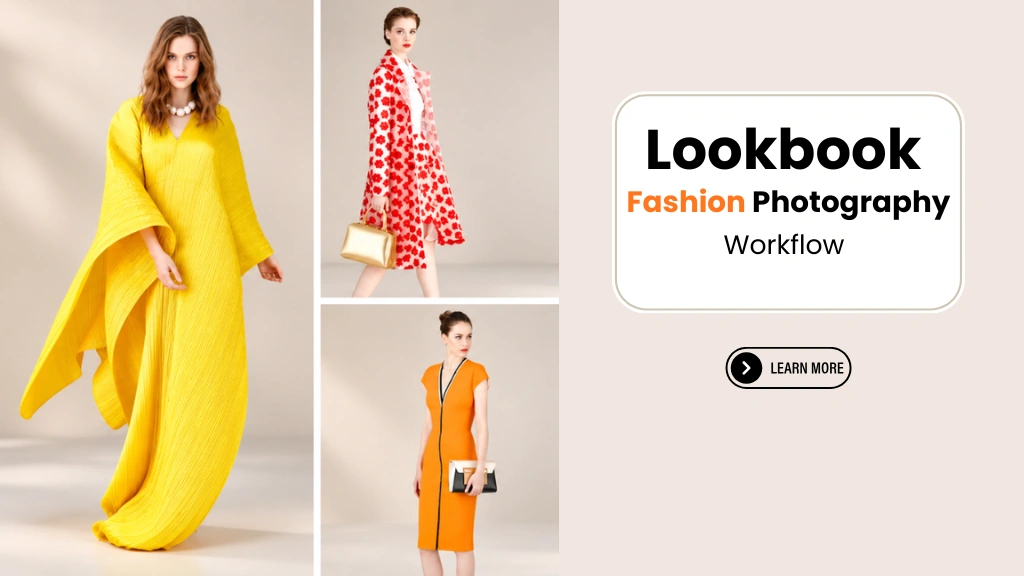
Product photography for clothing brands plays a critical role in building trust, improving conversion rates, and reducing return rates in ecommerce.
In fashion ecommerce, customers cannot touch the fabric, try the fit, or see the true color under natural light. Their purchase decision depends entirely on what your product images communicate.
If your visuals lack clarity, accuracy, or consistency, performance suffers. Brands begin to experience traffic without sales, higher return rates, and unpredictable collection results.
In apparel, visual trust determines buying confidence.
Why Product Photography for Clothing Brands Determines eCommerce Performance
Product photography for clothing brands is not about making garments look stylish. It is about eliminating uncertainty.
When customers view a product page, they subconsciously ask:
Is this color accurate?
Does this fabric look premium or thin?
Will the shape fit as expected?
Does this brand look professional and consistent?
If your images answer those questions clearly, conversion improves.
If they create hesitation, buyers leave.
Clothing is one of the most visually sensitive product categories in ecommerce. Slight color shifts, inconsistent lighting, flat texture, or distorted garment shape can reduce perceived quality — even if the product itself is excellent.
Strong product photography creates:
Confidence in color
Clarity in texture
Realistic garment shape
Consistent catalog presentation
And consistency builds trust.
In fashion ecommerce, trust directly influences conversion stability, return reduction, and long-term brand positioning.
Product photography for clothing brands is not decorative content.
It is performance infrastructure.
1️⃣ Capture Stage: Building a Controlled Foundation
Professional apparel photography starts before editing.
The goal is not “creative shots.”
The goal is repeatable clarity.
Essential Setup Requirements
DSLR or mirrorless camera with manual control
Fixed tripod height per product category
Controlled lighting (ideally 5500K daylight)
Neutral background with defined brightness range
Proper garment preparation (steaming, shaping, lint removal)
But here’s what most brands miss:
Equipment does not guarantee consistency.
Without defined lighting and framing standards, every collection looks slightly different.
This becomes a serious problem as SKU volume grows — which is why structured systems like the Scalable Product Image Workflow for Clothing Brands are critical for scaling operations.
Consistency must be engineered.
2️⃣ Editing Stage: Where Trust Is Either Built or Lost
Editing for apparel eCommerce is not about heavy retouching.
It is about:
Color accuracy
Texture clarity
Realistic garment shape
Background uniformity
Color Correction Is Critical
Clothing is color-sensitive.
If whites look yellow, blacks look gray, or pastels shift tone, customers hesitate.
If you’ve experienced complaints like “color not as expected,” review the issue covered in:
👉 Apparel Product Colors Look Wrong Online
Color calibration protects conversion.
Texture & Fabric Clarity
Over-smoothing fabric makes garments look artificial.
Over-sharpening creates harsh, unrealistic edges.
Proper editing maintains:
Stitch visibility
Weave detail
Natural folds
Texture clarity influences perceived quality.
Perceived quality influences pricing power.
Shape Integrity Matters
Improper editing can distort:
Shoulder alignment
Sleeve proportions
Garment drape
This creates unrealistic expectations — increasing return risk.
Structured ghost mannequin editing, when done correctly, preserves realistic shape while enhancing presentation.
If you want to understand what goes wrong, review:
👉 Why Ghost Mannequin Photos Look Unprofessional
3️⃣ Advanced Apparel Techniques That Improve Performance
Ghost Mannequin for Structured Presentation
Ghost mannequin editing creates a 3D silhouette without visual distraction.
It improves:
Fit visualization
Professional appearance
Marketplace compliance
Catalog uniformity
But it must follow clear visual standards to avoid distortion.
Bulk Editing for Collection Consistency
As SKU volume increases, manual editing becomes inconsistent.
Bulk processing systems ensure:
Lighting remains uniform
Background brightness is consistent
Color tone aligns across collections
Without batch review, visual drift occurs.
This is why scaling brands implement structured review processes like the Apparel Visual Quality Control Framework.
Consistency protects long-term performance stability.
4️⃣ Background Removal & Catalog Uniformity
Clean backgrounds increase focus.
But more importantly, they increase visual harmony in grid view.
In apparel eCommerce, customers scroll quickly.
If your product grid looks uneven, your brand feels inconsistent.
A properly calibrated white or neutral background should:
Remain within defined brightness levels
Avoid shadow inconsistency
Stay uniform across all SKUs
Uniform grids increase perceived professionalism.
Professionalism increases trust.
5️⃣ Why High-Quality Product Photos Impact Revenue
Strong apparel product photography influences:
Conversion rate
Return rate
Average order value
Ad performance
Brand positioning
High return rates in online clothing stores often trace back to visual expectation gaps — not product quality.
When product images accurately communicate color, shape, and texture:
Buyers hesitate less
Refund rates decrease
Customer satisfaction increases
Photography and editing directly influence profit margin protection.
📊 Case Study: From Amateur Product Photos to Conversion Growth
Brand Profile
Business Type: Online women’s fashion brand like ASOS
Monthly SKUs: 180–250
Traffic: ~75,000 monthly visitors
Ad Spend: Active Meta & Google campaigns
Initial Conversion Rate: 1.9%
Return Rate: 24%
The brand wasn’t struggling with traffic.
They were struggling with performance consistency.
🚨 The Problem
After reviewing their catalog, several issues appeared:
Whites looked slightly yellow in newer collections
Background brightness varied across SKUs
Texture looked flat on darker garments
Ghost mannequin alignment inconsistent
Product grid lacked visual harmony
Individually, no image looked “terrible.”
But collectively, the store lacked discipline.
Customers frequently complained:
“Color is slightly different than shown.”
“Fabric looks different in real life.”
Return rate was increasing — especially for lighter-colored items.
The marketing team initially blamed:
Audience targeting
Pricing
Seasonal trends
But the issue wasn’t traffic.
It was presentation.
🔍 The Audit Findings
After conducting a structured visual review, the following gaps were identified:
1️⃣ No defined lighting temperature standard
2️⃣ No color calibration reference
3️⃣ No editing SOP
4️⃣ No batch consistency review
5️⃣ No zoom-level inspection
6️⃣ No mobile grid simulation before publishing
Each collection was visually drifting from the previous one.
Growth amplified the inconsistency.
🔧 The Fix: Structured Photography & Editing System
The brand implemented:
Controlled Capture Standards
Locked lighting at 5500K
Fixed tripod placement per category
Defined crop ratios
Editing Standardization
Background brightness range defined
Texture clarity guidelines set
Shape correction limits documented
Color reference targets enforced
Batch Review Process
Compared 40–60 SKUs side-by-side
Reviewed whites & blacks across collections
Checked grid view on mobile before publishing
Approval Gate
Assigned final visual sign-off authority
The goal was not “better looking” photos.
It was consistency.
📈 Results After 3 Months
Conversion Rate:
1.9% → 2.5%
Return Rate:
24% → 18%
Color-Related Complaints:
Reduced by 41%
Ad ROAS:
Improved by 17%
Most importantly:
Collection-to-collection performance became stable.
No more random dips.
No more “this drop underperformed” without explanation.
The products didn’t change.
The visual system did.
🎯 Key Insight
High-quality product photography for apparel is not just about sharp images.
It’s about:
• Color accuracy
• Texture realism
• Shape integrity
• Catalog uniformity
When these are controlled systematically, performance stabilizes.
When they drift, performance fluctuates.
This case study reinforces your entire apparel cluster:
Why Clothing Product Photos Don’t Convert
High Return Rates Online Clothing Stores
Apparel Visual Quality Control Framework
Scalable Product Image Workflow
It positions you as operationally mature — not just an editing provider.
Frequently Asked Questions
Why is product photography so important for clothing brands?
Clothing is judged visually. Without accurate color, texture, and shape representation, buyers lack confidence, which reduces conversion and increases returns.
How does professional editing improve ecommerce performance?
Professional editing standardizes color accuracy, refines texture clarity, maintains garment integrity, and ensures catalog consistency — all of which increase trust and conversion stability.
What is the biggest mistake clothing brands make with product images?
Inconsistent lighting and editing between collections. Small variations compound visually and weaken brand perception.
Can better product photos reduce return rates?
Yes. When product images accurately represent real garments, expectation gaps shrink — reducing “not as described” returns.
Is bulk product photo editing necessary for scaling brands?
Yes. As SKU volume increases, structured bulk editing ensures consistency and prevents performance fluctuation between collections.
Final Perspective
For apparel brands, product photography is not creative content.
It is operational infrastructure.
When your images are:
Accurate
Consistent
Controlled
Professionally refined
Conversion becomes stable.
Return rates decrease.
Ad performance improves.
Brand perception strengthens.
When visual standards drift, performance becomes unpredictable — no matter how much traffic you drive.
In fashion eCommerce, trust is visual.
And visual trust is built through systems.
Ready to Strengthen Your Visual System?
If your clothing brand is experiencing:
High traffic but inconsistent sales
Rising return rates
Collection-to-collection performance drops
Internal revision chaos before launches
The issue may not be marketing.
It may be your product image process.
We help apparel brands:
• Standardize product photography
• Improve color accuracy
• Refine garment presentation
• Create catalog consistency at scale
• Reduce visual performance variability
Before increasing ad spend or discounting products, evaluate your visuals.
Send us one of your product images.
We’ll review it and show you where clarity, color, or consistency may be limiting performance — no obligation.
👉 Request a free apparel image assessment and see how structured product photography supports predictable growth.